Serruria foeniculacea
Rondevlei spiderhead · spindly spiderhead
A rare spiderhead with a remarkable conservation story
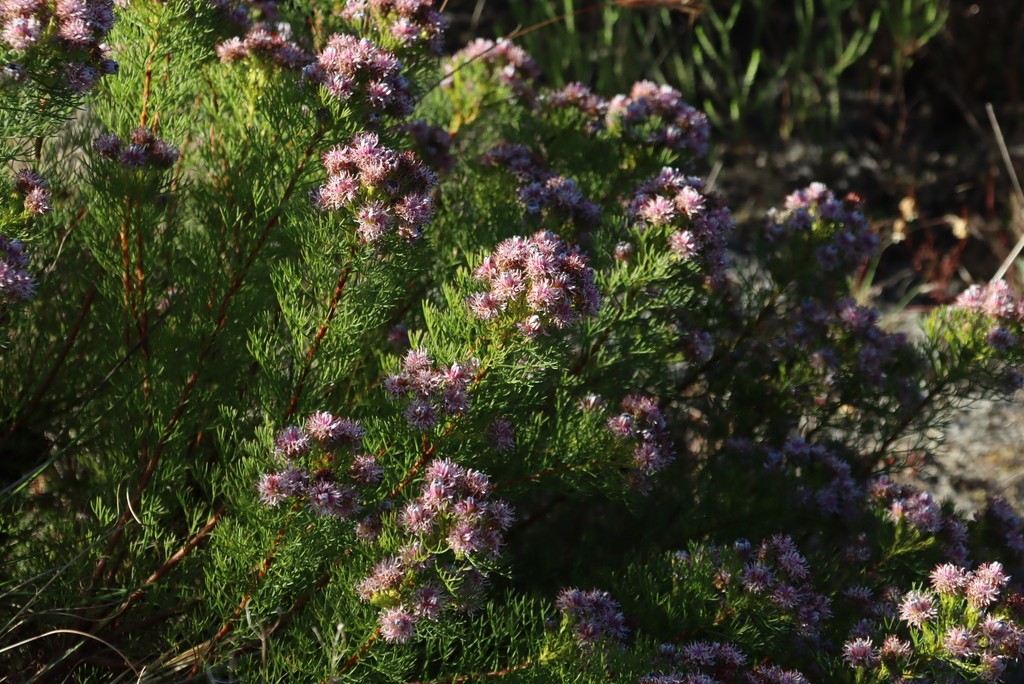
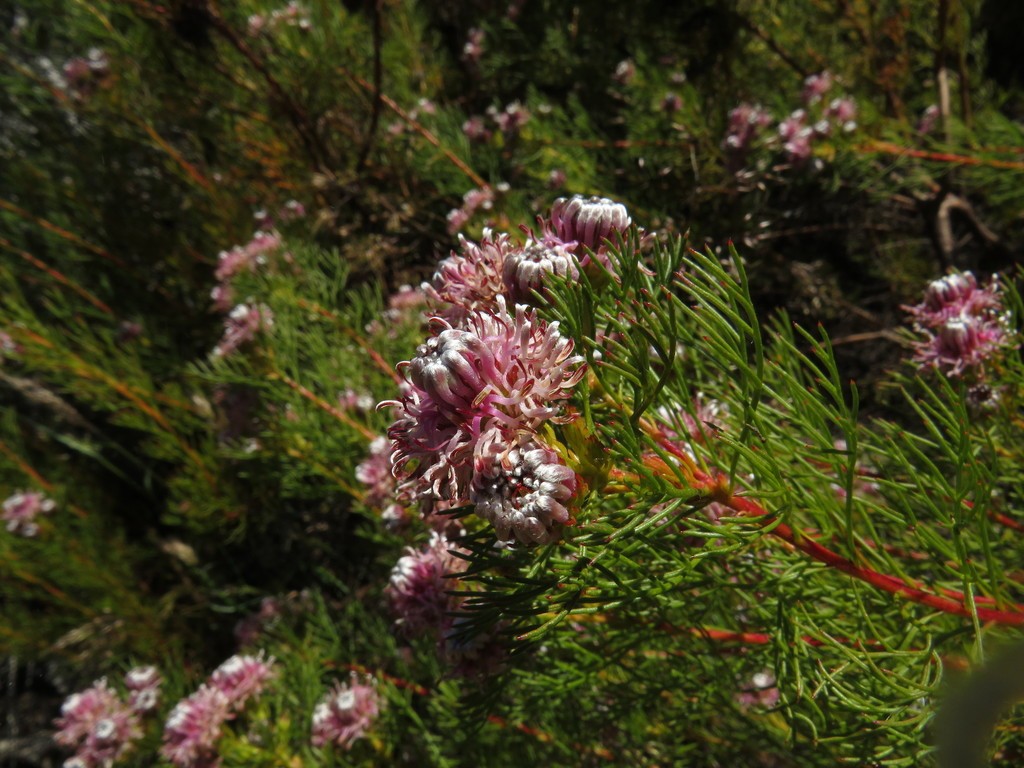
Serruria foeniculacea is a fine-textured, spreading shrub of the protea family. Its long, repeatedly divided leaves create a soft, feathery outline, while the small creamy-white to pale-pink flowerheads are carried towards the ends of slender branches. Plants tend to be more sprawling and longer-leaved than the closely related Serruria aemula.
Flowering is mainly from July to October. The delicate, sweetly scented flowerheads are visited by insects, which transfer pollen between plants. Like other Cape spiderheads, the fruits are hard, nut-like seeds that are normally gathered and buried by ants, protecting them underground until conditions favour germination.
The species is restricted to moist, acidic sands of the Cape Flats. Almost all of its former habitat has been transformed or degraded by urban development, invasive plants and altered fire patterns. The surviving wild population is extremely small, isolated and vulnerable.
SANBI’s 2020 assessment, published in its 2024.1 Red List, lists the species as Endangered, an improvement from its former Critically Endangered category. Four plants were rediscovered in 1989 after it had been considered extinct. Propagation and reintroduction subsequently established two viable populations that recruited after fire. This recovery shows what sustained restoration can achieve, while the species remains vulnerable and needs continued monitoring.
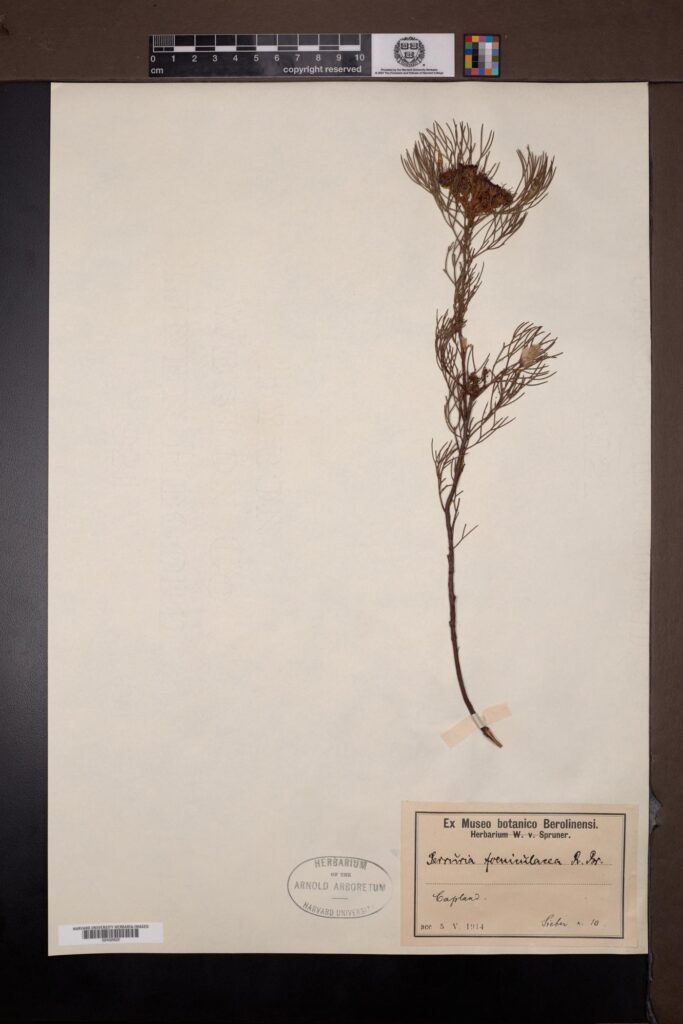
A name with history: Robert Brown formally described the species in 1810 in the Transactions of the Linnean Society of London. The epithet foeniculacea means fennel-like, referring to its finely divided leaves. Its rediscovery and subsequent recovery connect the older botanical record with practical modern conservation: accurate identification and documented plant material are essential foundations for bringing such a rare species back into suitable habitat.