Seriphium plumosum
Silver stoebe · slangbos · vaalbossie · Khoi-kooigoed
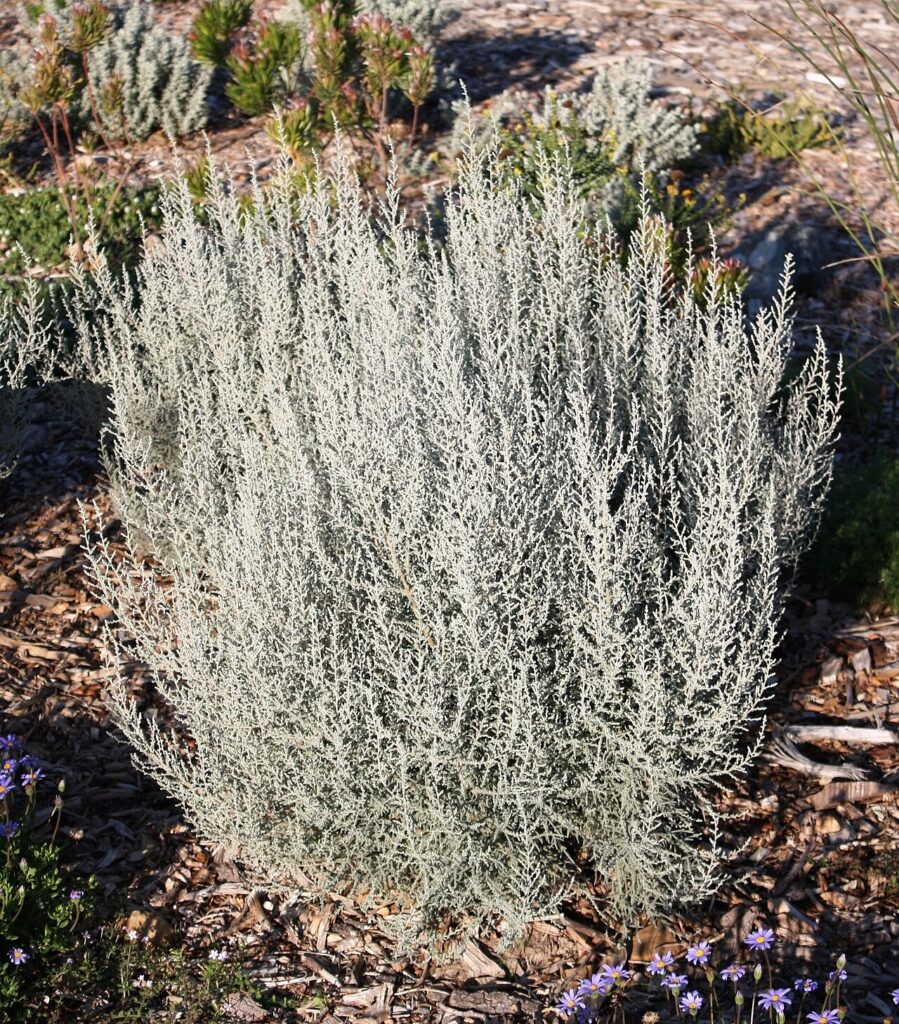
A feathery silver shrub built for dry fynbos
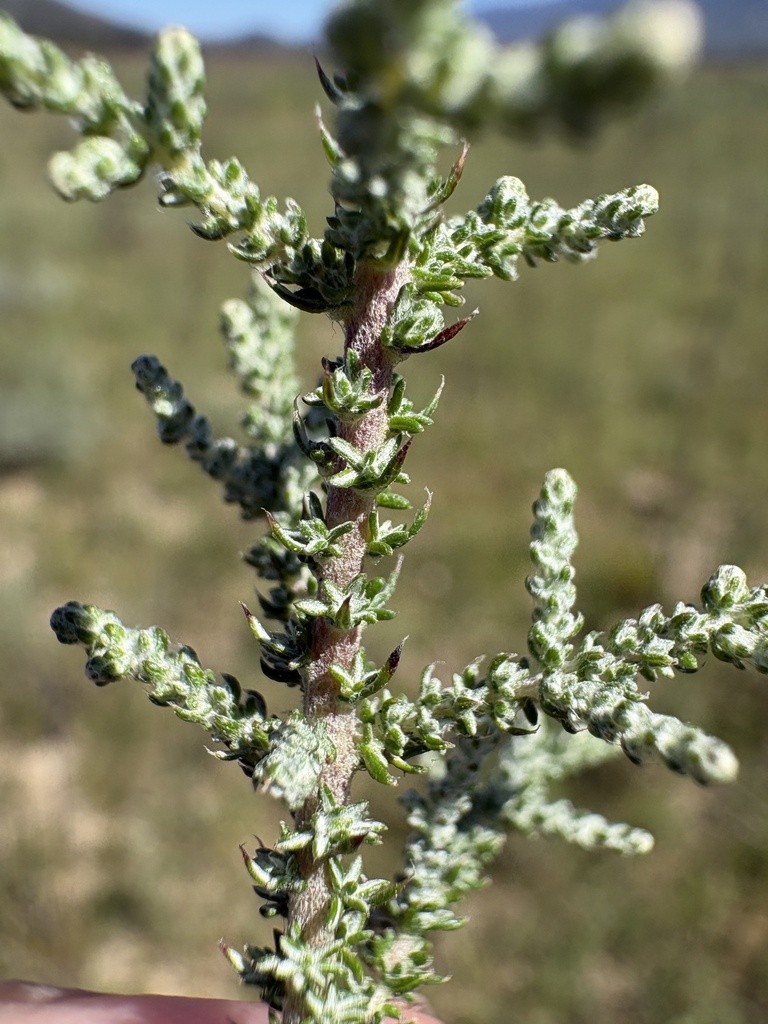
Seriphium plumosum is an evergreen, intricately branched shrublet, usually about 1 m high and wide but sometimes reaching 1.5 m. Its tiny leaves are packed along long and short shoots and partly covered in pale woolly hairs, producing the soft grey-green texture that makes the plant resemble a compact heath.
The brown to purplish flowerheads are minute and grouped in the leaf axils, often building narrow spike-like or branched displays. Flowering is chiefly in winter, from April to July. The flowers are subtle rather than showy, but the plant’s silvery architecture gives year-round colour and movement.
After flowering, each small fruit carries a feathery pappus—fine bristles that catch the wind and carry the seed away. The pale foliage reflects sunlight, while the woolly covering and very small leaves reduce water loss during the Cape’s long, dry summers. Its aromatic oils also make mature plants unpalatable to most livestock.
A 2024 revision separated the old, broadly defined Seriphium plumosum complex into several species. Older accounts therefore describe a much wider range of habitats than the Cape plant alone occupies. The revision identifies Seriphium vulgaris as the rangeland encroacher; that behaviour should not automatically be attributed to this fynbos shrub. SANBI’s existing Least Concern listing predates this narrower treatment, so records and nursery labels deserve careful interpretation.
Its quiet flowers are easiest to appreciate close up. From farther away, the repeated fine shoots and pale foliage provide the strongest identifying impression, especially against darker fynbos shrubs.
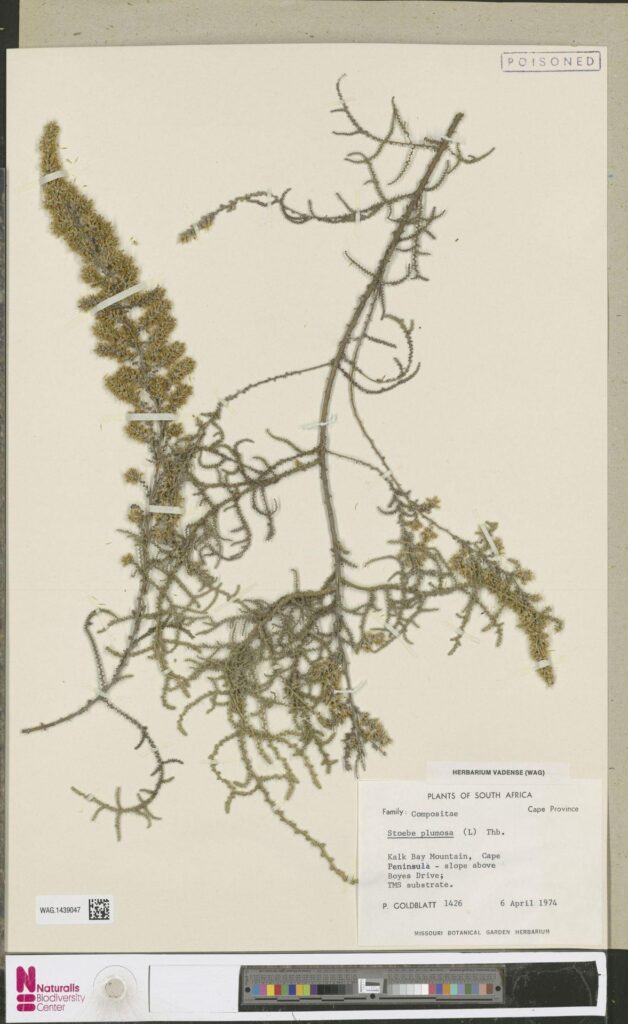
A name with history: Linnaeus published Seriphium plumosum in 1753. It later became familiar as Stoebe plumosa, before a 2002 revision returned the broad group to Seriphium. The 2024 study clarified further differences between its members, showing why older labels can be misleading. The epithet plumosum means “feathery”, referring to the fruit’s pappus rather than to a showy petal display.