Salvia africana
Blue African sage · blue sage · wild sage · bloublomsalie
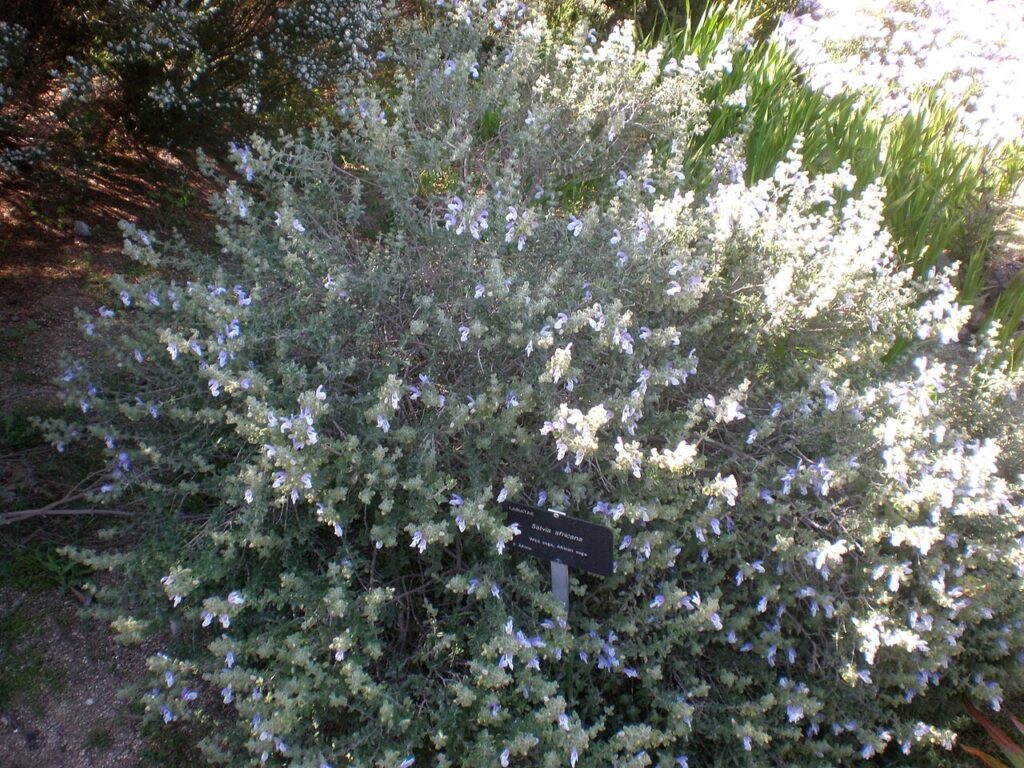
Grey leaves, blue flowers and an ingenious bee mechanism
Salvia africana is a soft, greyish, hairy and strongly aromatic shrub, much branched and reaching up to about 2 m. Its opposite leaves are greenish above, grey-hairy and gland-dotted beneath, and release a characteristic sage scent when brushed.
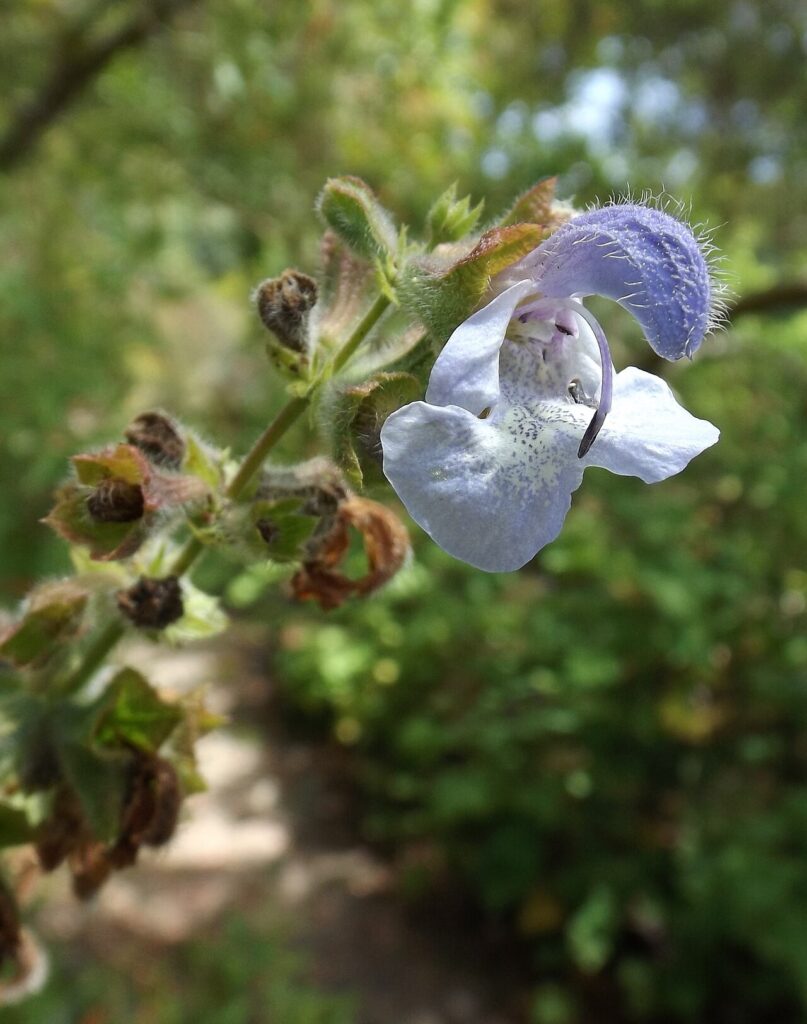
Flowers appear from June to January, peaking from August to December. The hooded upper lip is blue, bluish-purple or pinkish, while the lower lip usually has a white centre with darker markings. After flowering, the silky calyx enlarges into a light, papery structure that helps the four small nutlets disperse.
Each flower contains a hinged pollination mechanism. When a bee lands on the lower lip and presses an internal “pedal” while reaching for nectar, the anthers swing down and place pollen on its back. A later visited flower’s curved stigma can then collect that pollen.
This South African endemic occurs widely through the Cape in fynbos. SANBI assesses it as Least Concern: it remains common, has many subpopulations and has a stable population, although agriculture, infrastructure and invasive alien plants continue to degrade parts of its habitat.
The foliage is useful for distinguishing this sage from its relatives even outside the flowering season. Its softer grey appearance contrasts with the greener leaves of rough blue sage, while its cool flower colours differ markedly from the coppery blooms of golden sage.
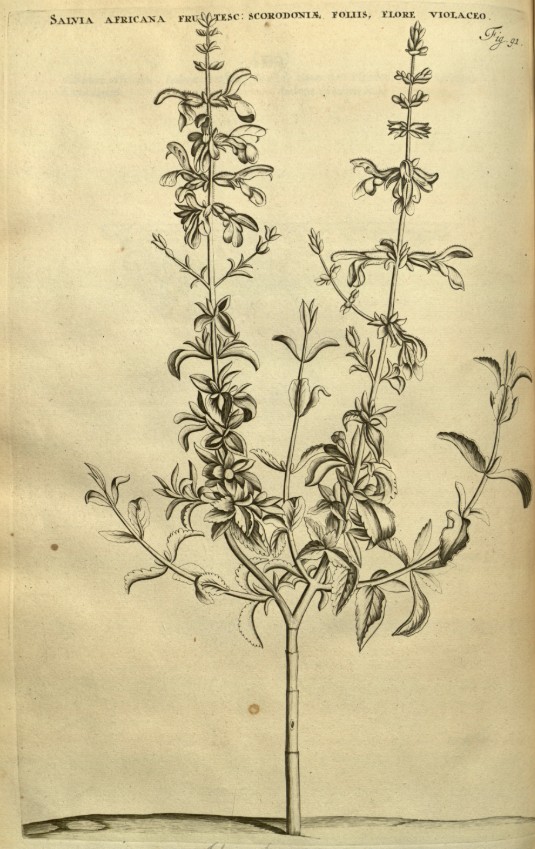
A name with history: The plant has a notable recorded history. It was illustrated in the Moninckx Atlas in 1682 and cultivated in Amsterdam’s medicinal garden by about 1710, and later at the Chelsea Physic Garden by about 1760. Linnaeus first used the familiar but illegitimate hyphenated name Salvia africana-caerulea in 1753, then published the accepted name Salvia africana in 1762. Early Cape settlers and Khoisan communities valued its aromatic leaves for flavouring and traditional remedies.