Psoralea repens
Creeping fountainbush · coastal fountainbush
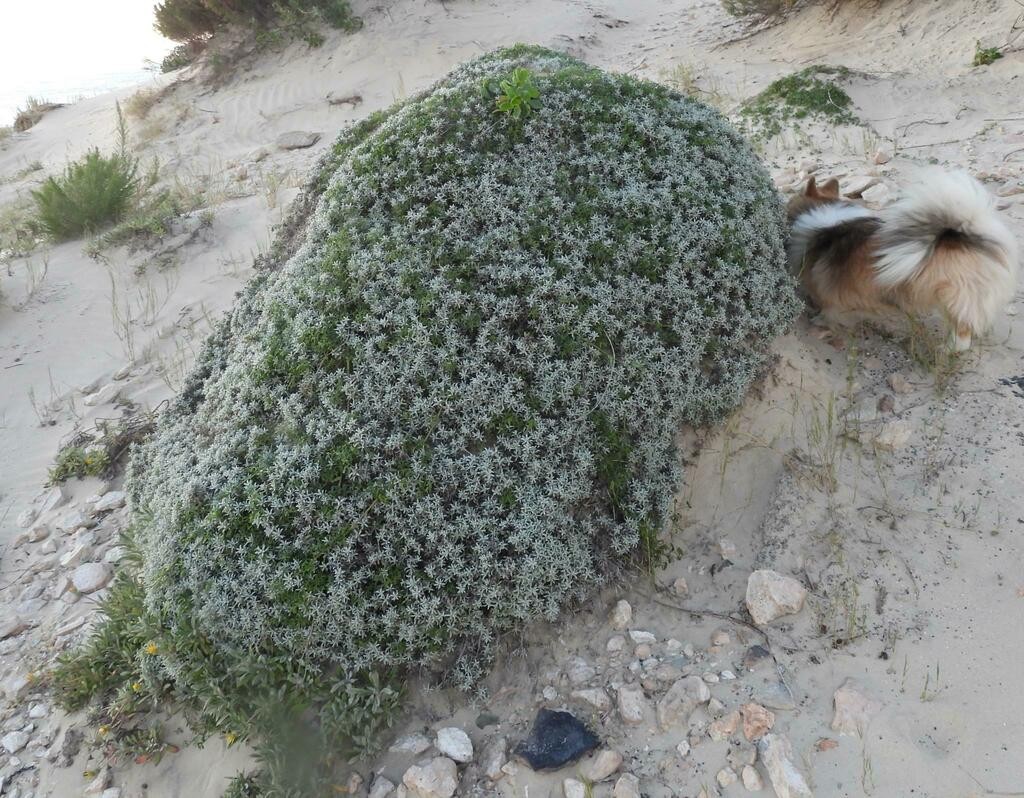
A sand-binding fountainbush of the Cape coast
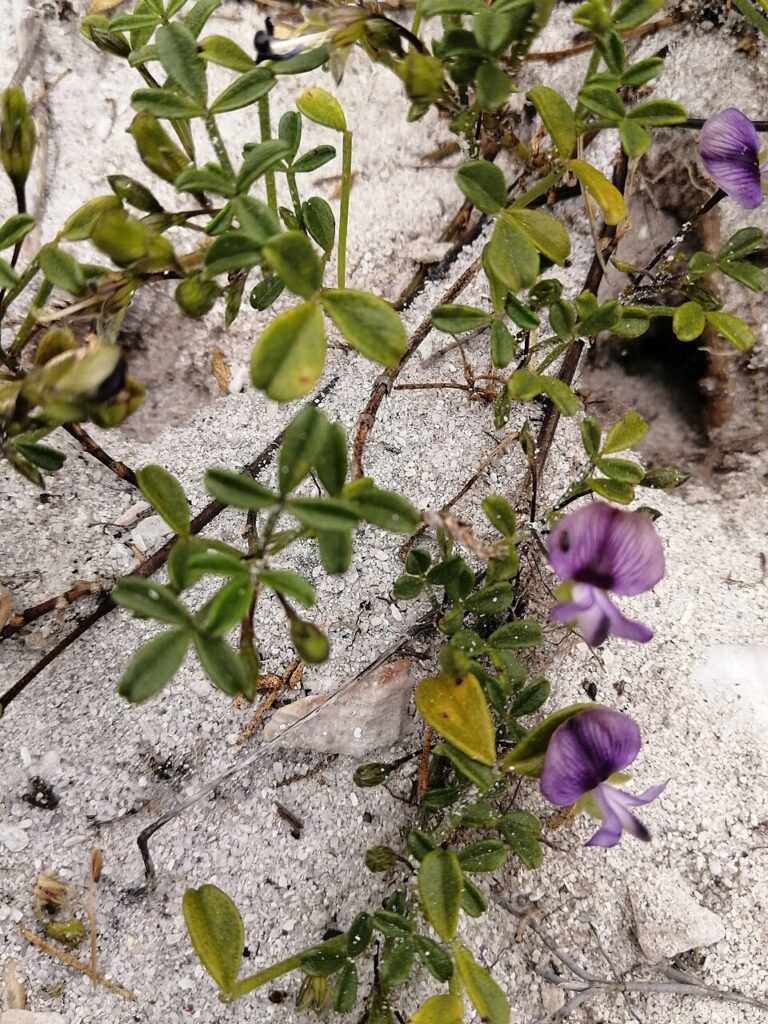
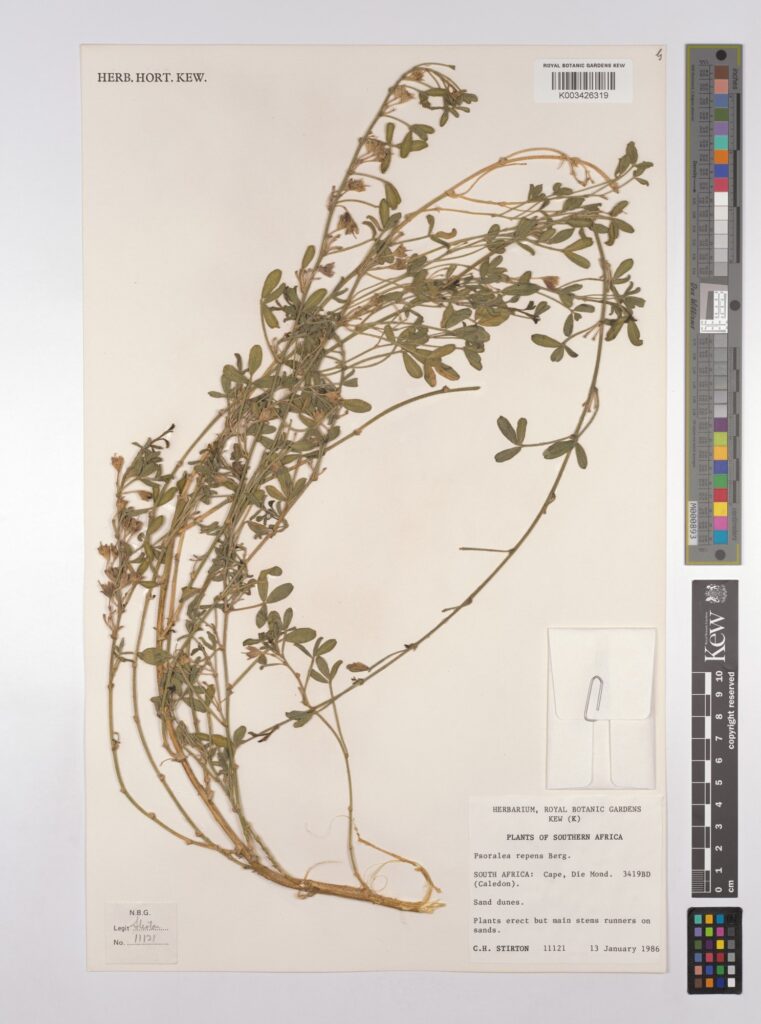
Psoralea repens is a low, prostrate shrublet that sends long, thick runners across the sand. Rather than growing upright like many fountainbushes, it forms a spreading mat whose stems help cover and hold loose coastal soil.
Its fleshy leaves are divided into three leaflets. From November to February, long flower stalks rise above the foliage and carry unusual violet-brown pea flowers. The combination of creeping habit, three-part succulent leaves and long-stalked blooms makes the species distinctive.
This South African endemic occurs along the Western and Eastern Cape coast, from Saldanha and the Cape Peninsula eastwards to Kenton-on-Sea. It is primarily a plant of coastal foredunes and occurs in several strandveld, sand fynbos and dune-thicket vegetation types, including Cape Flats Dune Strandveld.
SANBI assesses the species as Near Threatened . Coastal development has already caused at least 33% habitat loss, while invasive alien plants continue to degrade surviving coastal vegetation. Between 40 and 50 subpopulations were recorded, but the population trend is decreasing.
The plant’s outline is as informative as its flowers. Follow a stem across the ground and compare its thick, three-part leaves with the finely divided foliage of the upright fountain bush, Psoralea pinnata. The long-stalked flowers lift the display above the low mat. This combination of horizontal runners, fleshy leaves and elevated blooms is well suited to recognising it among other coastal groundcovers.
A name with history: Peter Jonas Bergius formally published Psoralea repens in Descriptiones Plantarum ex Capite Bonae Spei in 1767. The Latin epithet repens means “creeping”, an exact reference to the long runners that trail over coastal sand. The species has also appeared historically under the name Psoralea diffusa .