Psoralea pinnata
Fountain bush · fonteinbos · blue pea · bloukeur
A fragrant fountain bush for wet fynbos
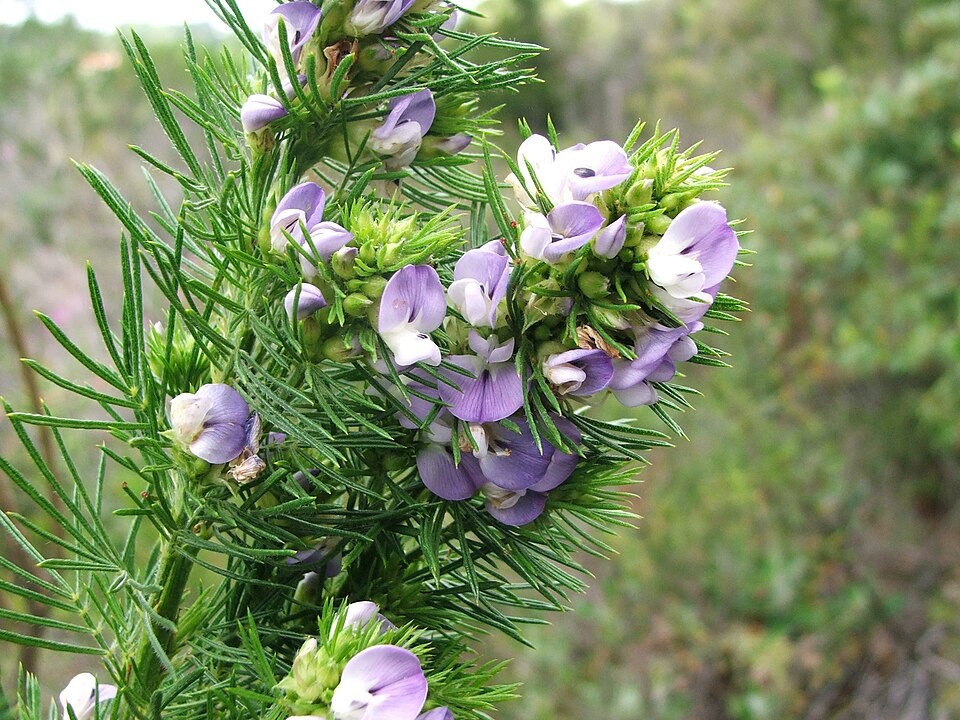
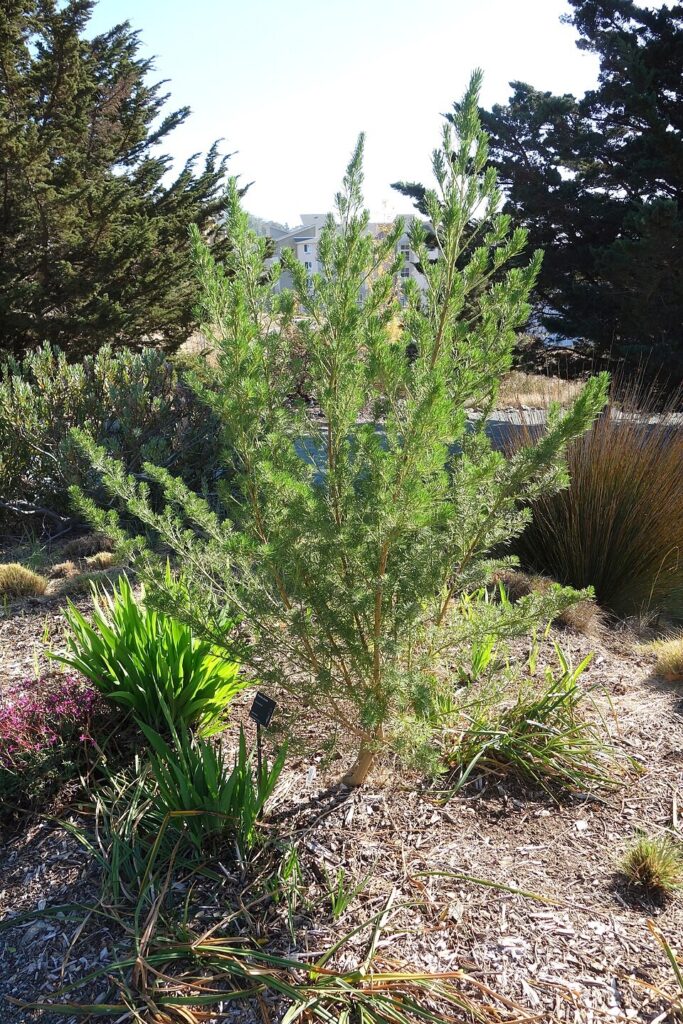
Psoralea pinnata is an erect evergreen shrub or small tree, usually 1.5–4 m high. Its soft green leaves are divided into several pairs of long, narrow leaflets with a terminal leaflet, creating a light, feathery crown. The foliage carries resinous dots and releases a strong aromatic scent when crushed.
From October to December, slender branches carry delicate pea-shaped flowers in blue, lilac and white. The blooms are lightly scented and attract bees and other insects; white-eyes are also often seen searching among the flowers for insect prey. Each small pod contains a single seed.
The names “fountain bush” and fonteinbos reflect its preference for streams and wet ground. Under the modern, narrower treatment of the Psoralea pinnata complex, the species occurs from the Cape Peninsula to the Kogelberg in mountain fynbos, forest margins, river-bed seepages and open veld. SANBI assesses it as Least Concern, with an abundant, stable population, although invasive alien plants degrade parts of its habitat.
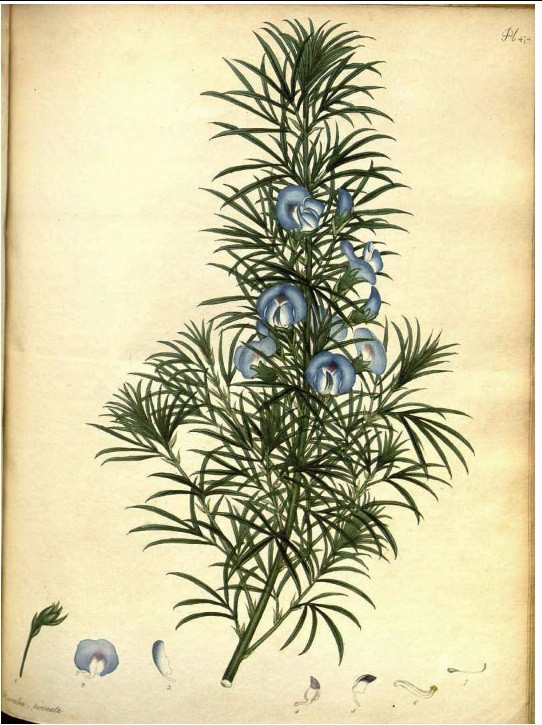
A name with history: Psoralea pinnata has a long horticultural history: Cape seed was already being grown in England by 1690, making it one of the earliest South African plants cultivated there. Carl Linnaeus formally published the name in Species Plantarum in 1753. The epithet pinnata refers to the feather-like arrangement of its leaflets, while Psoralea comes from a Greek word meaning scurfy or warty, referring to the glandular dots on the plant. The species was attractively illustrated as the “Winged-leaved Psoralea” in Henry Cranke Andrews’s hand-coloured Botanist’s Repository for New and Rare Plants , plate 474, in the early nineteenth century. The plate records the long European fascination with this elegant Cape shrub.