Psoralea glaucina
Bluetea fountainbush · bloutee · blouteebossie
A tiny Cape Flats survivor brought back to the wild
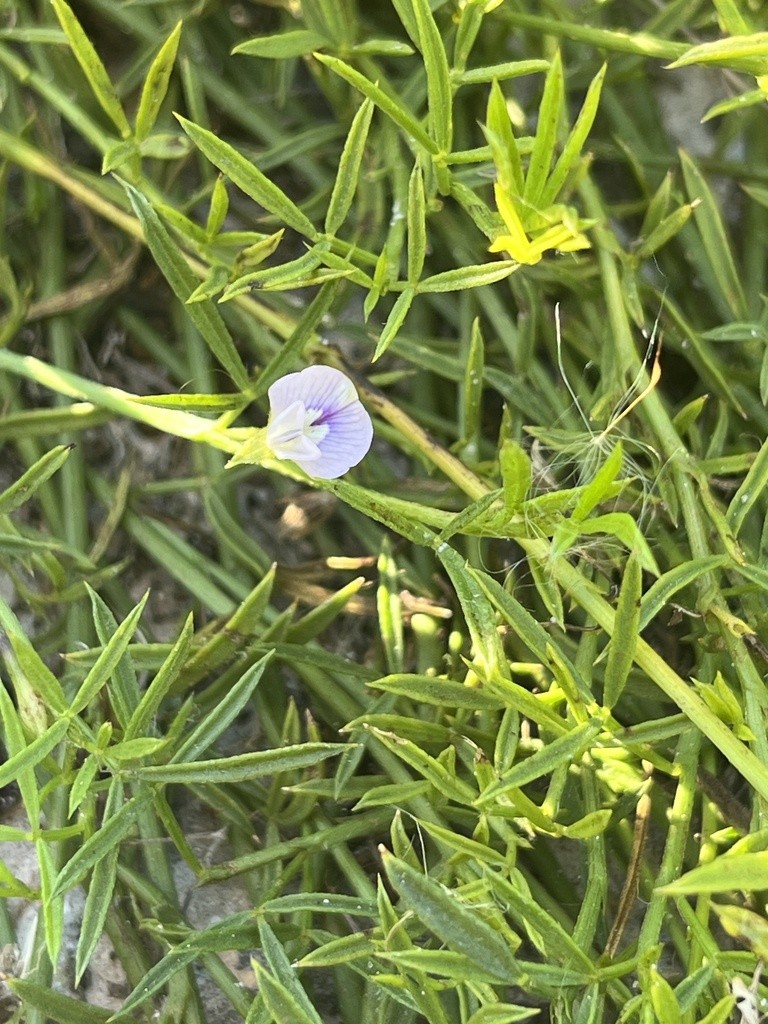
Psoralea glaucina is a small, diffuse perennial subshrub with slender, smooth stems. Its modest scale can make it easy to overlook among grasses and low fynbos plants, but its delicate pea-family flowers reward a closer look.
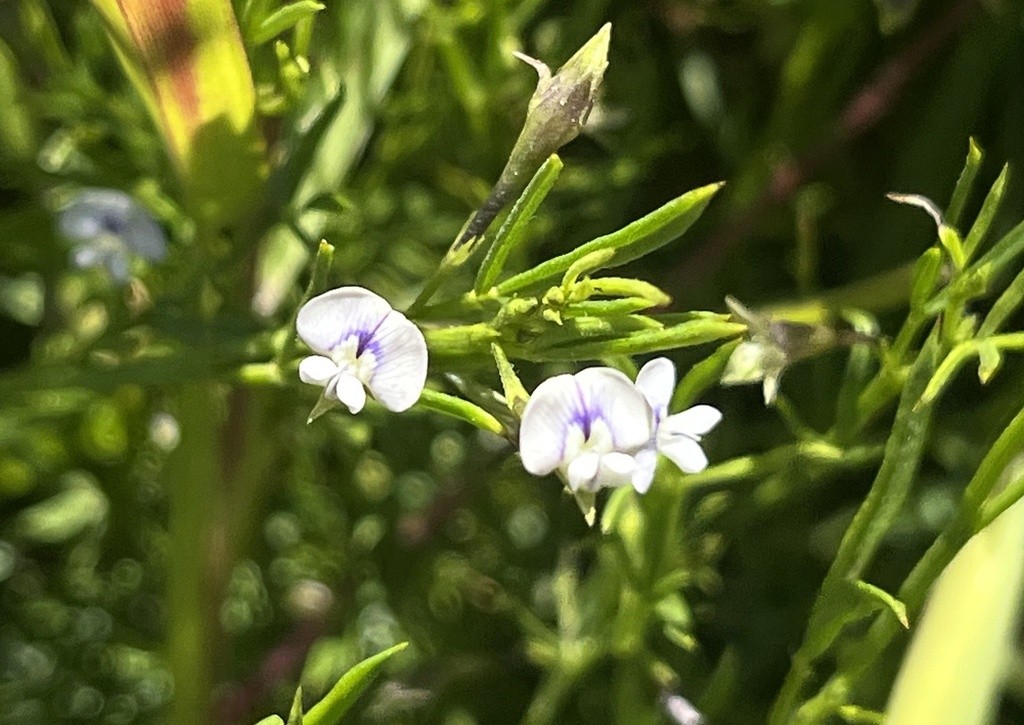
The fingernail-sized flowers are white and purple to deep blue and are produced in summer. Their delicate appearance contrasts with the urgency of protecting the species and its remaining coastal habitat.
This species occurs naturally only on the Cape Flats, in Cape Flats Sand Fynbos, Cape Flats Dune Strandveld and Atlantis Sand Fynbos, on seasonally damp neutral to alkaline sands below 100 m. Its habitat has been drastically reduced and fragmented by residential and industrial development, while invasive alien plants continue to degrade remaining sites.
SANBI’s published assessment records an extent of occurrence under 100 km² and two small natural subpopulations, with a decreasing population trend. Two reintroduced populations were recorded at the time of that assessment. These figures describe the assessment, rather than a current census, and illustrate why monitoring and restoration matter.
Its small flowers are easy to miss in a landscape view. A close inspection reveals the contrast between pale and darker parts of each pea flower. The surrounding vegetation matters too: a low, open patch can offer this modest shrub space that would disappear beneath vigorous alien growth. Protecting such small patches helps retain the less conspicuous components of the Cape Flats flora.
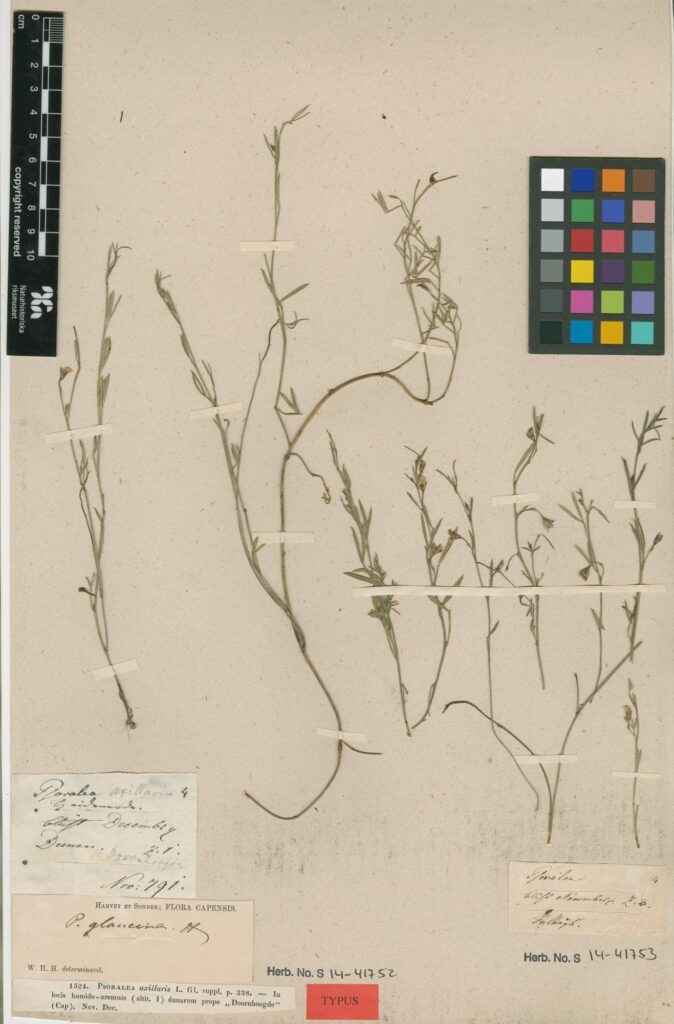
A name with history: William Henry Harvey formally described Psoralea glaucina in 1862 in volume 2 of Flora Capensis . Earlier Cape collections had been called Psoralea axillaris , but that name had already been used for another species. The epithet glaucina refers to its bluish or glaucous character, echoed in the Afrikaans names bloutee and blouteebossie .