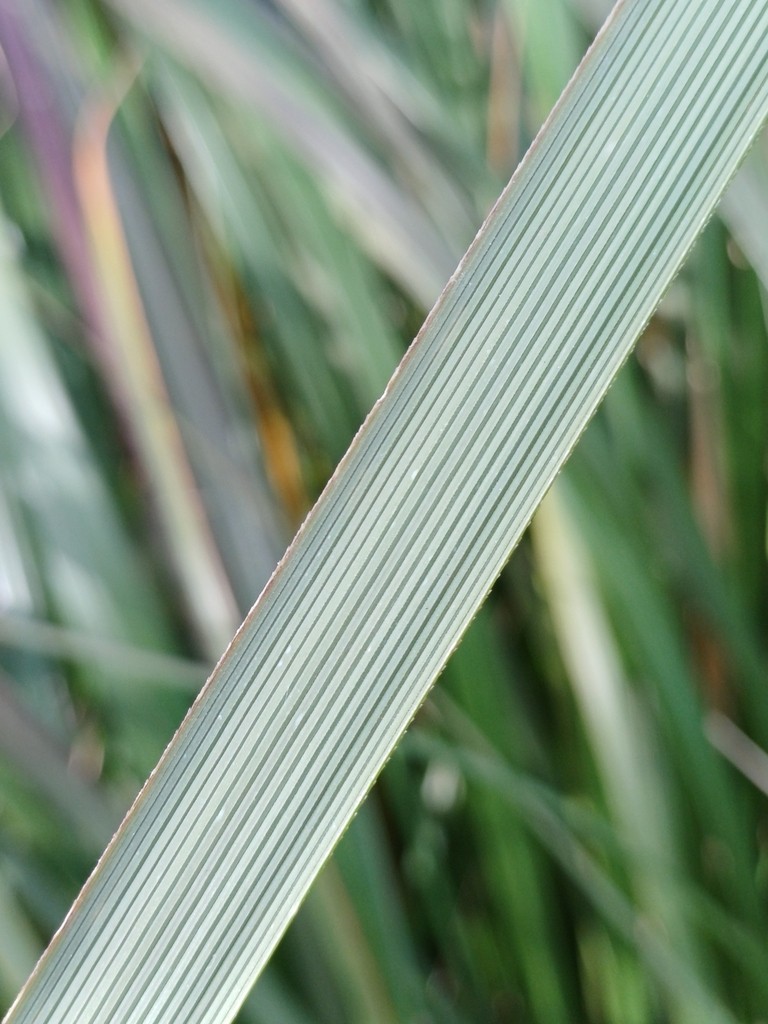
Pennisetum macrourum
African feather grass · bedding grass · jaagbesem
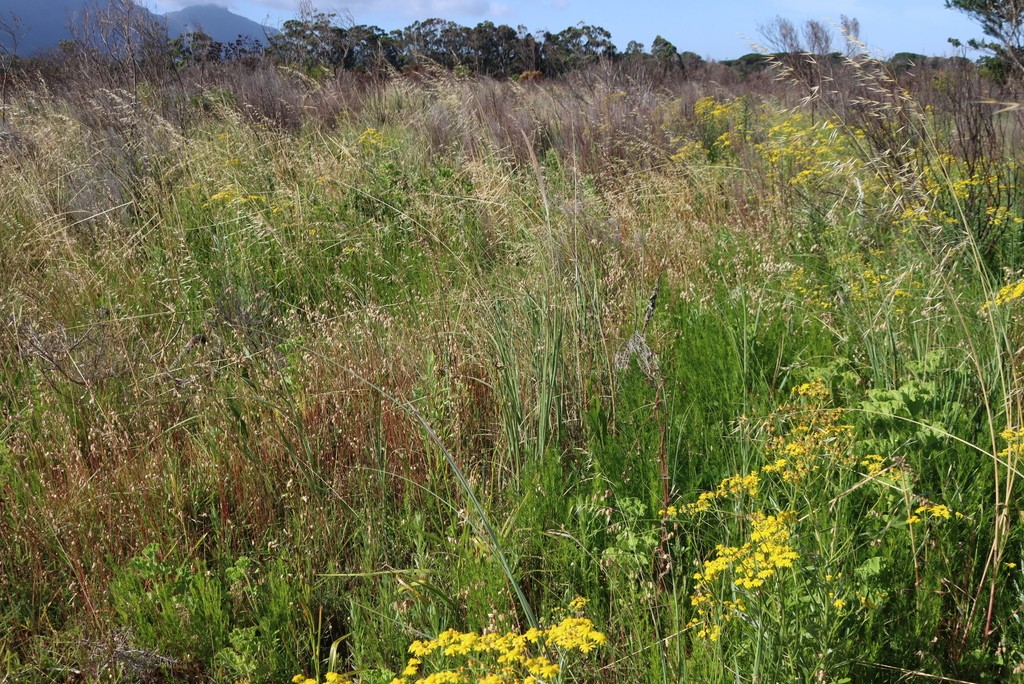
Tall feathered “tails” beside the water
Pennisetum macrourum is a robust perennial grass that forms dense tussocks roughly 0.8–2 m high. It spreads through creeping underground rhizomes, producing many upright leafy shoots. Its narrow blades can reach about 45 cm and create strong vertical texture in damp vegetation.
From November to May, tall stems carry unusually long, narrow, cylindrical flower heads. These green to yellow-green “tails” may be tinged purple or brown and mature to a pale straw colour. Each spikelet is surrounded by fine bristles, giving the inflorescence its soft, feathered appearance.
The species is widespread through tropical and southern Africa and extends to the Arabian Peninsula. In South Africa it occurs in many provinces, often in marshes, stream margins, riparian ground and other moist places, although established plants can tolerate seasonal dryness. It is assessed nationally as Least Concern.
The flower heads remain visible after the green growth has faded, so the grass contributes both a summer display and a later straw-coloured structure. Seen against the light, its fine bristles give each head a soft outline. Compare the narrow flowering spikes with the wider leafy tussock beneath them: both parts are needed to recognise the plant, rather than relying on the attractive seed heads alone.
A name with history: Carl Bernhard von Trinius formally described the species as Pennisetum macrourum in Graminum Panicearum in 1826. Modern grass classifications place it in the broader genus Cenchrus , often treating it as Cenchrus caudatus ; the familiar older name remains widely used in South Africa. Pennisetum combines Latin words for “feather” and “bristle”, while macrourum means “long-tailed”—both names point to the distinctive flower spikes. Native and valuable in its African range, it has become invasive in several countries where it was introduced.