Pelargonium capitatum
Rose-scented pelargonium · coast pelargonium · kusmalva
A coastal rambler with the scent of roses
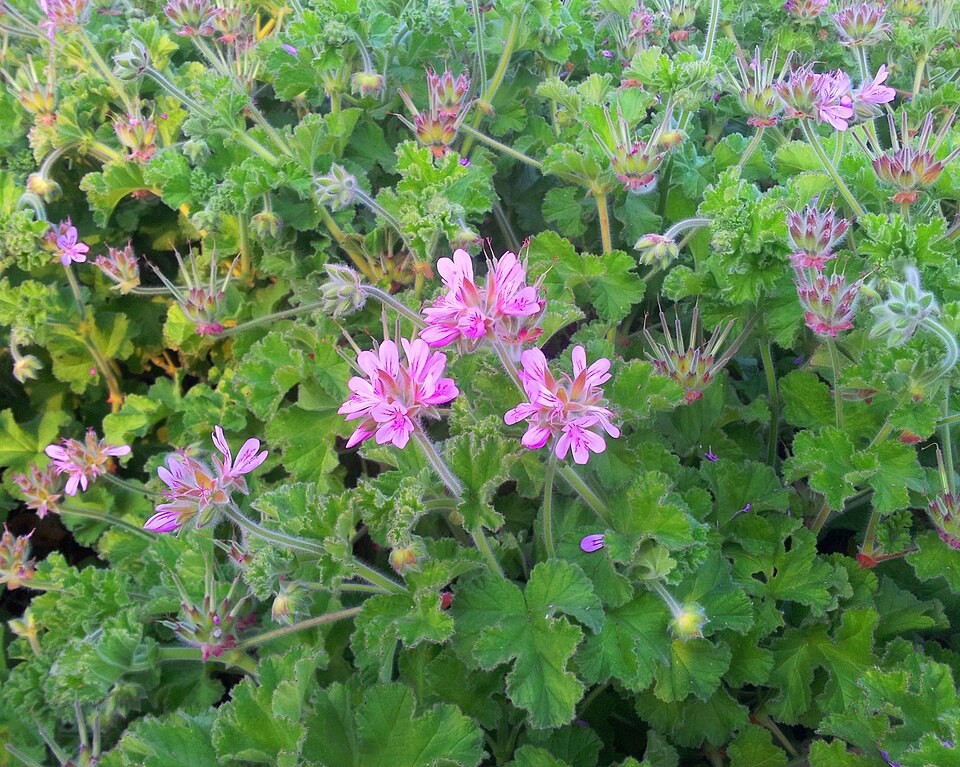
Pelargonium capitatum is a low, bushy shrub with soft-wooded stems that may sprawl or grow upright. It usually stands about 30 cm high but can spread to around 1.5 m, with individual side branches reaching about 60 cm.
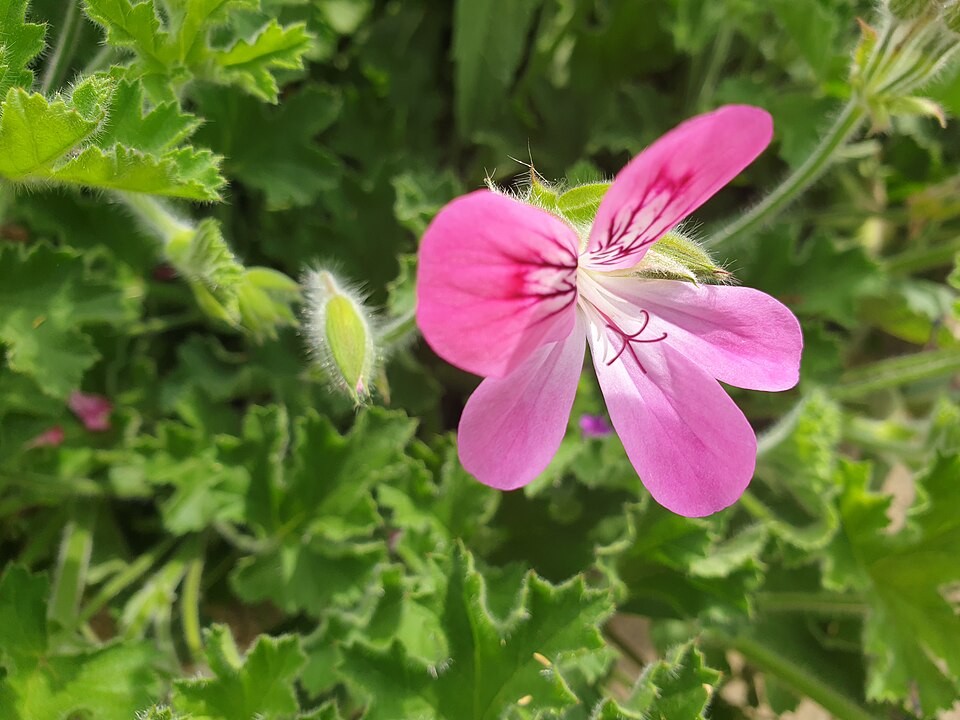
The softly hairy, lobed leaves and stems release a distinctive sweet, rose-like fragrance when touched or crushed. The aromatic oils have made this species—and hybrids descended from it—important in perfumery and scented gardening.
Rounded heads of pale to deep pink flowers appear mainly from August to December, although occasional flowers can be seen at other times. The blooms are visited by honeybees and other insects, while the spreading growth provides useful low cover in coastal planting.
The species occurs naturally in coastal fynbos from Lambert’s Bay in the Western Cape eastwards to KwaZulu-Natal, especially on dunes and other well-drained sandy soils. It is tough, fast-growing and drought resistant once established, and is assessed as Least Concern.
Look closely at a flowering shoot: the compact cluster, rather than the individual bloom, creates the rounded pink display. Its hairy, lobed foliage helps distinguish this low rambler from the taller, more strongly cupped-leaved Pelargonium cucullatum. Both contribute recognisable Cape character to a restored planting, but they occupy very different amounts of space.
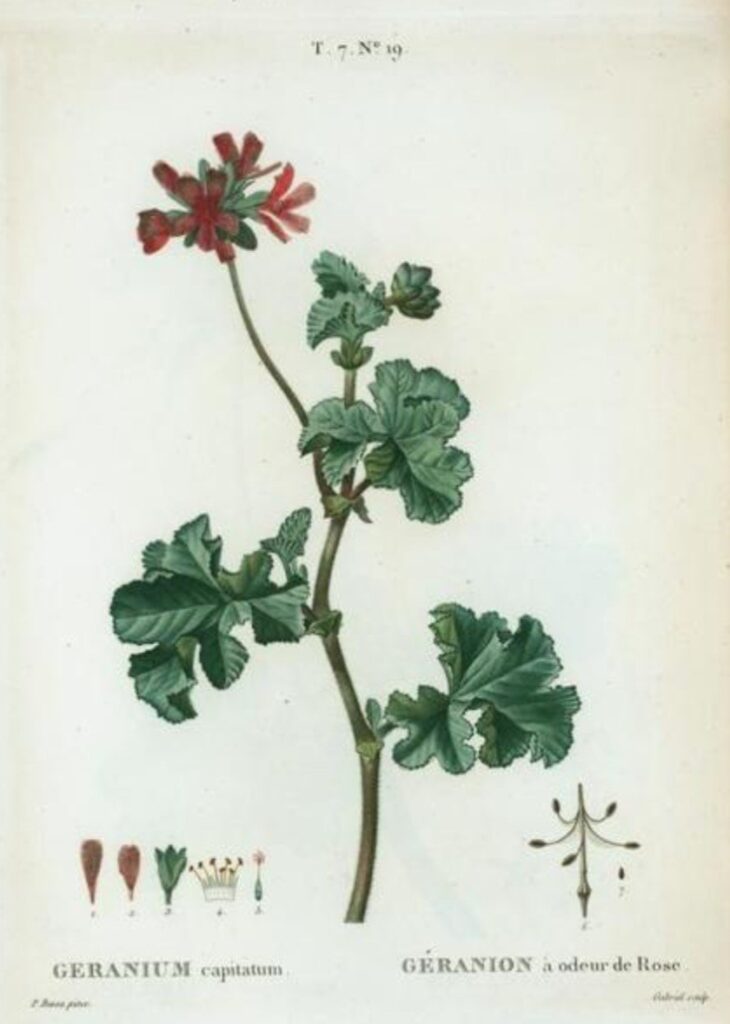
A name with history: Carl Linnaeus formally described the species as Geranium capitatum in Species Plantarum in 1753. The French botanist Charles-Louis L’Héritier de Brutelle later placed it in Pelargonium , with the name Pelargonium capitatum published in William Aiton’s Hortus Kewensis in 1789. It had already reached cultivation in Britain by 1690. Between 1801 and 1818, the celebrated botanical artist Pierre-Joseph Redouté illustrated it under its earlier name for the revised edition of Duhamel du Monceau’s Traité des arbres et arbustes . The epithet capitatum means “head-like”, referring to its tightly clustered flower heads.