Nymphoides indica
Floating hearts · water snowflake · fairy water lily · geelwateruintjie
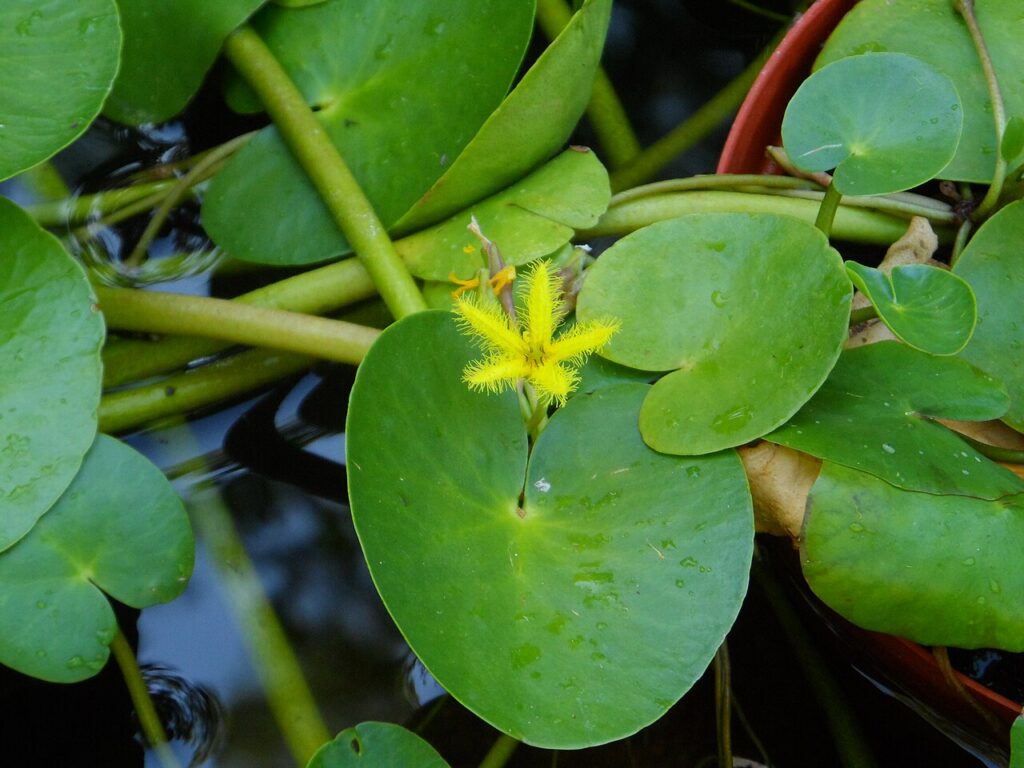
Tiny fringed stars above floating hearts
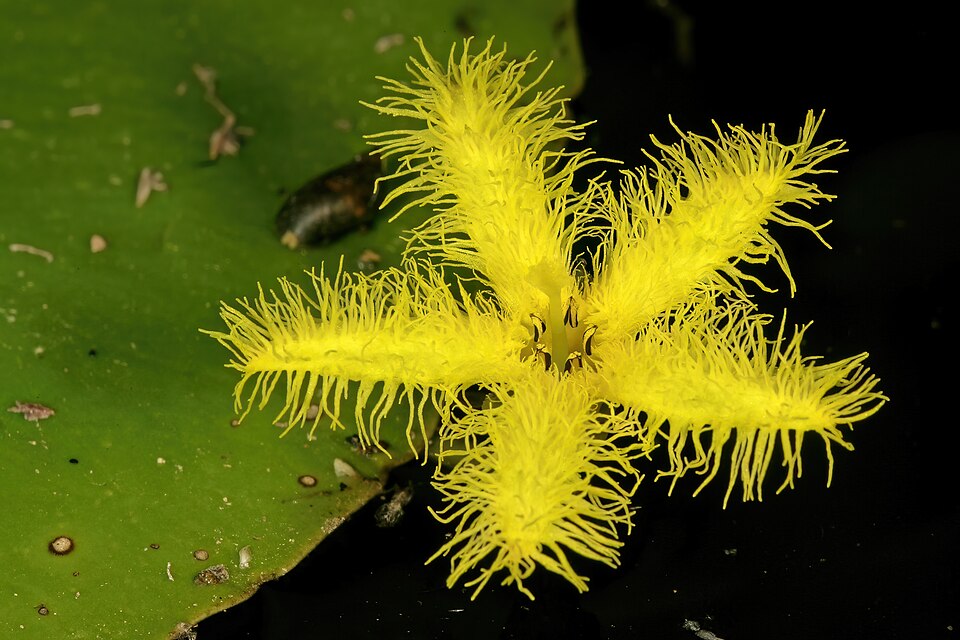
The supplied name, Nymphoides indica, reflects an older, broad identification used for southern African floating hearts. SANBI now treats the local plant as N. thunbergiana, the species illustrated in the photographs. The distinction matters when choosing indigenous pond plants: similar-looking floating hearts are not necessarily the same species.
A perennial rooted in the muddy bottom, it sends long, slender stalks towards the light. Rounded to heart-shaped leaves rest flat on the surface, with a notch at the base. They resemble miniature water-lily pads, although floating hearts belong to the bogbean family, Menyanthaceae, rather than the true water-lily family.
Small flowers stand just above the leaves during the warmer months, approximately October to May. Their five lobes have delicate, feathery fringes. Southern African plants may bear yellow flowers, as pictured here, or white flowers with yellow centres. Those fringes make a close look especially rewarding.
New plants develop along spreading stolons, producing rooted tufts that can become independent colonies. This growth allows a small planting to occupy a much larger patch of pond. Where water levels fluctuate, rooting at the nodes helps the plant persist, although a dependable freshwater habitat remains essential.
The accepted southern African species occurs in pools, pans, marshes and quiet river water, extending into southern tropical Africa and Madagascar. Its South African conservation assessment is Least Concern.
A name with history: Nymphoides means “resembling Nymphaea”, recalling the water-lily-like leaves. The local epithet thunbergiana honours Cape botanical explorer Carl Peter Thunberg. Otto Kuntze published the present combination in 1891. The older name indica remains in this page’s title for continuity, with the local identity clarified here.