Muraltia mitior
Spinetip purplegorse
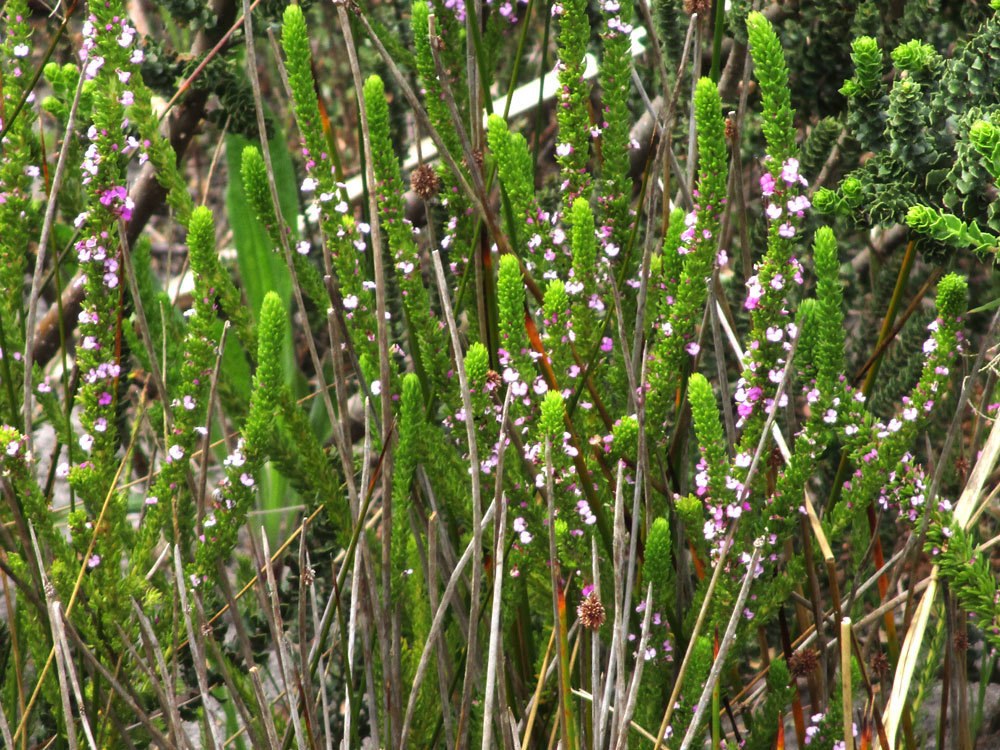
Purple wands of the winter-wet flats
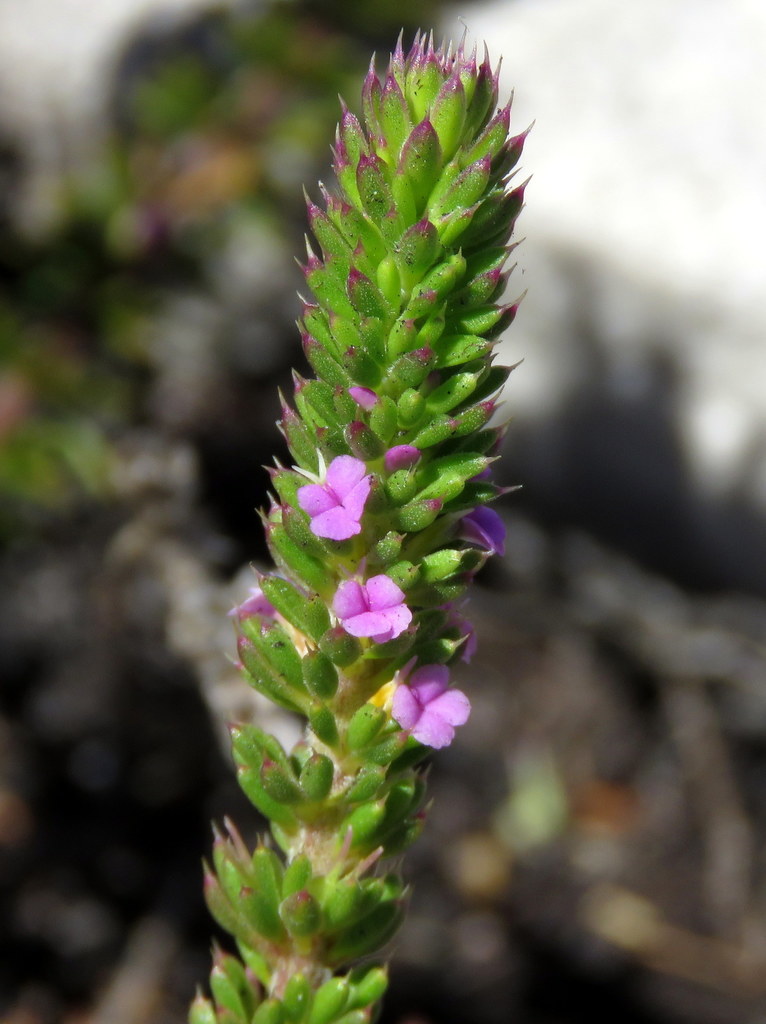
Muraltia mitior is an unusual shrub with slender, finger-like flowering branches. Small leaves sit closely along the stems, while scattered pink to purple flowers create the effect of delicate coloured wands. Its fine texture is particularly appealing beside broader-leaved coastal shrubs.
Flowering extends over a long season, mainly from July to February. Bees and butterflies visit the blooms. The flowers belong to the milkwort family, Polygalaceae, and have a specialised, keel-like structure. Their appearance can suggest a miniature pea flower, but resemblance alone does not establish a relationship with the pea family.
This Western Cape endemic occupies low sandy flats among coastal dunes, including places that become waterlogged during winter. Its remaining distribution is fragmented between the Cape Flats and Agulhas Plain. Strandveld is particularly relevant around False Bay; SANBI also records Peninsula Sandstone Fynbos among its vegetation associations. Suitable moisture and sandy soil matter more than proximity to a vegetation boundary.
The species is assessed as Endangered. SANBI’s assessment describes only four to six severely fragmented subpopulations, with continuing losses in habitat quality, extent and mature plants. These figures belong to the published assessment rather than a new census of every remaining stand. Urban expansion, coastal development, invasive alien plants and inappropriate management continue to threaten its survival.
Restoration therefore involves more than planting a pretty shrub. Protecting remnant populations, keeping invasive plants under control and maintaining suitable habitat remain central. Nursery propagation can support carefully planned restoration, but cultivated individuals do not replace the ecological value of intact wild populations. Gardeners can help by obtaining responsibly propagated plants and giving them a site suited to their seasonal moisture needs.
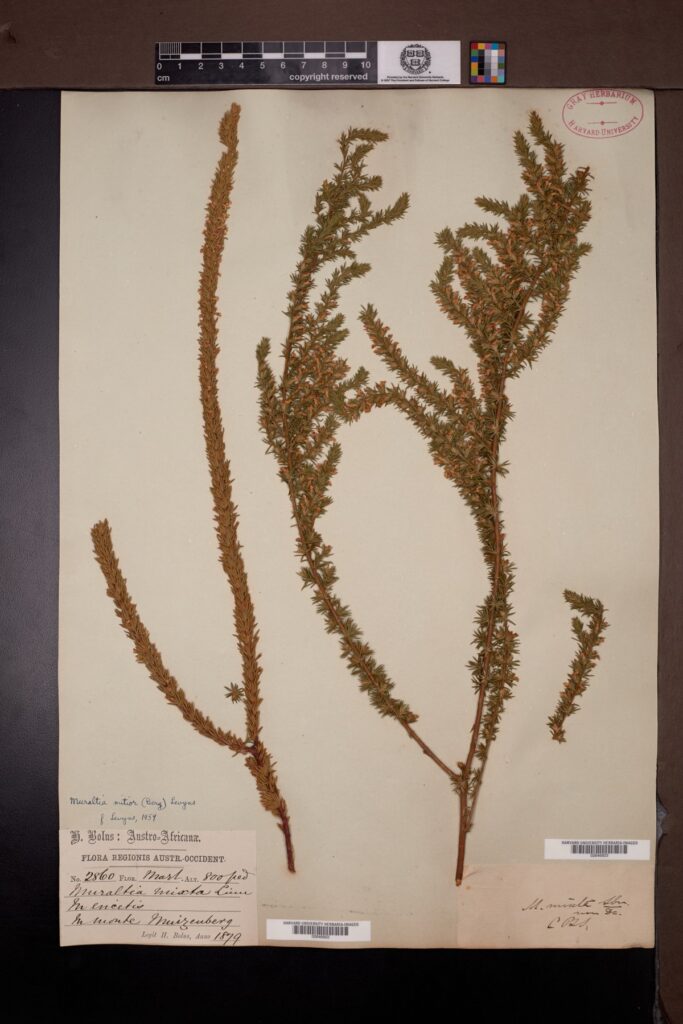
A name with history: The species was first named Heisteria mitior by Peter Jonas Bergius in 1767. Its accepted placement in Muraltia, published in 1941, reflects later botanical study of the Cape’s remarkably diverse milkwort relatives.