Monopsis lutea
Yellow monopsis · gold lobelia · geel lobelia
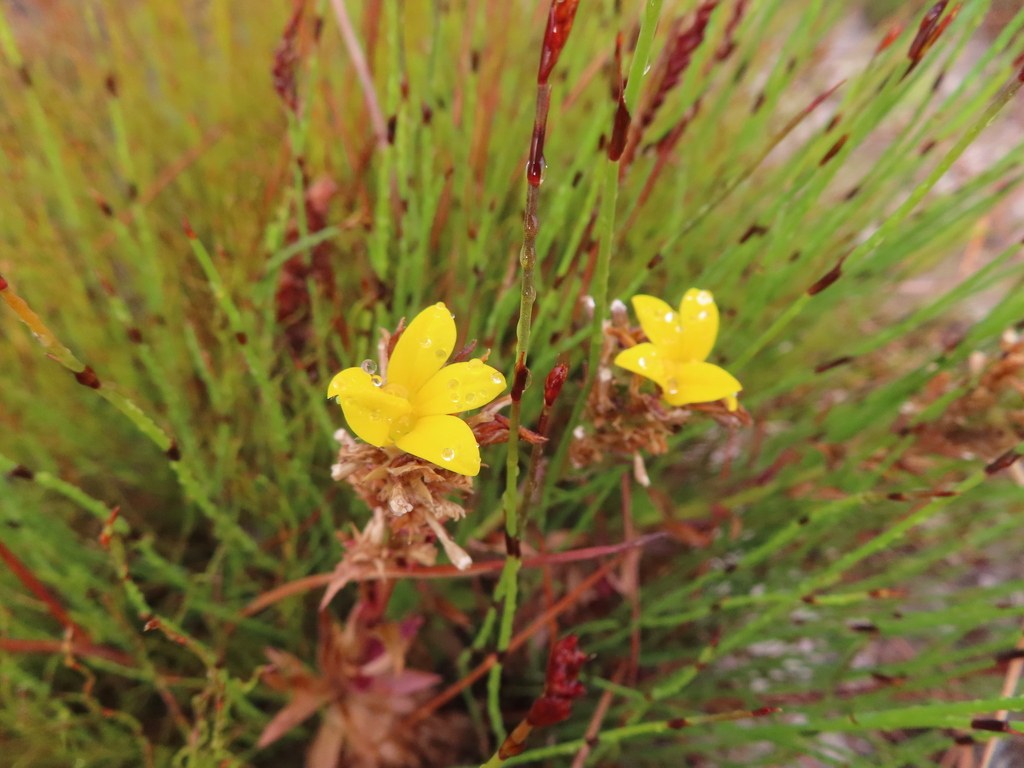
A golden groundcover for moist coastal ground
Monopsis lutea is a small perennial herb with trailing, slender stems that can root where they touch suitable soil. Rather than forming a rigid shrub, it threads through neighbouring plants or spreads gently along the ground. Narrow, elliptical leaves with toothed margins cluster along the shoots, making a fine-textured backdrop for the flowers.
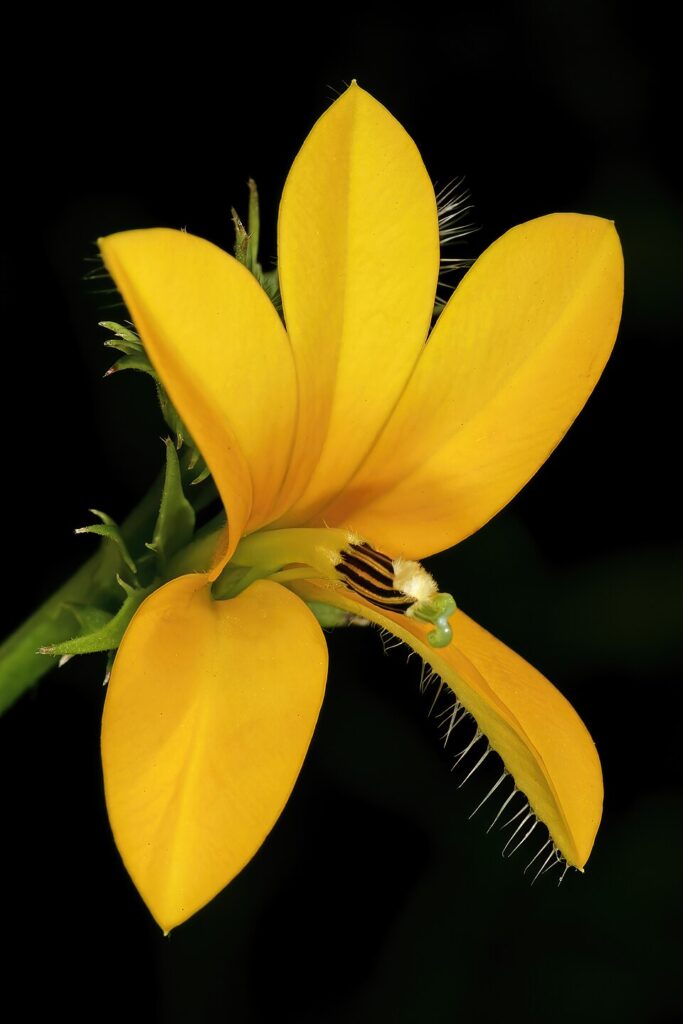
Bright yellow blooms appear mainly from November to April, bringing cheerful colour through the Cape’s dry season wherever the roots still receive moisture. The flower is distinctly unequal: three lobes form an upper face and two make a lower one. This small-scale symmetry is easiest to appreciate in the detailed photograph below.
The flowers have a specialised pollination mechanism. A visiting insect can press on the floral structure and release the concealed reproductive parts, a process often described as “tripping” the flower. Megachilid bees are among its recorded visitors, and butterflies also visit flowering patches. Watching a bloom before and after a visit can reveal that change.
Tiny seeds develop in small capsules that split when mature. Seed dispersal and rooting stems both contribute to the plant’s persistence. In suitable gardens it may become much less conspicuous during winter and reappear strongly as temperatures rise; a quiet season should not immediately be mistaken for the loss of the planting.
Its natural distribution runs from the Grootwinterhoek Mountains to Humansdorp in the Eastern Cape. Damp sandy flats, lower slopes, seeps and stream margins are characteristic. The need for moisture is more useful than a broad “fynbos” label: nearby dry sand may be unsuitable even where the surrounding vegetation looks similar. SANBI assesses it as Least Concern, and it remains a valuable companion for other low wetland flowers.
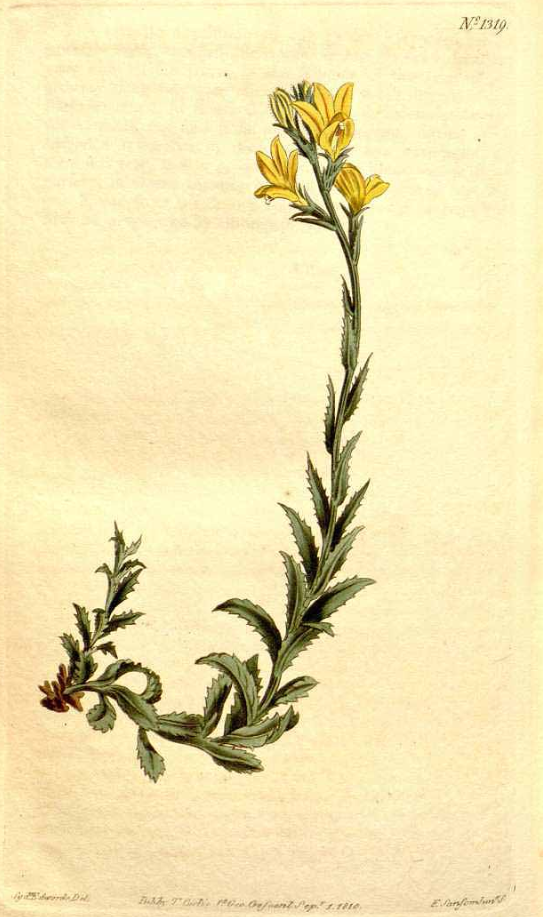
A name with history: Monopsis combines Greek words meaning “one face”, although this species appears two-faced; lutea means yellow. The historical plate was published as Lobelia lutea in Curtis’s Botanical Magazine in 1810, before its placement in Monopsis.