Melianthus major
Giant honey flower · honey bush · kruidjie-roer-my-nie
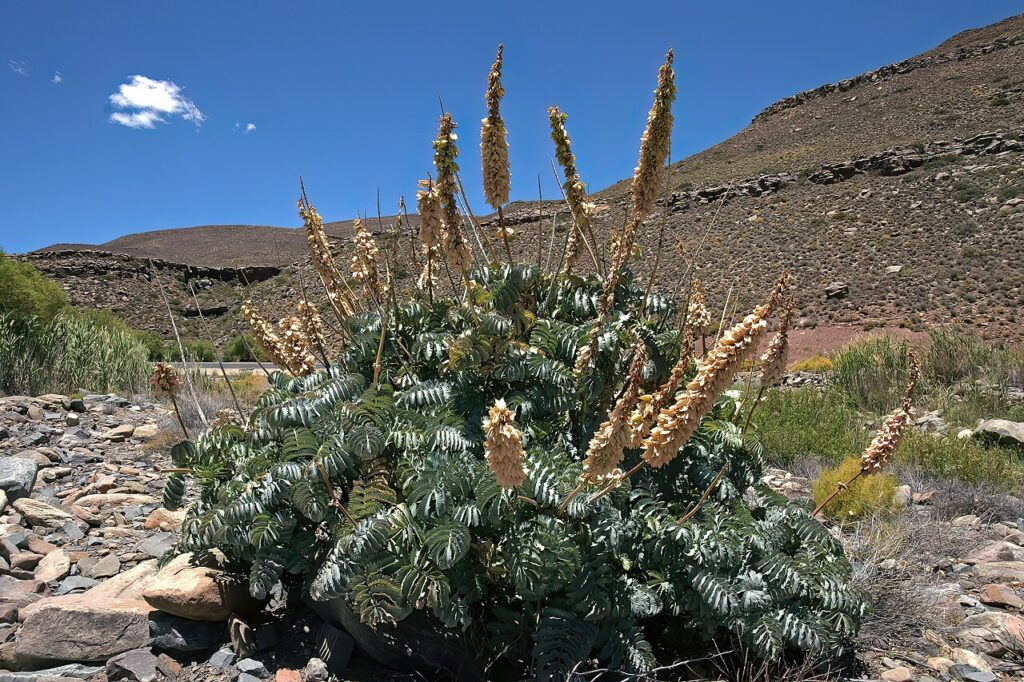
Bold blue-green foliage and nectar-rich maroon flowers
Melianthus major is a dramatic perennial shrub that can reach about 2.5 m high and 3.5 m across. Its large blue-green leaves are divided into sharply toothed leaflets, producing an architectural outline that stands out among finer fynbos foliage. A winged central leaf stalk adds another distinctive feature.
Brushing or crushing the foliage releases a strong, often nutty smell. The Afrikaans name kruidjie-roer-my-nie recalls the familiar warning not to touch or disturb it. More importantly, the leaves and roots are poisonous if eaten, so the plant deserves thoughtful placement where children, pets or grazing animals might investigate its foliage.
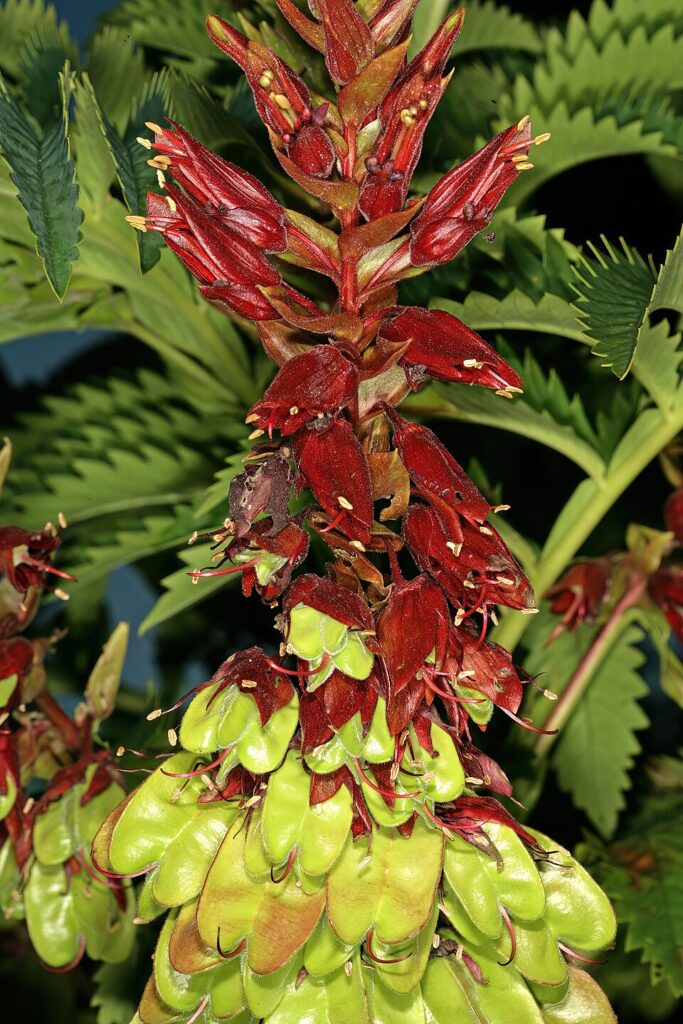
In late winter and spring, tall flower spikes rise above the leaves. Rusty red to dark maroon flowers surround conspicuous black nectaries, which produce abundant dark nectar. The combination of elevated flowers and generous nectar makes a flowering shrub a rewarding place to watch sunbirds and other visiting birds. Bees also visit.
After flowering, inflated, four-chambered capsules develop. They change from green to papery brown as they mature, adding interest after the maroon blooms have faded. Their light construction allows movement by wind and water, linking the reproductive cycle with the open banks and watercourses where the shrub often grows.
Its natural range extends from the Bokkeveld through the Western Cape into the Eastern Cape. Sandstone slopes and stream margins are characteristic settings. Moisture supports vigorous growth, but permanently saturated marsh soil is not required. During a dry Cape summer, stems may die back; the enduring rootstock can produce fresh shoots when rain returns. This seasonal renewal is part of its natural growth pattern. SANBI lists it as Least Concern.
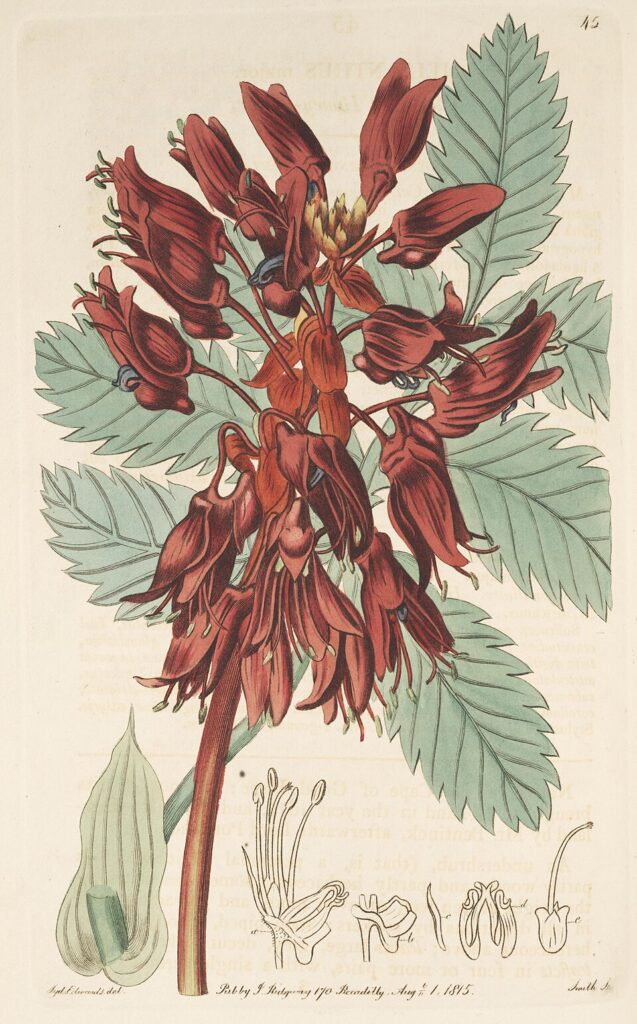
A name with history: Melianthus means “honey flower”, while major means larger. Linnaeus published the name in 1753. The coloured plate below, from The Botanical Register in 1815, records the longstanding horticultural appeal of its unusual flowers and bold foliage.