Maurocenia frangula
Cape beech · bittersweet-cherry · Khoi cherry · vulture berry · aasvoëlbessie
A compact Cape tree with scarlet new growth
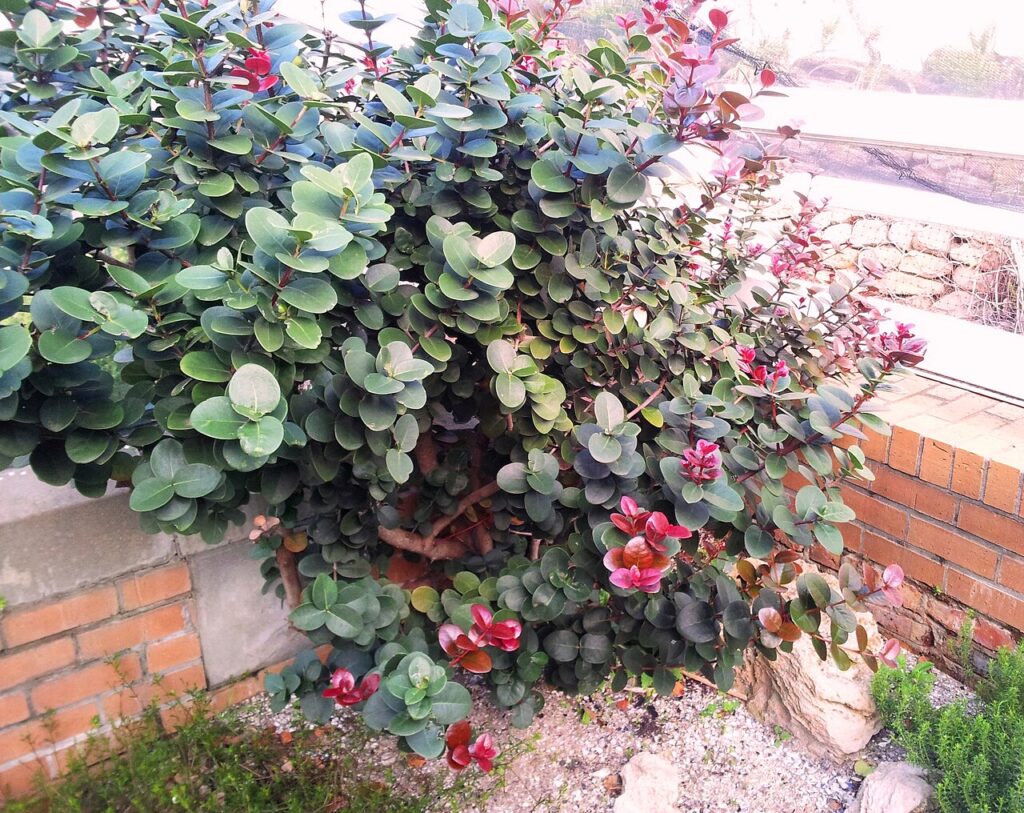
Maurocenia frangula is a slow-growing, long-lived evergreen that usually forms a dense shrub or small tree about 3–4 m tall. Its rounded crown and closely packed leaves give it a substantial presence even when no flowers or fruit are visible. Older stems develop textured greyish to yellow-brown bark.
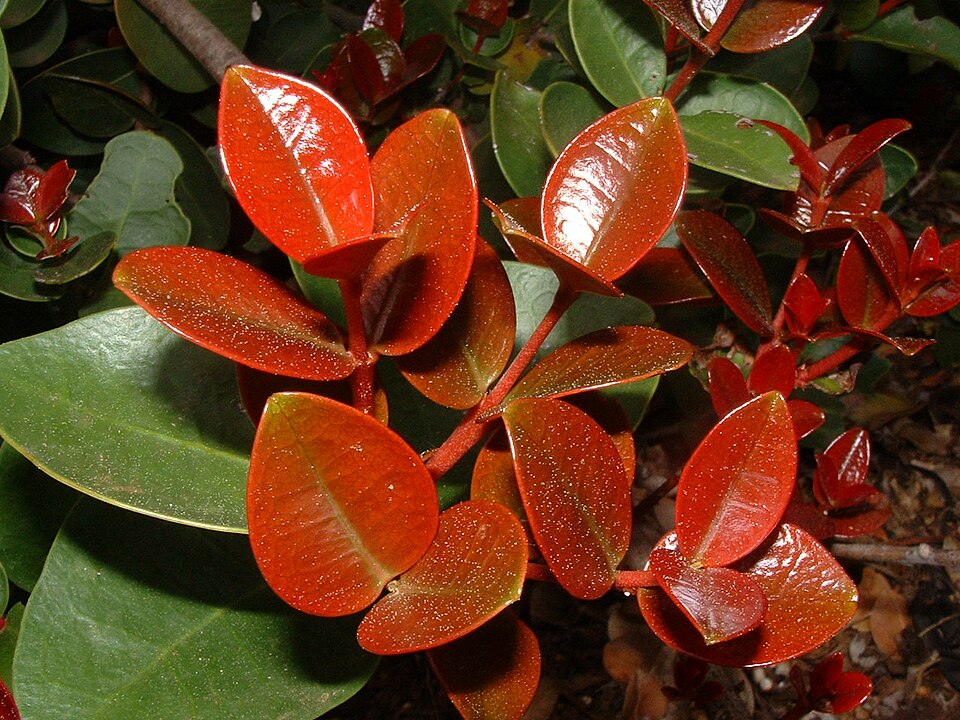
The leathery leaves are arranged in opposite pairs, with successive pairs facing different directions. Rounded blades, firm texture and short stalks are useful identification features. New growth can be particularly striking: young leaves flush red before turning green, creating a seasonal contrast with the mature foliage.
Small, pale flowers appear mainly in late autumn and early winter. They are easily overlooked beside the bold leaves, but a closer inspection reveals their delicate structure. Male and female flowers commonly occur on separate plants, so several seed-grown trees offer better prospects for a fruiting planting than a single isolated specimen.
The fleshy fruits ripen to pinkish red or purple and are eaten by birds. Their colour against the evergreen crown explains the name Cape cherry, although this tree is unrelated to orchard cherries. In a restoration landscape, its value extends beyond appearance: a persistent crown supplies cover and strengthens the structure of sheltered bush vegetation.
This Western Cape endemic is associated with the Cape Peninsula and the West Coast. It grows in coastal bush and rocky ravines, including sites on granite and sandstone, where shelter and reduced exposure to repeated fire favour woody vegetation. Around Muizenberg, strandveld thicket and sheltered bush within the two slope fynbos types are relevant contexts, rather than permanently wet marsh soil. SANBI assesses it as Least Concern.
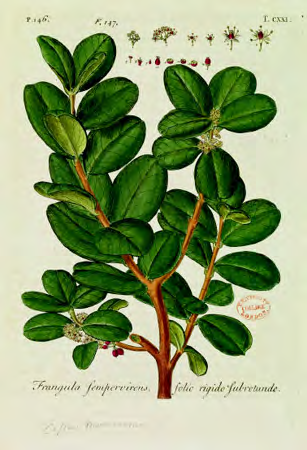
A name with history: Philip Miller published Maurocenia frangula in 1754. The genus honours Italian horticulturist Francesco Mauroceno. The attractive drawing below predates that name: Johann Jakob Dillenius illustrated the plant in Hortus Elthamensis in 1732, recording its cultivation in England.