Lobelia anceps
Swamp lobelia · angled lobelia
A delicate blue-flowered groundcover for wet places
Lobelia anceps is a perennial groundcover whose sprawling stems root where their nodes touch damp soil. A small plant can gradually form a soft, irregular mat, threading between neighbouring plants rather than making a stiff, upright bush. Flowering shoots may rise to about 45 cm, especially when supported by surrounding vegetation.
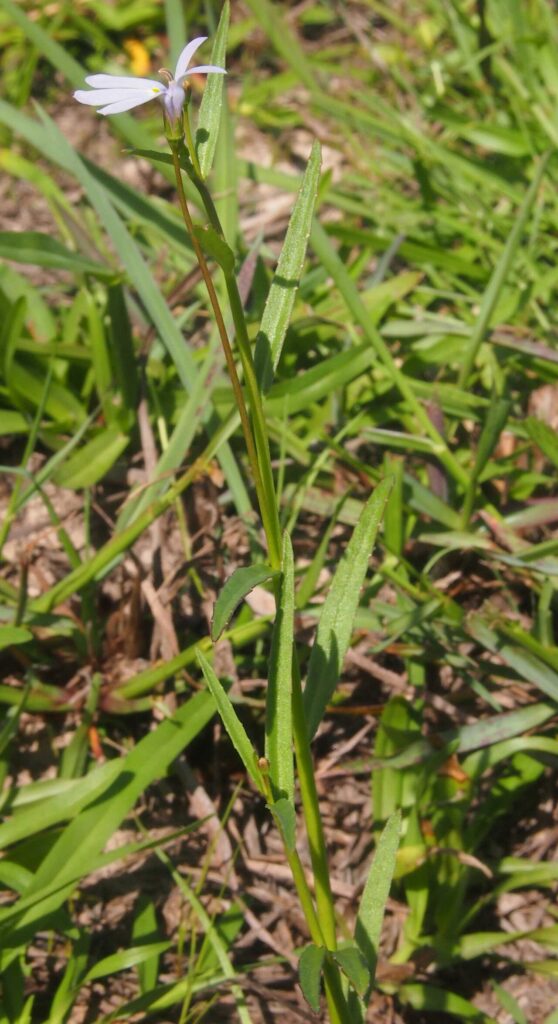
The stems offer a useful identification clue: narrow wings run along their sides, giving them an angled or flattened appearance. Leaves vary from narrow and elongated to spoon-shaped, with margins that may be lightly toothed. The combination of creeping growth, winged stems and small fan-shaped flowers is more informative than flower colour alone.
The flowers appear singly in the upper leaf axils. They are usually blue to mauve, sometimes almost white, with two small upper lobes and three broader lower lobes. This unequal arrangement creates the familiar lobelia fan. In southern African gardens, flowering can extend through much of the warmer season, approximately November to June.
Bees visit the flowers, while the small insects attracted to flowering patches also contribute to a lively garden food web. Capsules release numerous tiny seeds. Rooting stems provide another effective means of spread, so a colony can expand without every new shoot beginning life as a seedling.
The species occurs widely across the southern hemisphere, including southern Africa, Australia and New Zealand. Here it is a plant of damp coastal ground, marshes and water margins, assessed as Least Concern.
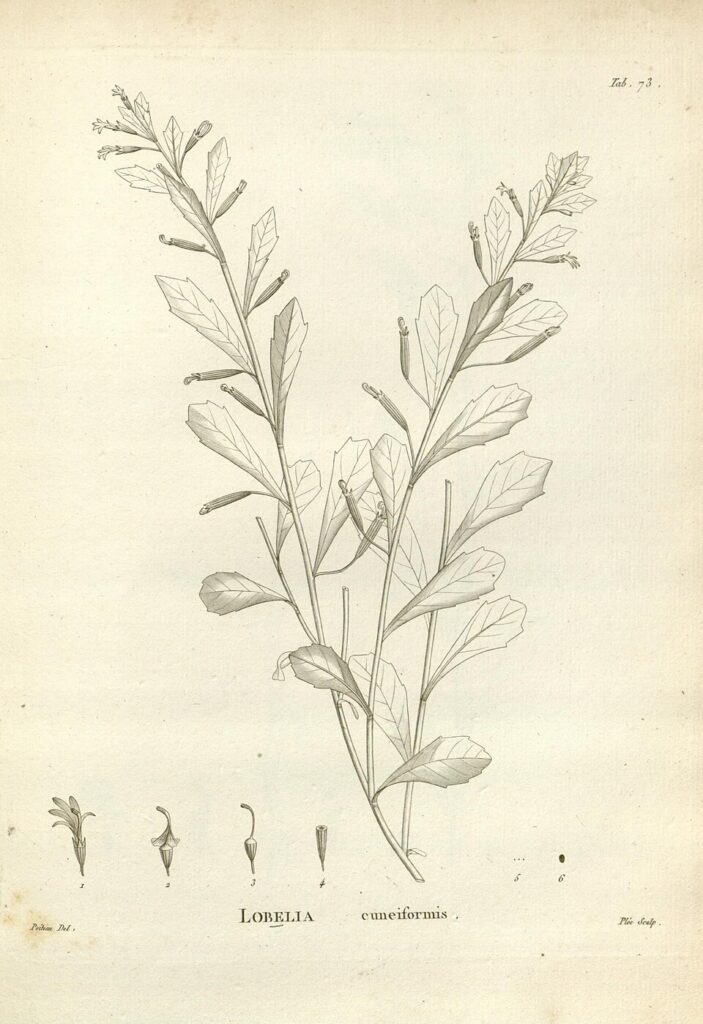
A name with history: Lobelia commemorates botanist Matthias de l’Obel; anceps refers to the two-edged stems. The historical plate shows its synonym Lobelia cuneiformis. Kew’s current classification places it in Trimeris as T. anceps; the familiar SANBI name is retained here.