Lampranthus emarginatus
Cluster-leaf brightfig · purple vygie
A low-growing vygie with jewel-bright purple flowers
This small succulent subshrub commonly grows to about 25 cm tall, branching into a low mound. Short shoots carry crowded, fleshy leaves that are grey-green, sometimes mottled, and often tipped with red. Their surface can feel slightly rough. These water-storing leaves help the plant endure the Cape’s dry summer conditions.
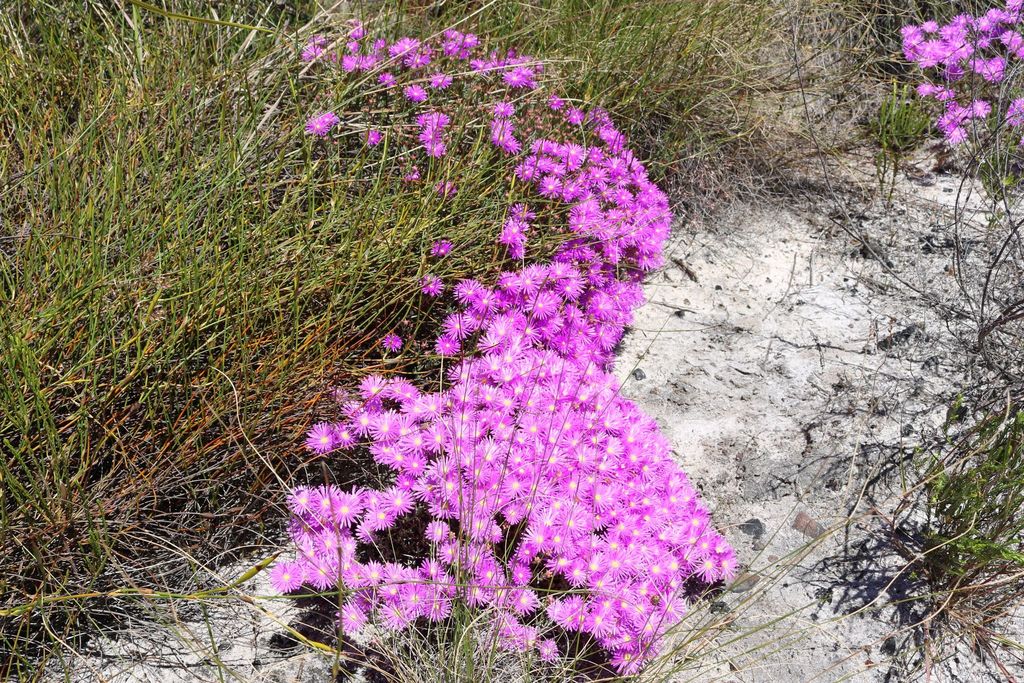
In spring, purple to magenta flowers transform the otherwise quiet foliage. Numerous narrow, glossy petals surround a pale or yellowish centre, creating the characteristic daisy-like appearance of a vygie. The flowers open most fully in sunshine and attract honeybees and flies. SANBI records October flowering; nearby Lakeside observations also show flowers in late November. A small clump can make considerable impact.
The species belongs to Aizoaceae, the ice-plant family. Its display is built from many slender petal-like structures rather than the broad petals of a rose. The contrast between these bright flowers, reddish stems and small succulent leaves is especially clear in the detailed photograph below.
Woody seed capsules provide another point of interest. As in many vygies, moisture opens the fruit and helps release seeds during rainy conditions, when establishment is more likely. This response links reproduction to the Cape’s irregular opportunities for germination rather than scattering every seed into dry ground.
It is endemic to South Africa’s south-western Cape. SANBI describes sandy slopes between Langebaan and Gordon’s Bay, and assesses it as Least Concern. Local flowering records on the Lakeside–Silvermine ascent support its occurrence on open sandstone slopes. Within the Park, sunny ground with reliable drainage matters more than a broad vegetation label: saturated soil and persistent shade are poor choices.
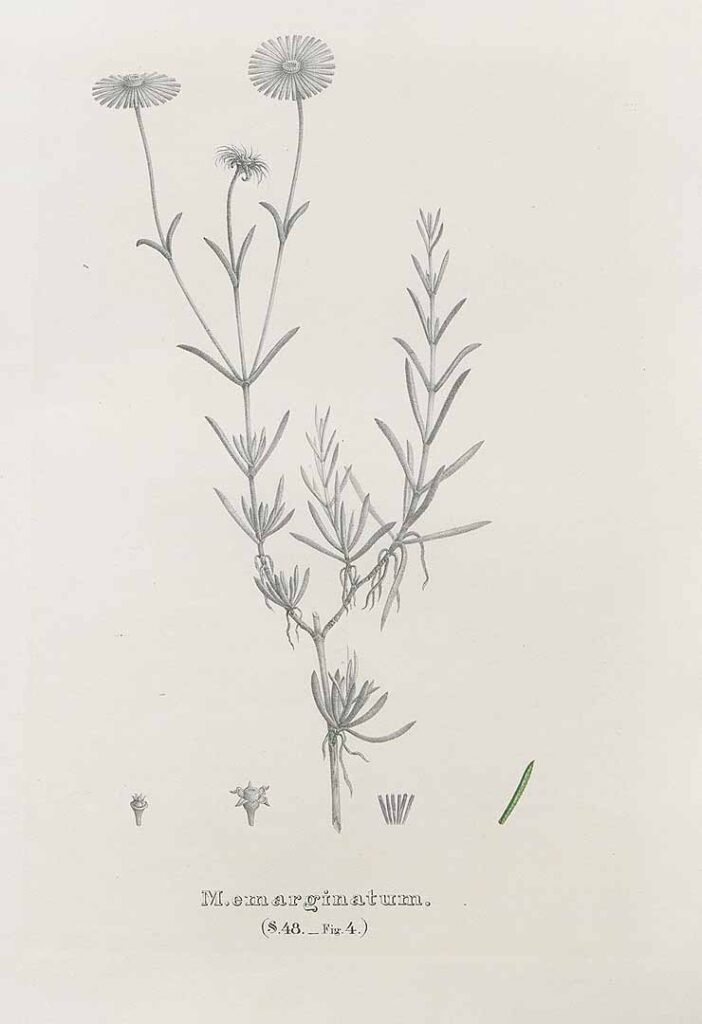
A name with history: Linnaeus named it Mesembryanthemum emarginatum in 1762; N. E. Brown transferred it to Lampranthus in 1930. The genus means “shining flower”. Salm-Dyck’s 1849 plate below records the plant under its earlier name.