Juncus lomatophyllus
Leafy rush · fringe-leaved rush · aalwynbiesie
A broad-leaved rush made for permanently wet ground
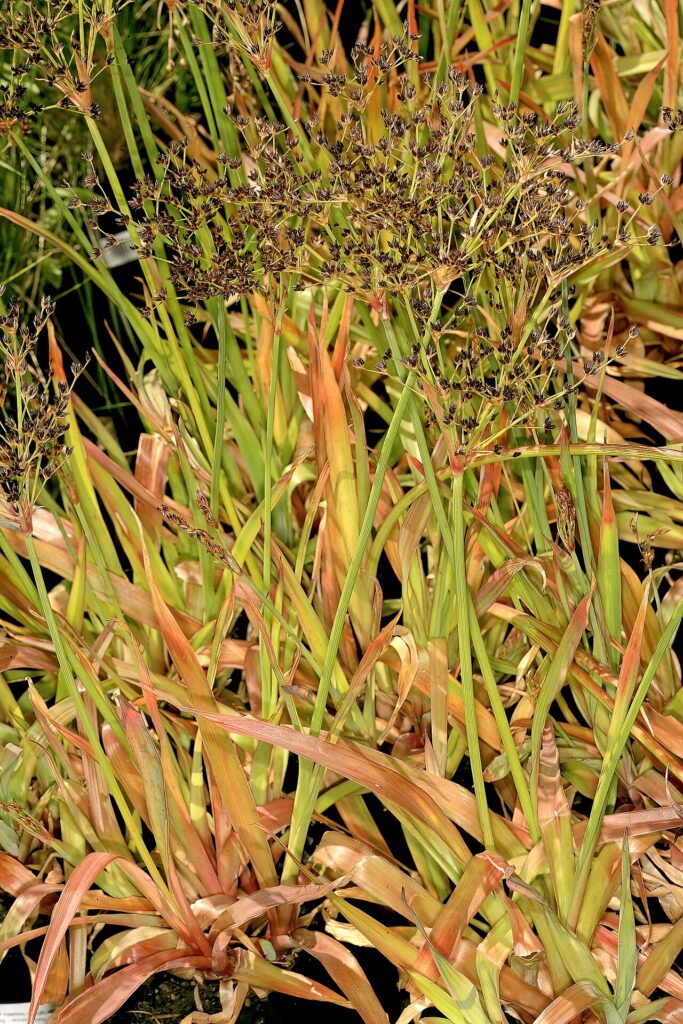
Juncus lomatophyllus is an unusual rush with broad, flat, soft leaves rather than the wiry, cylindrical foliage associated with many familiar species. Its basal rosettes carry blades about 6–15 mm wide, tapering to fine points. The leaves are green, sometimes tinged red along the margins or tips, with reddish sheaths at their bases.
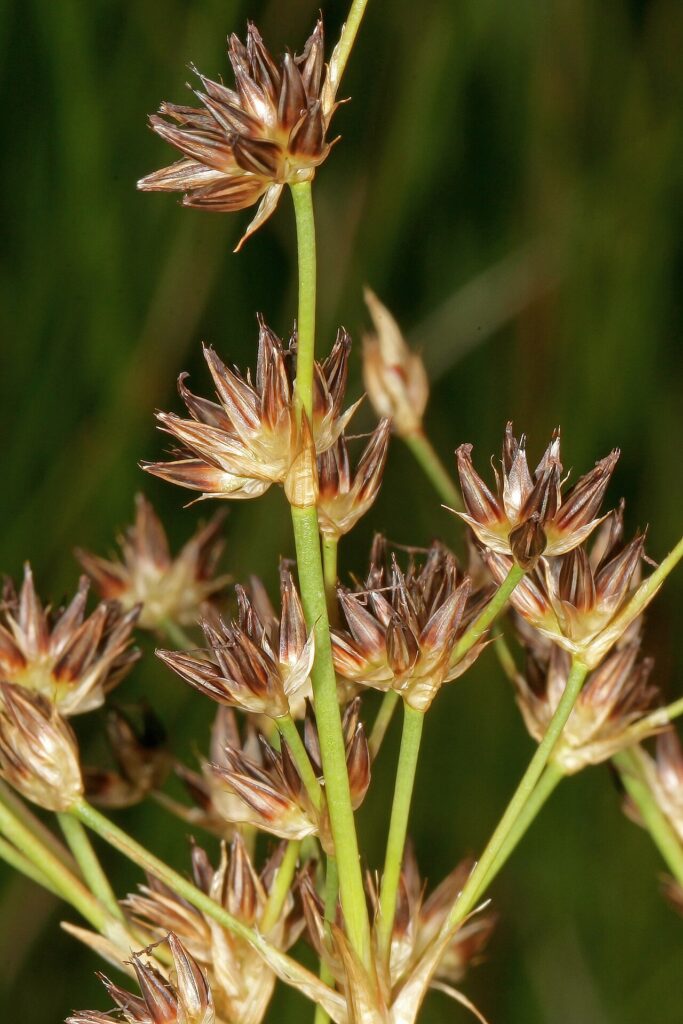
Flowering stems usually reach 15–75 cm and rise above the leaves. Their spreading branches carry small clusters of brown flowers, most noticeable in summer. Each flower has six dry, scale-like segments rather than showy petals. Dark capsules mature among these pointed coverings, making the fruiting heads particularly attractive when viewed closely.
Leafy shoots attached to creeping stems allow a plant to expand into substantial clumps or low swards. This vegetative growth makes division straightforward and explains how surviving plants can supply material for restoration. Where space is limited, vigorous growth also means that neighbouring, slower-growing wetland plants may need room kept around them.
It grows beside freshwater streams, in marshes and seepages, and around pools where moisture remains dependable. CapeNature describes it forming a distinct zone around water margins. Bolus Herbarium records from Table Mountain, Skeleton Ravine and Grootkop link it to the Peninsula’s mountain landscape, including wet watercourses within sandstone fynbos. It is a plant of the wet pockets, not the dry shrubland between them.
Indigenous to southern Africa from Zimbabwe southwards, it is assessed as Least Concern. Its broad foliage adds a different texture among fine-leaved sedges and rushes, while dense waterside growth provides shelter for small organisms.
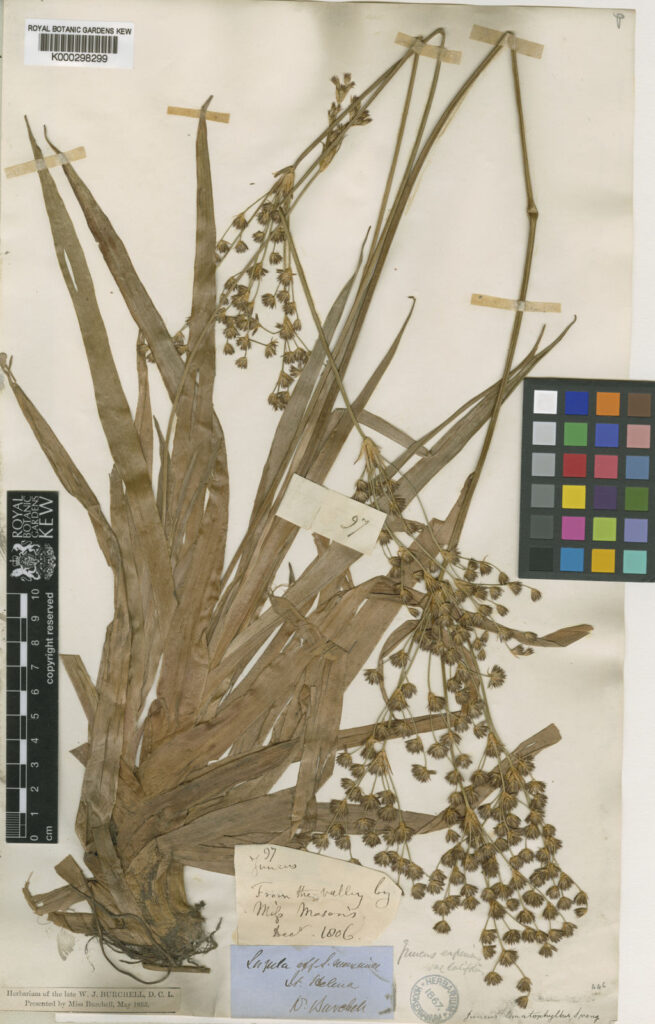
A name with history: Kurt Sprengel published Juncus lomatophyllus in 1821. Juncus is the Latin name for a rush. The complete Kew specimen below bears an 1806 collection label, preserving its broad leaves and branched flowerheads.