Imperata cylindrica
Cotton-wool grass · silver-spike grass · cogon grass
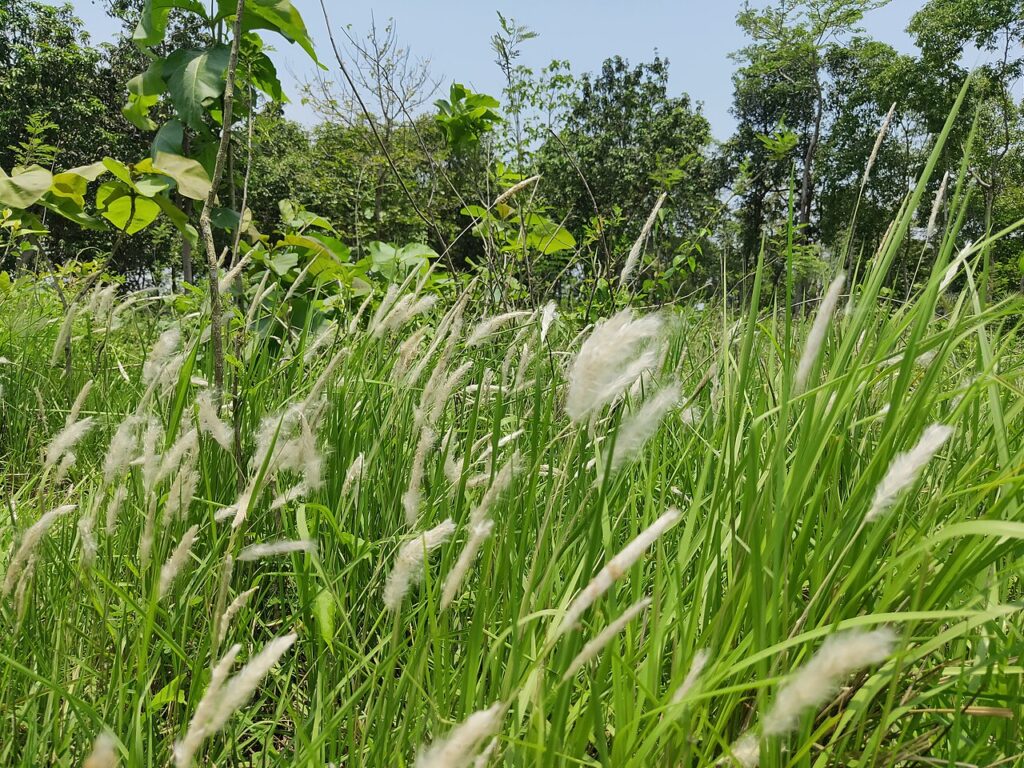
Silver plumes above a powerful network of rhizomes
Imperata cylindrica is a perennial grass that builds colonies through spreading underground stems called rhizomes. Usually about 30–120 cm tall, it has stiff, pointed leaves with rough margins. A useful identification feature is the pale midrib, often set slightly to one side of the blade rather than exactly in the centre.
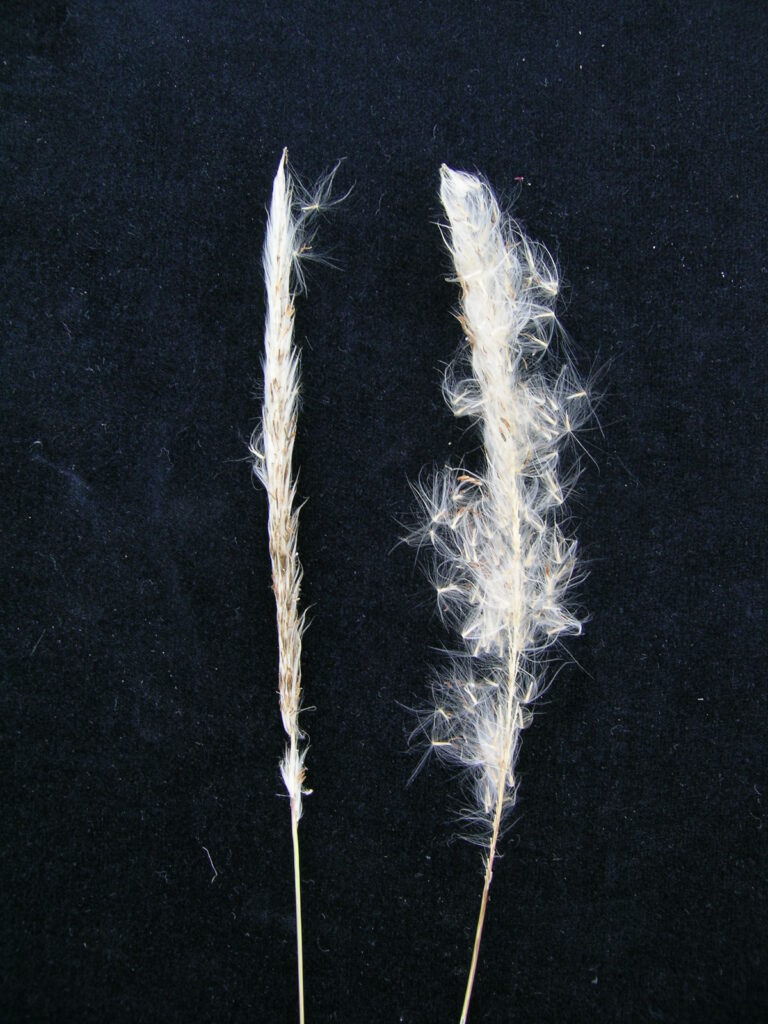
The cylindrical flowerheads seem almost luminous when backlit. Their cotton-wool appearance comes from silky hairs surrounding tiny flowers; later these hairs carry the seeds on the wind. Flowering can occur over much of the year, with SANBI recording August to June. Fresh foliage is green and may become reddish in cooler weather.
Locally, this is chiefly a plant of moist ground: freshwater wetland edges, seasonal depressions and damp dune hollows within strandveld. These small wet patches can differ markedly from the drier vegetation around them. Soil moisture is therefore a better guide to its preferred position than the name of the surrounding vegetation alone.
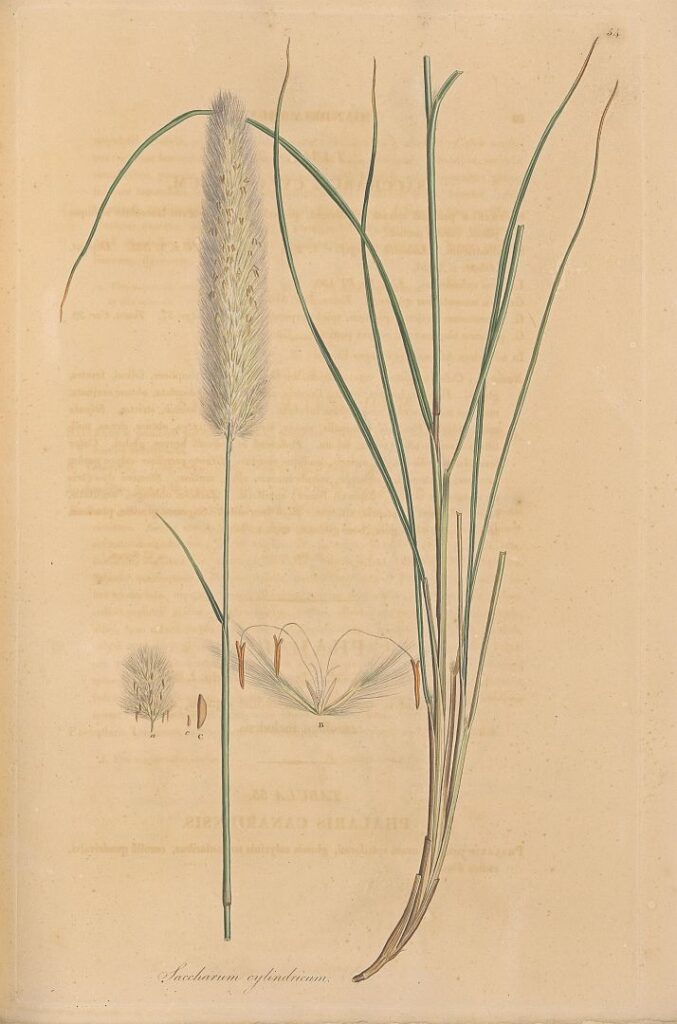
Its rhizomes anchor soil and allow vigorous recovery after disturbance or fire. The same persistence creates difficulties when colonies expand into neighbouring planting. Tough leaves offer poor grazing, although the plant has long supplied material for thatching, ropes and paper. Small pieces of rhizome moved with soil can establish new colonies. The historical plate below shows how early botanists illustrated both the conspicuous plume and the much smaller flowering structures needed to distinguish similar grasses.
The grass is indigenous to South Africa and occurs in every province; its national conservation assessment is Least Concern. Beyond its native range, it has become a serious invasive weed in many countries. Its value in local restoration consequently needs to be balanced with careful management of spreading colonies.
A name with history: Imperata honours Ferrante Imperato, the Italian naturalist. Cylindrica describes the plume’s shape. Linnaeus named it Lagurus cylindricus in 1759; Raeuschel published the present combination in 1797.