Helichrysum teretifolium
Dune scrub everlasting · heath-leaf strawflower
A fine-leaved everlasting made for wind and sand
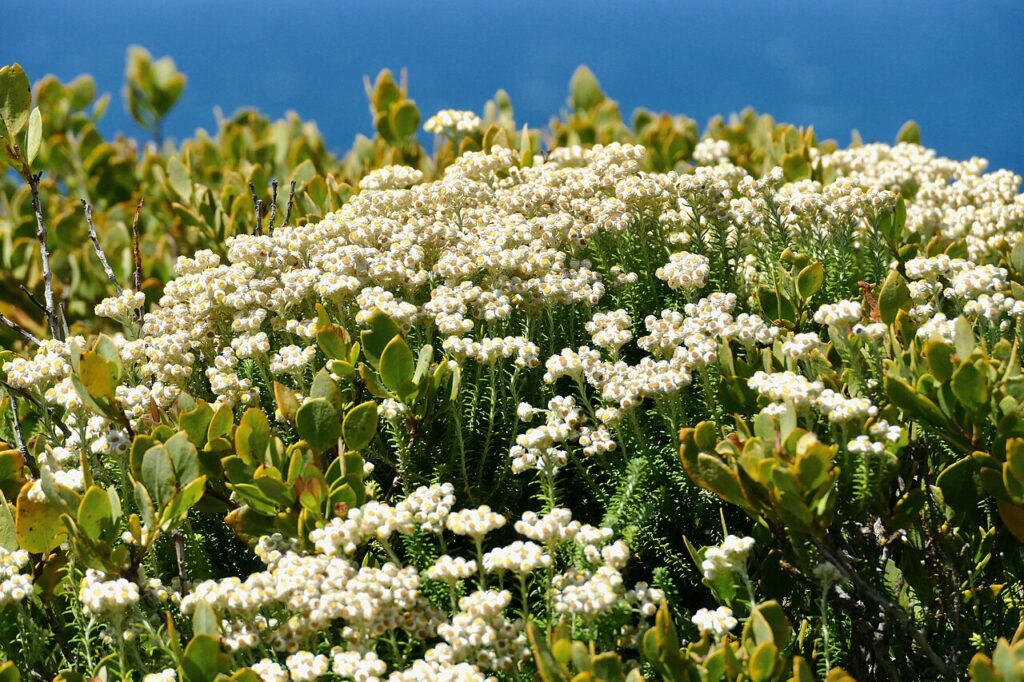
Helichrysum teretifolium is an evergreen shrublet, usually about 20–30 cm tall, sometimes reaching 50 cm. Much-branched stems form compact cushions or loosely spreading patches. Thin branchlets are lightly white-felted and closely clothed with narrow leaves to their tips, giving the plant a delicate, heath-like appearance.
The stiff leaves are only 3–15 mm long. Their margins roll underneath, creating an almost needle-like outline, while hooked tips spread from the stems. The upper surface becomes smooth and green; the sheltered underside remains white and woolly. These small, rolled leaves help conserve moisture in exposed conditions.
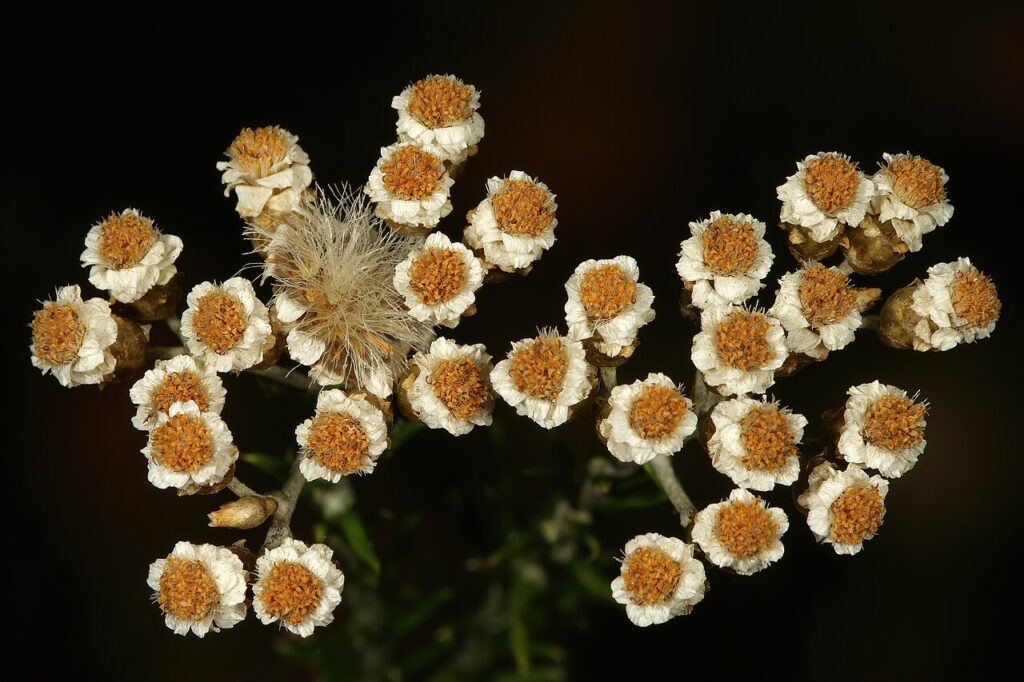
Between July and November, clusters of bell-shaped flowerheads appear at branch tips. Tiny yellow florets sit within opaque cream-white, papery bracts, occasionally tinged pink. The showy bracts are modified leaves rather than petals. Their dry texture explains why the heads remain recognisable after flowering.
Older heads become fluffy as the bristly pappus opens around the tiny fruits. Fresh flowers and seed heads may share a plant, revealing two stages of its life cycle. The contrasting forms are particularly clear in the photograph below.
This South African endemic ranges from Piketberg to Cape Agulhas and eastwards to Durban. It occupies stabilised coastal dunes, sandy flats and mountain slopes, sometimes forming dense stands. Coastal strandveld is particularly relevant locally; it also occurs in Peninsula fynbos, including disturbed granite-fynbos ground. Herbarium collections place it above Camps Bay and on Table Mountain, linking its wider distribution to familiar landscapes of the Cape Peninsula. Widespread and not declining, it is assessed as Least Concern.
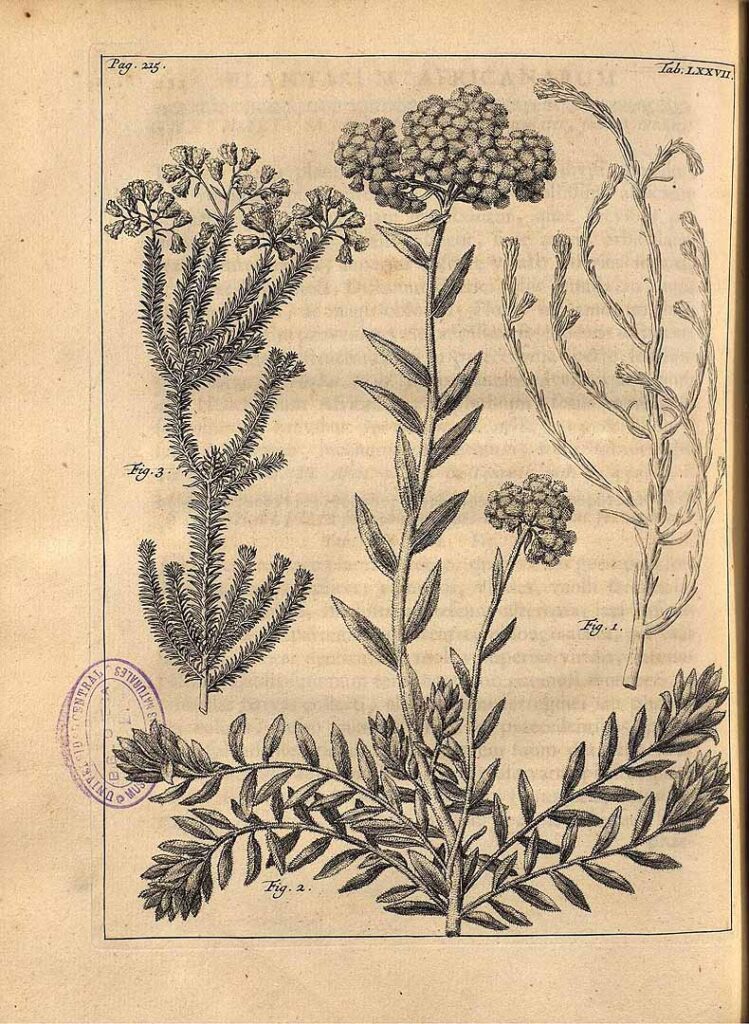
A name with history: Teretifolium refers to the slender, rounded-looking leaves. Linnaeus named it Gnaphalium teretifolium in 1753; David Don’s name in Helichrysum appeared in Robert Sweet’s publication in 1826. The engraving below is older: Johannes Burman’s plate 77 (1739) shows this species as figure 3 on the left, alongside two other plants.