Helichrysum odoratissimum
Most fragrant everlasting · kooigoed · imphepho
The fynbos everlasting whose fragrance lives up to its name
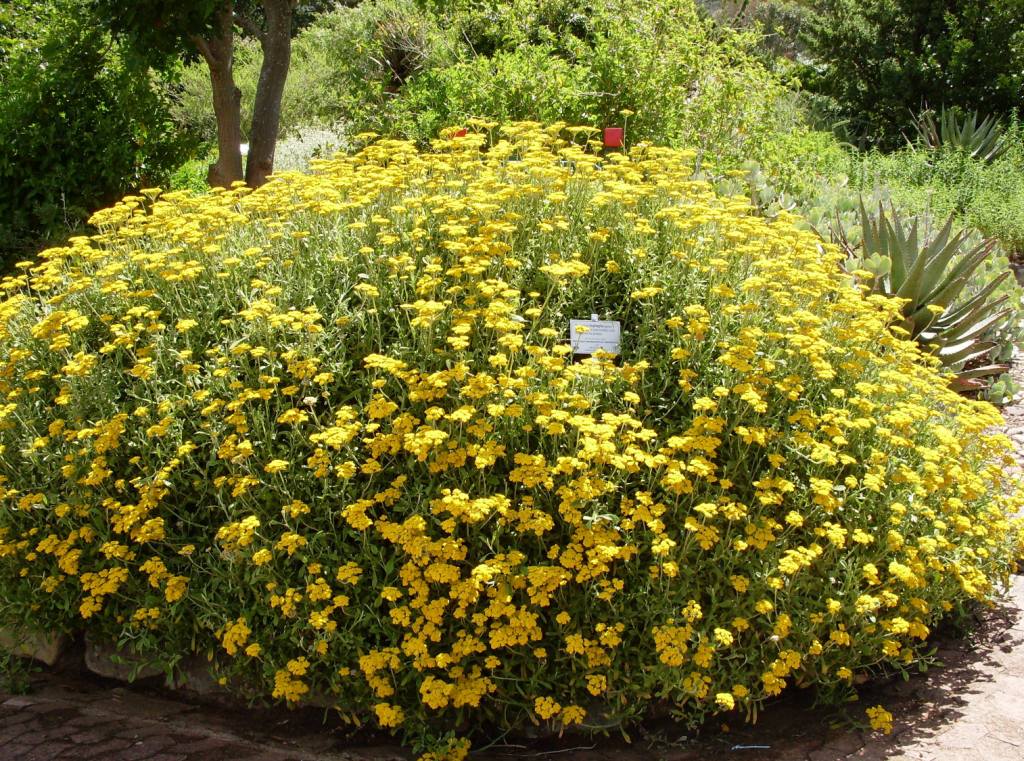
Helichrysum odoratissimum is a strongly aromatic, much-branched perennial, woody at the base and usually about 50 cm tall. Slender stems carry small grey-green to silvery leaves, often woolly beneath; forms elsewhere in Africa may grow taller or scramble.
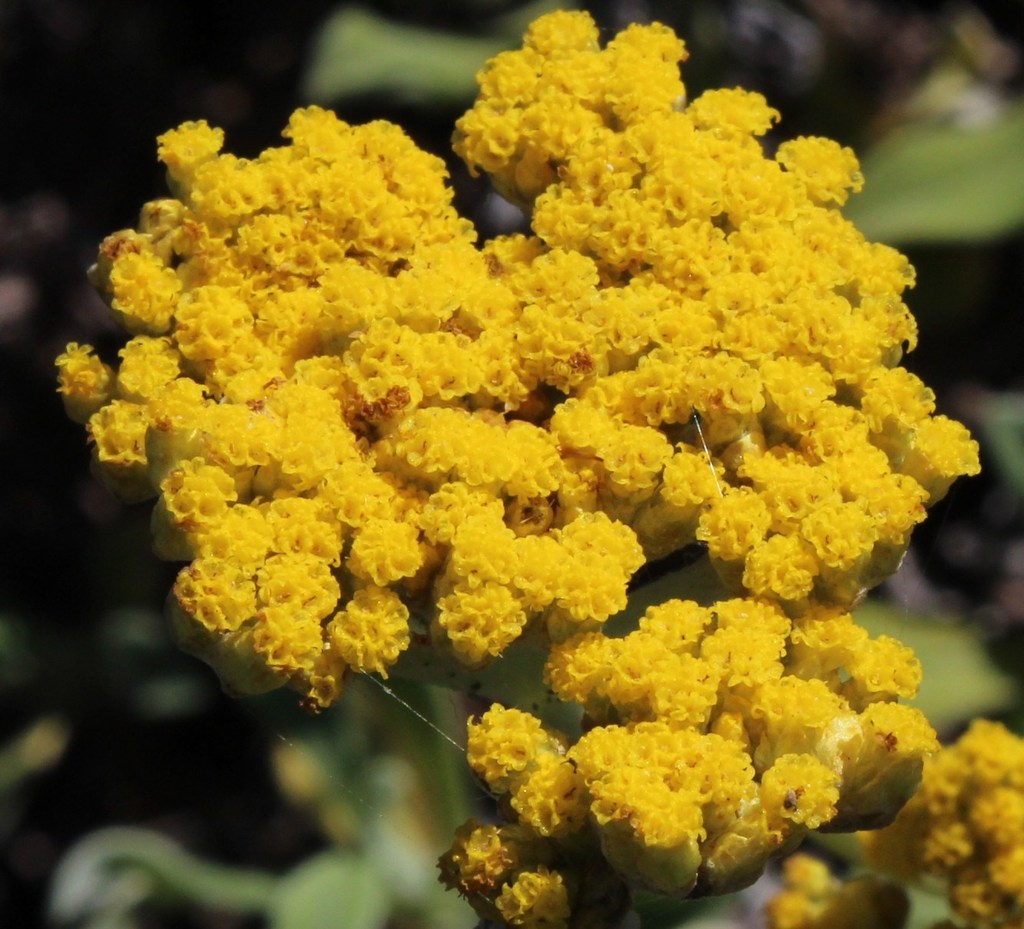
Numerous tiny flowerheads form dense golden clusters at the branch tips. Bright yellow inner bracts surround the florets, while outer bracts are browner and woollier. These papery structures retain their colour and shape after flowering.
In the southwestern Cape, flowering occurs mainly from August to December, although some flowering may occur at other times. Touching the leaves or warming them in sunlight releases their aromatic oils, making the plant especially rewarding beside a path.
Widespread in tropical and southern Africa, it occupies grassy and rocky slopes, mountain fynbos and bare pathside banks. Its quick growth provides cover while slower shrubs establish. Garden plants are often short-lived and replaced every two or three years. Renewing a group as the planting matures maintains colour and cover, while allowing space for the longer-lived woody fynbos plants around it.
The leaves often clasp the stem, their bases extending downward as narrow wings. Leaf size and woolliness vary across its range. Look at these features together with the densely clustered heads: fragrance alone is insufficient for identification.
Traditionally used as perfume, incense and insect repellent, it also features in southern African healing practices. Imphepho is shared by several aromatic helichrysums, so the common name does not identify this species uniquely.
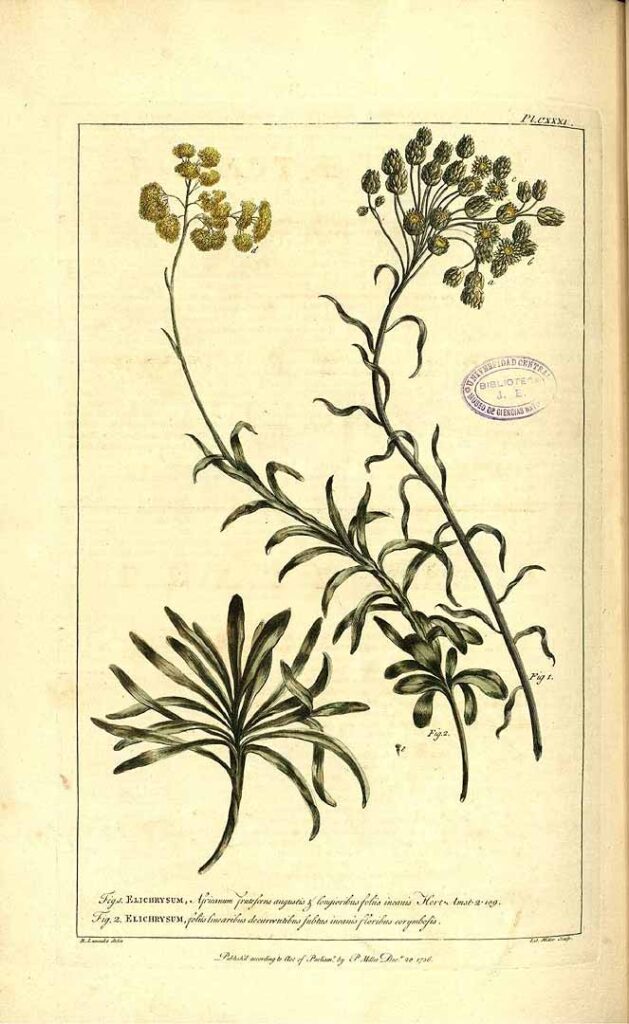
A name with history: Helichrysum means sun and gold; odoratissimum means “most fragrant”. Linnaeus named it Gnaphalium odoratissimum in 1753; Robert Sweet transferred it to Helichrysum in 1826. The hand-coloured engraving below is from Philip Miller’s Figures of plants (1755–1760), plate 131. Figure 2 at left shows this species; figure 1 at right depicts H. orientale. The complete plate preserves their original botanical comparison, showing how the leaves and flower clusters differ between these two related everlastings.