Ficinia nodosa
Knotted club-rush · knobby club-rush · vleibiesie
A coastal survivor with a distinctive knob
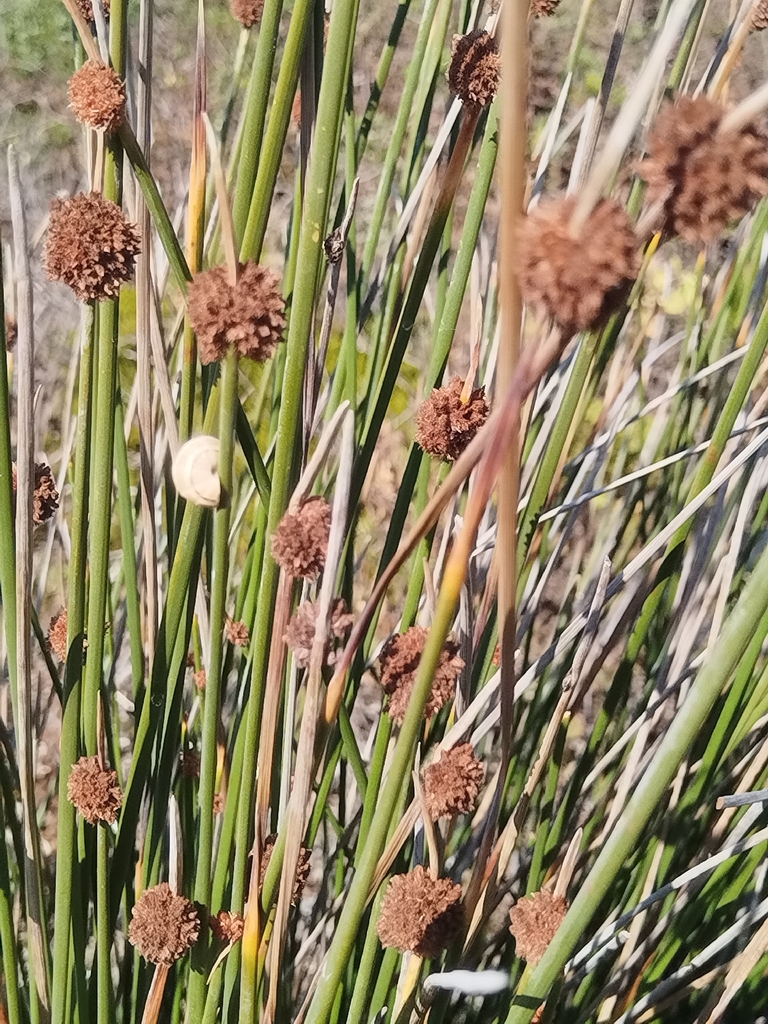
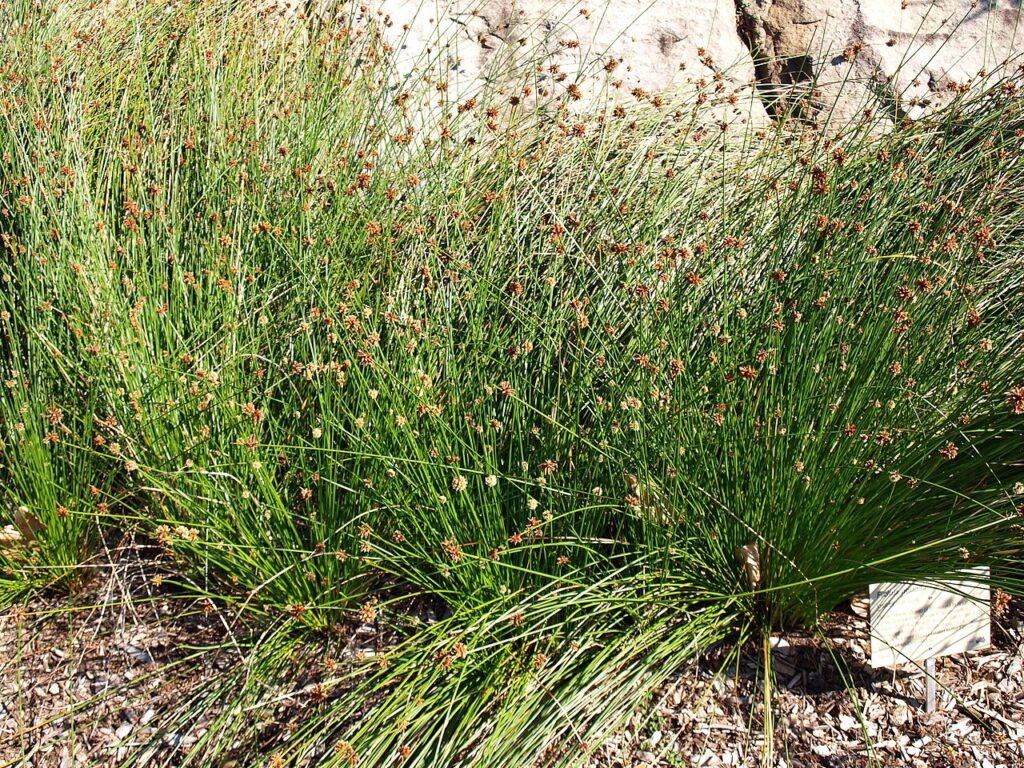
Ficinia nodosa is a robust, evergreen sedge that forms dense clumps of smooth, wiry green stems. These are commonly 30–100 cm tall, although the species is extremely variable. The stems rise from short, woody rhizomes, helping the plant hold loose soil and recover after wind, salt spray and periods of drought.
Near the tip of each stem is a rounded or half-rounded brown flower head, usually 7–20 mm across. A stiff green bract continues beyond it, making the head look like a knot tied to one side of the stem. The head contains many spikelets and numerous tiny wind-pollinated flowers rather than showy petals.
Flowering is strongest from spring into early summer, but the dark seed heads often remain for many months and may be visible throughout the year. Each flower can produce a tiny, dark, shiny nutlet. The apparent stem above the head is a bract: the true flowering stem ends where the spikelets are clustered.
This is one of the most widely travelled members of Ficinia. It occurs naturally in southern Africa, Australia, New Zealand and several southern-ocean islands, and the Juan Fernández Islands off Chile. It thrives on coastal dunes, sandy flats, lake margins, saltmarshes and seasonally wet ground. Its rhizomes and dense roots help bind loose sand. It bridges the transition between damp hollows and drier coastal ground, rather than being restricted to permanently flooded sites.
Although it resembles a rush, it belongs to the sedge family, Cyperaceae. Its leaves are reduced to brown sheaths around the stem bases, so the green stems provide most of its visible foliage. Examine the base of a tuft as well as the flower heads: these sheaths and the woody rhizome help explain its firm, densely clustered habit.
Its value in local restoration extends beyond the Park. In 2021 it was named among the indigenous plants intended for wetland restoration beside Promenade Road on the western edge of Zandvlei. That nearby project illustrates its role in rebuilding the vegetation of seasonal coastal wetlands. The habitat box highlights the two Park vegetation types most relevant to this ecology; it does not imply that the species is limited to those types across its wider range.
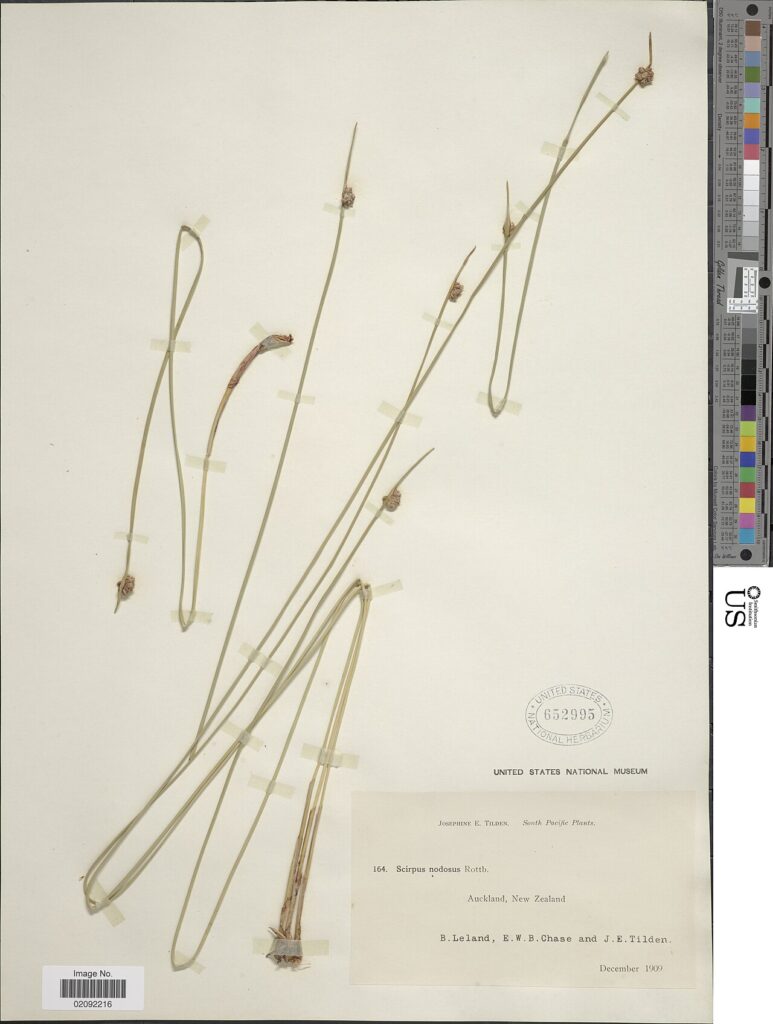
A name with history: Christen Friis Rottbøll described it as Scirpus nodosus in 1773. Many older books and specimen labels use Isolepis nodosa; Goetghebeur, Muasya and Simpson published the accepted Ficinia combination in 2000. The Latin nodosa means “knotted”, a memorable description of its heads. The genus honours the German botanist Heinrich David August Ficinus. The uncropped historical sheet below, collected in Auckland in December 1909, shows how the same distinctive sedge was documented far from the Cape. South Africa’s Red List assesses it as Least Concern.