Ficinia capitella
Blackhead clubrush
A neat tuft crowned by a dark little head
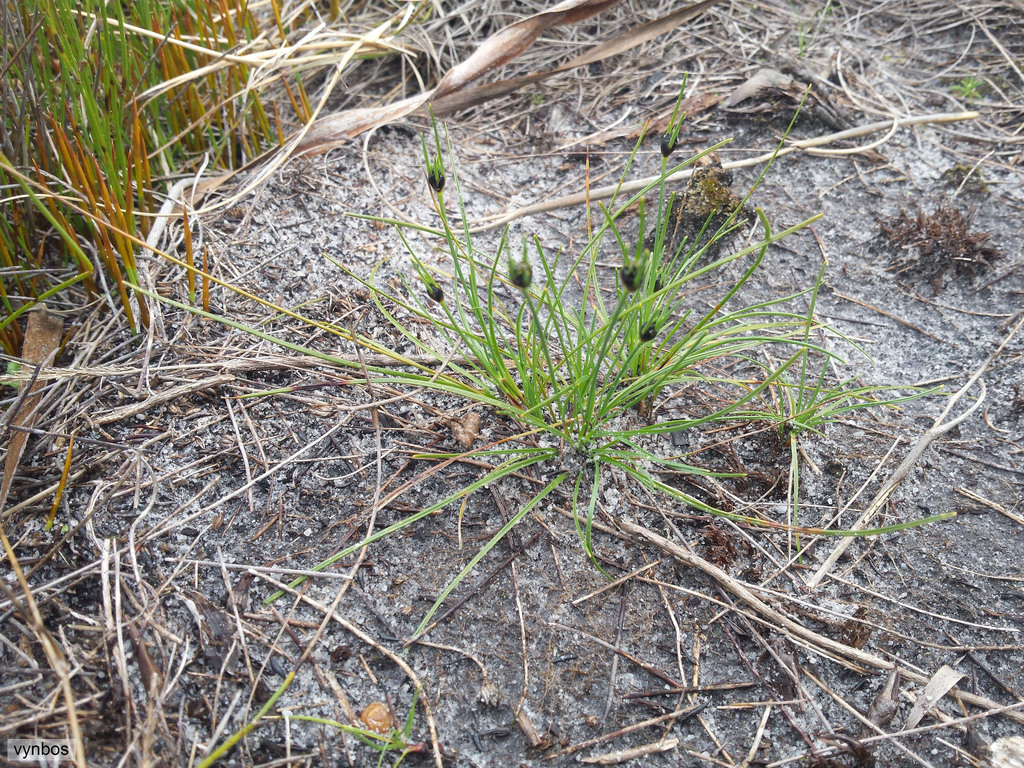
Ficinia capitella is a compact, perennial sedge that produces many slender stems in a tight tuft. The Cape flora gives a usual height of 5–25 cm, although taller plants are recorded. Its underground shoots are packed closely together, giving the plant a neat, upright form rather than a widely spreading one. Fine leaves and papery basal sheaths add to its delicate appearance.
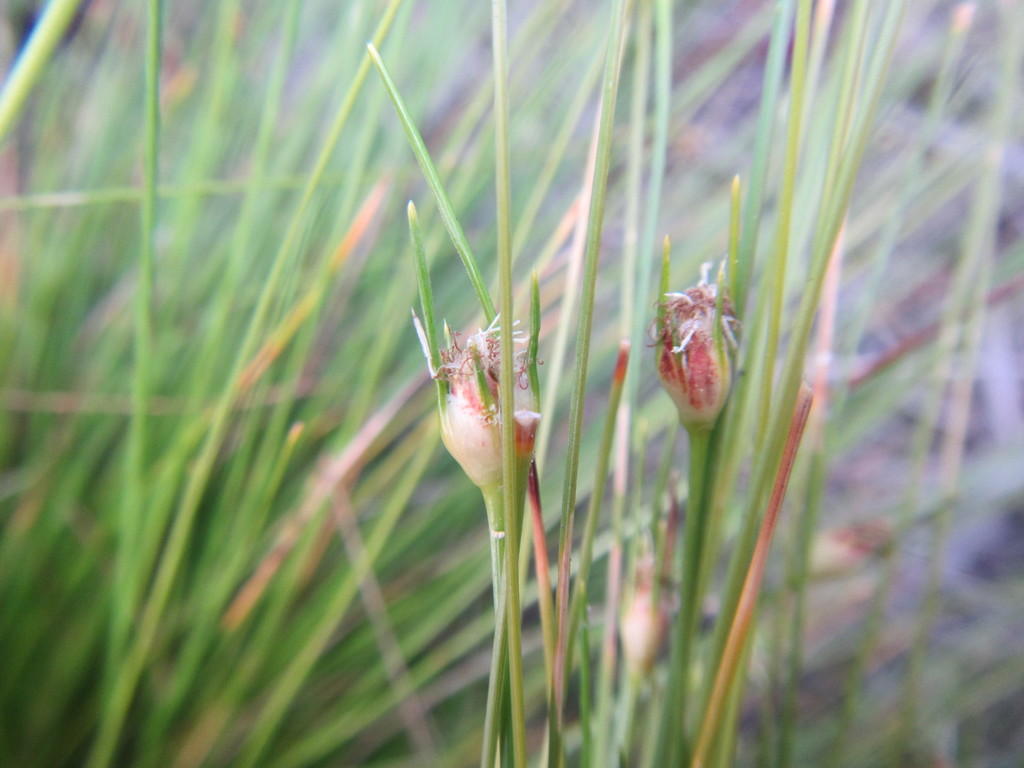
At the tip of each fertile stem sits a small, dense head, roughly 4–8 mm across. Reddish-brown spikelets are partly enclosed by bracts with glossy dark bases and narrow, leaf-like tips; the colour of the head changes as it develops. These are not single flowers: each head contains many tiny flowers protected by overlapping scales called glumes. They rely largely on the wind to move their pollen, so there is no need for bright petals or nectar.
The compact, button-like head and its dark bract bases explain both names. Capitella comes from Latin for “little head”, while “blackhead clubrush” describes the feature that is easiest to notice in the field. The compact head also distinguishes the species from many related sedges with looser, more branched flower clusters.
Like other members of Ficinia, it produces a tiny dry nutlet with a collar-like structure at its base—the gynophore. This minute botanical detail is one of the best clues to the genus. The plant is part of the exceptionally rich sedge flora of the Cape Peninsula. Its stems are ridged but round in cross-section, a useful reminder that the familiar rule “sedges have edges” has exceptions.
It is a South African endemic, with the national Red List recording the Western Cape and assessing it as Least Concern with a stable population. Herbarium records help reveal the variety of places it occupies. At Muizenberg’s Capricorn site it was collected in sunny, well-drained calcrete sands in strandveld; elsewhere it has been recorded on mountain slopes and in sandy spots beside streams. Local moisture matters more than assuming every sedge needs permanent wet ground.
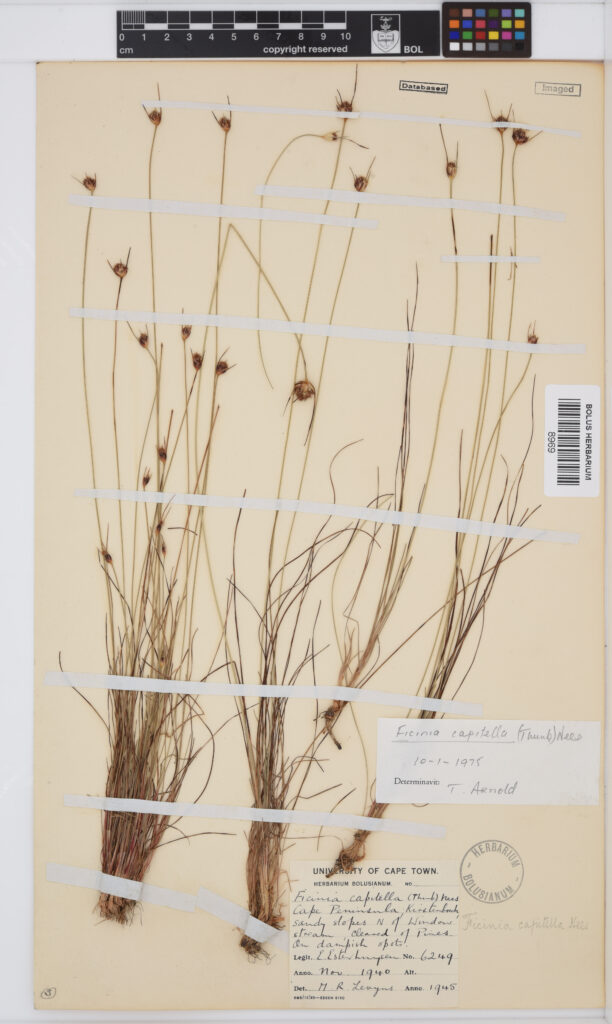
A name with history: Carl Peter Thunberg first published it as Schoenus capitellum in 1794; Christian Gottfried Daniel Nees von Esenbeck transferred it to Ficinia in 1835. The historical sheet below was collected by Elsie Esterhuysen at Kirstenbosch in November 1940 (collector number 6249; BOL 8969). Her label records sandy slopes north of Window Stream, cleared of pines, in dampish spots. Margaret Rutherford Bryan Levyns identified it in 1945—a link between two influential women in Cape botany.