Falkia repens
Oortjies · little ears · white carpet
Little ears with a hidden trick
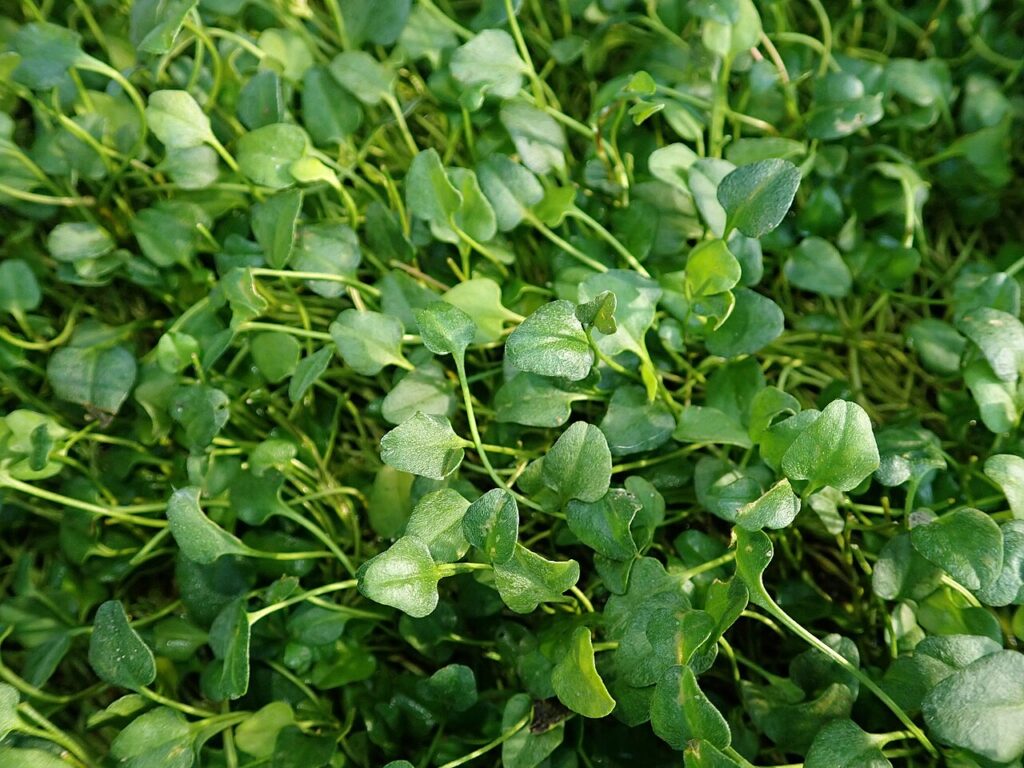
Falkia repens is a fast-growing perennial that creeps across the ground on slender stems, rooting wherever a node touches the soil. It usually stands only 5–10 cm high. Its glossy, slightly succulent leaves are rounded or heart-shaped and often cup upwards like tiny ears—hence the Afrikaans name oortjies.
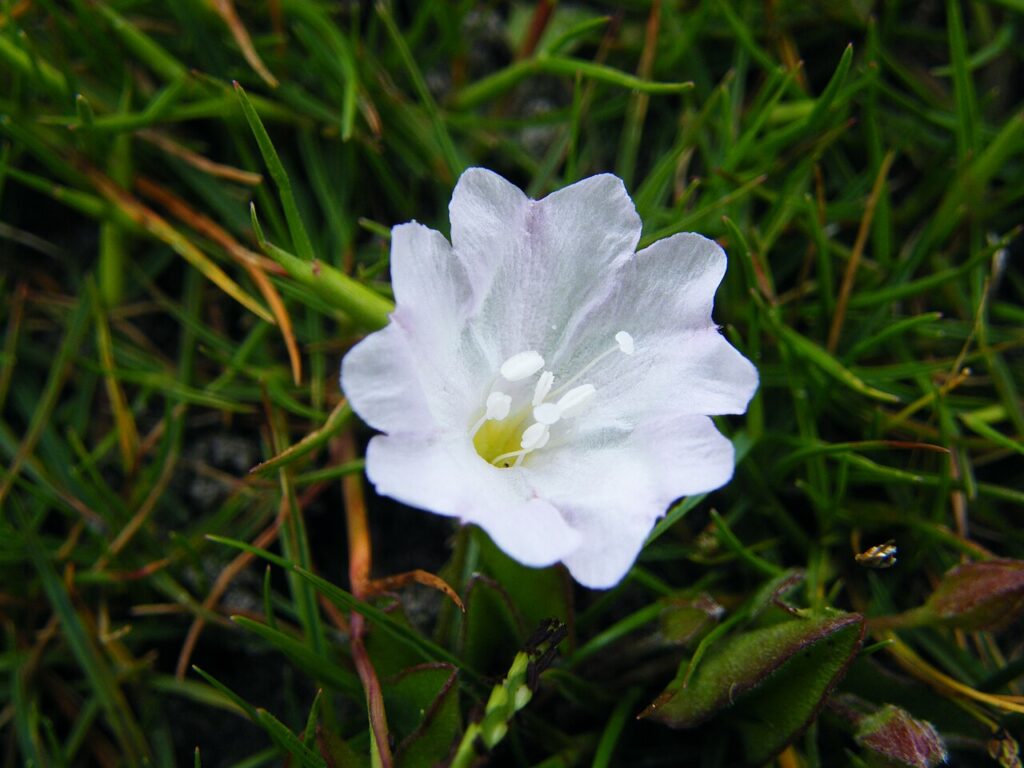
From late September to December, white or softly pink trumpet-shaped flowers open above the foliage. Though delicate in appearance, the plant tolerates sun or shade, heat, periods of drought and surprisingly poor soil. Bees and moths visit the flowers, making the carpet useful to small pollinators.
Without flowers, its rounded leaves can resemble those of Dichondra, another member of the morning-glory family. The conspicuous trumpet-shaped flowers are a much better clue to its identity. To see the creeping habit, trace a stem across the mat and look for the points where it has rooted: each rooted section can help the plant occupy a new patch of ground.
Its most remarkable feature appears after flowering. The flower stalk bends down and pushes the developing fruit into the soil. The ripe fruit remains enclosed by the protective calyx and matures underground—a strategy called geocarpy. It places the seeds directly into a sheltered site where the next generation may establish.
In the Western and Eastern Cape, it is especially associated with damp or temporarily flooded ground. Although SANBI’s local accounts describe it as a South African endemic, Kew’s current treatment gives a broader southern African range, including Namibia and Botswana; it is therefore safest not to describe it as confined to the Cape. Its ability to root as it spreads also helps bind exposed soil and quickly cover bare patches.
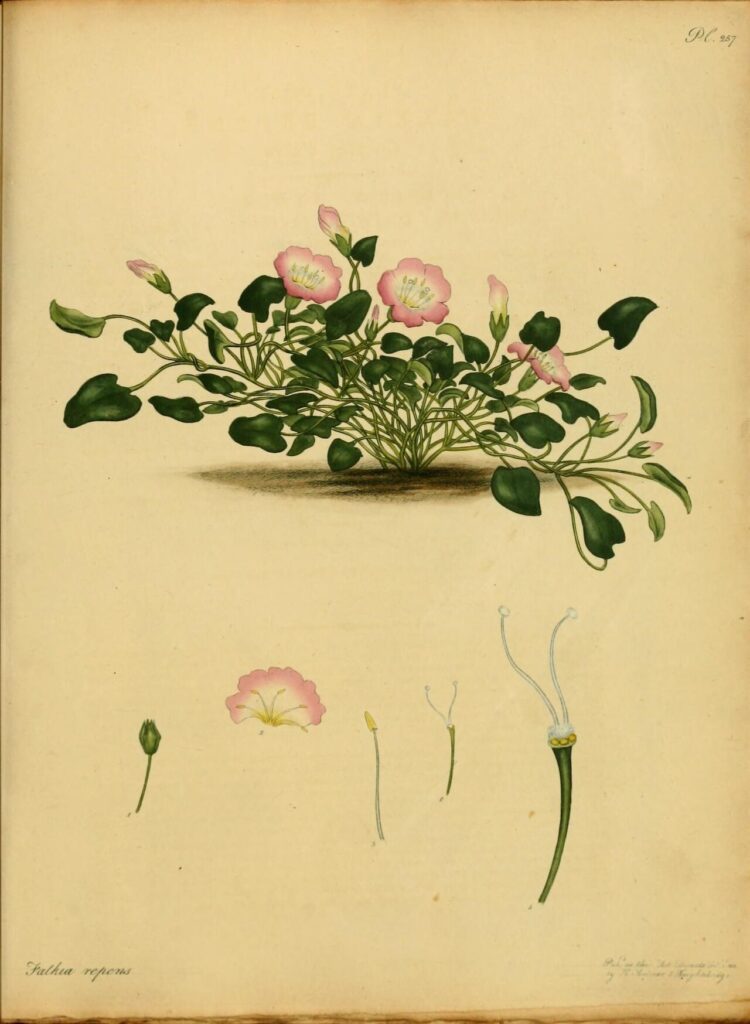
A name with history: Carl Peter Thunberg published the name in 1781. He named Falkia for Johan Peter Falck (1733–1774), a Swedish botanist, physician and explorer. The Latin repens means “creeping”, a perfect description of its habit. It is assessed as Least Concern. The historical plate below, published as “The Creeping Falkia” in Henry Charles Andrews’s Botanist’s Repository, records both its trailing habit and the structure of its pink flowers.