Eriocephalus africanus
Wild rosemary · kapokbos · Cape snowbush
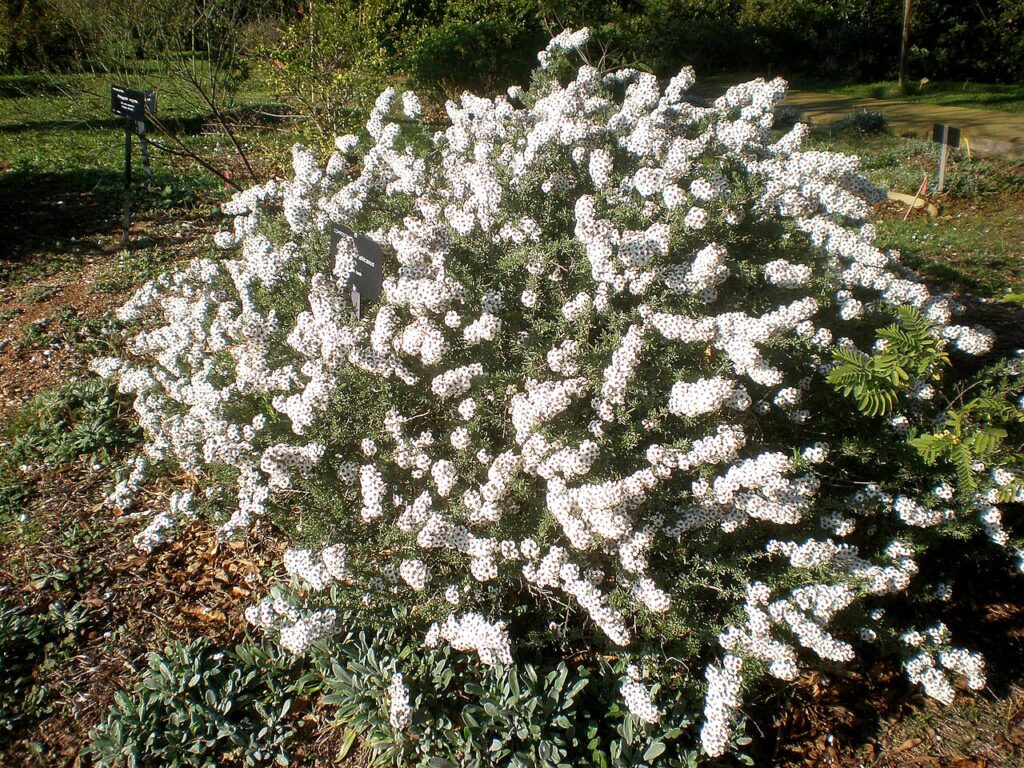
A silver shrub that turns to snow
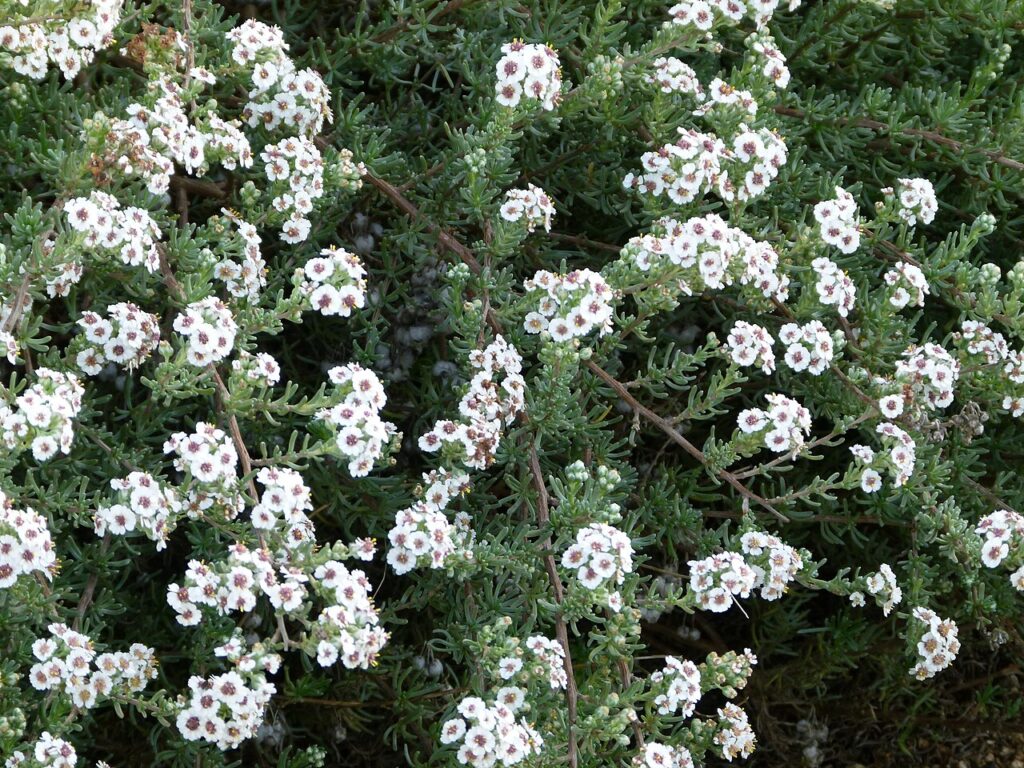
Eriocephalus africanus is a compact evergreen shrub, usually 0.5–1 m tall, with many slender branches and narrow, softly hairy grey-green leaves. Crush a leaf gently and it releases a strong, fresh scent often compared with rosemary or menthol—although this plant is not related to Mediterranean rosemary.
Its finest display is usually in winter. Each tiny flower head combines two or three white ray florets with purple disc florets at the centre. Bees visit eagerly on warm days. After flowering, long silky hairs expand around the fruits until the shrub appears dusted with cotton wool or snow. This explains kapokbos: in Afrikaans, kapok refers to snow.
The silvery hairs help reflect sunlight and reduce moisture loss. Below ground, an unusually deep taproot—reported to reach several metres—helps the shrub survive drought and recover after grazing. It grows naturally on clay and granite slopes from Namaqualand through the Western and Eastern Cape.
Coastal and inland plants can look surprisingly different. Coastal forms tend to have fleshier leaves, while plants from drier inland sites have thinner leaves. The small leaf size and dense silvery covering are useful clues to its drought tolerance. Even when it is not flowering, its foliage gives a pale contrast against darker shrubs.
The aromatic leaves have a long history in Cape households. They have been used sparingly to flavour food and in traditional preparations for coughs and colds; aromatic oils have also been used in toiletries. These historical uses should not be treated as medical advice.
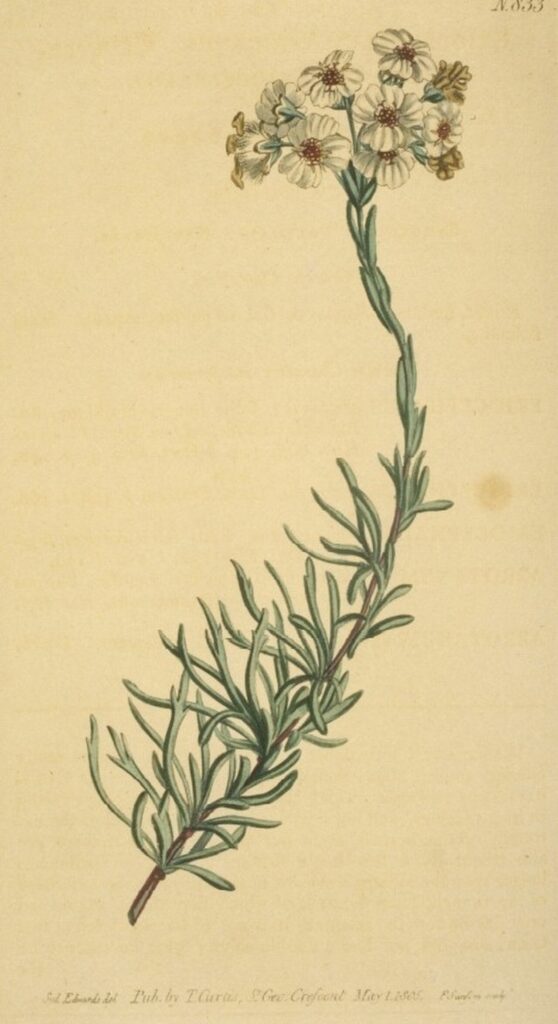
A name with history: Linnaeus published the name in Species Plantarum in 1753. Eriocephalus combines Greek words meaning “wool” and “head”, describing the fluffy fruits, while africanus means “African”. The species is common and not threatened. The uncropped 1805 plate by Sydenham Edwards below shows how its leafy flowering branches were recorded more than two centuries ago.