Elegia tectorum
Cape thatching reed · dakriet · Cape rush
Architecture, movement and Cape history
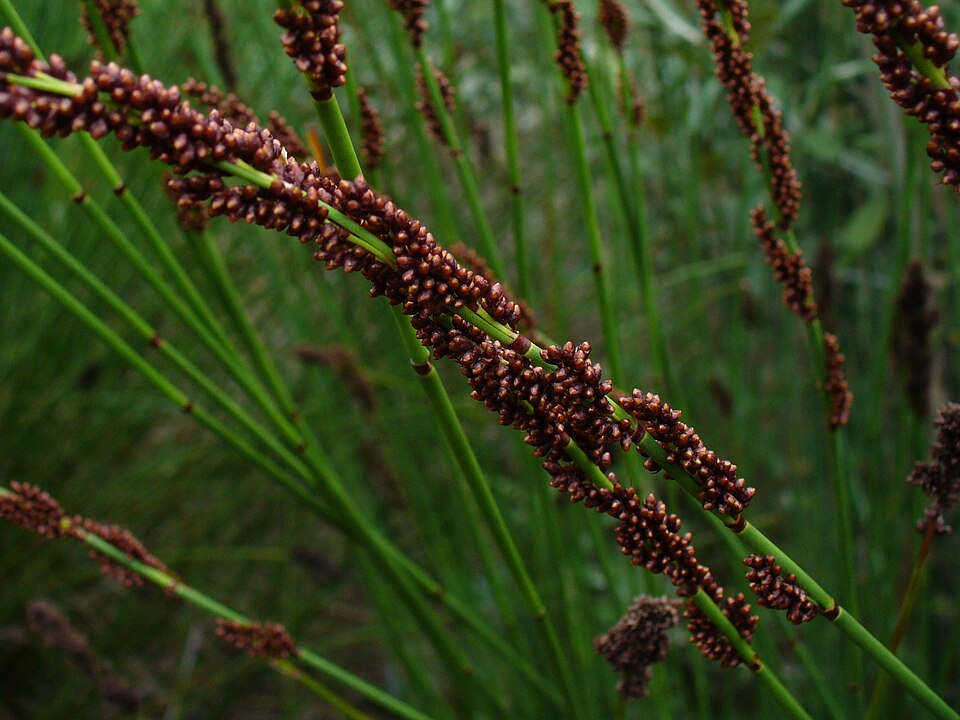
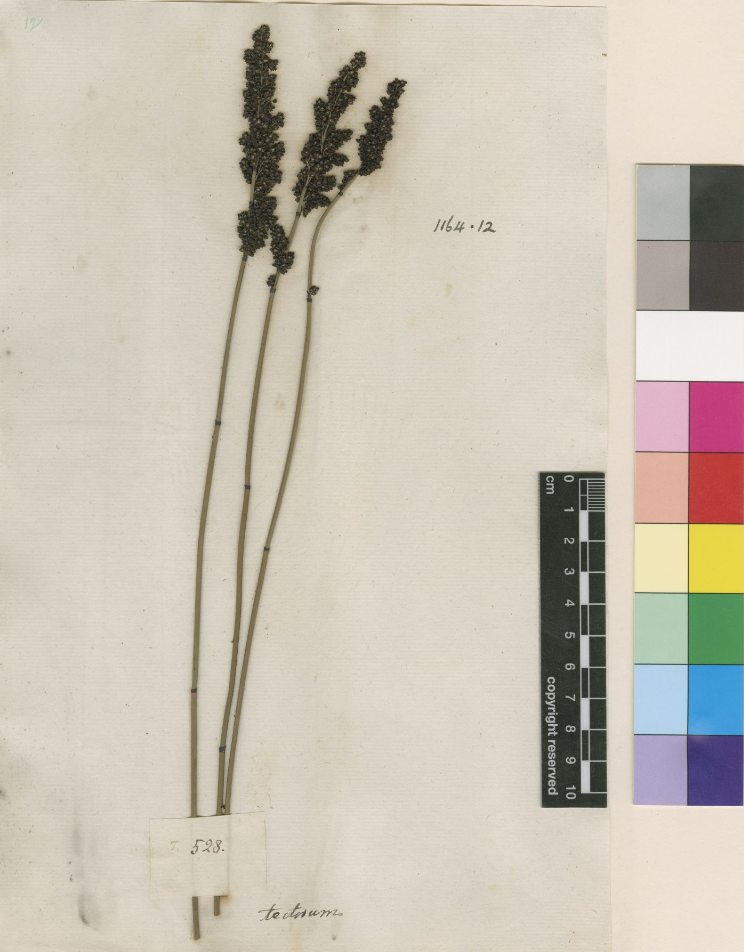
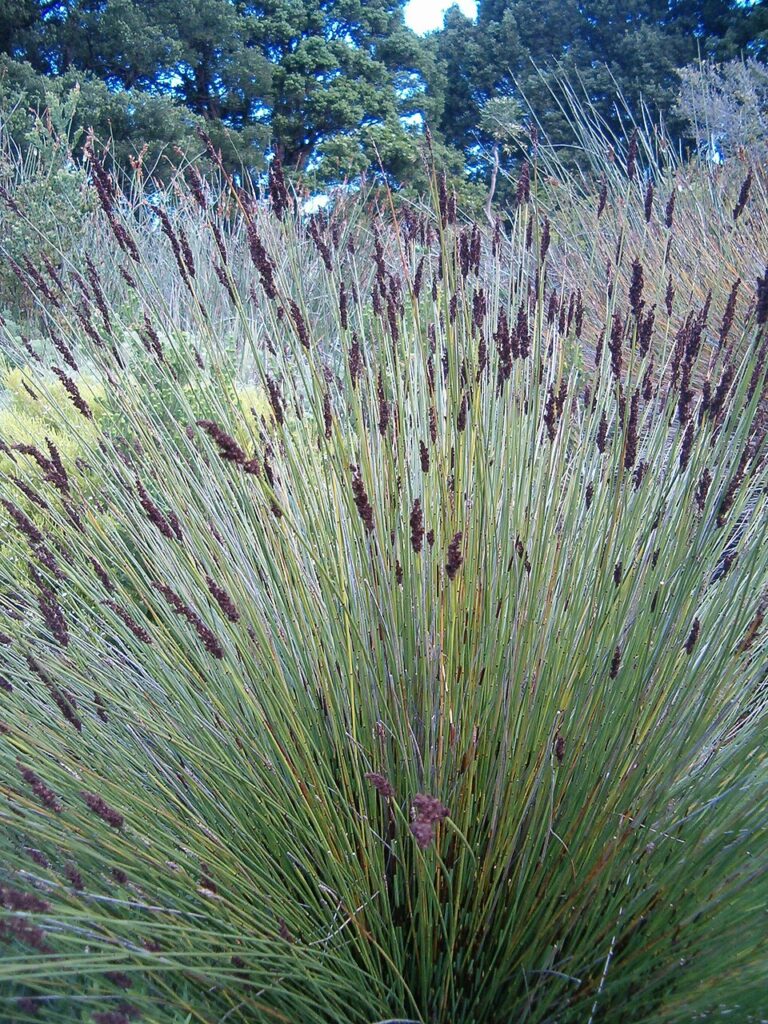
Elegia tectorum is an evergreen, tuft-forming restio with slender, dark green culms—the upright stems that perform the work normally done by leaves. A mature plant is usually around 1 m tall, sometimes reaching 1.5 m, and may arch outward to form a broad, symmetrical clump.
Look along each culm for papery brown sheaths. These eventually fall away, leaving dark rings at the nodes and giving the stems a subtly jointed appearance. In autumn, slender spikes of dark brown flowers rise above the clump. Male and female flowers occur on separate plants; female flowers are protected by attractive golden-brown bracts.
Restios are wind pollinated. Once fertilised, female plants produce small seeds that fall onto the sandy soil. In nature, smoke and temperature changes associated with fynbos fires help trigger germination, allowing a new generation to establish after fire.
The species is endemic to South Africa, ranging from the Bokkeveld Escarpment and Cape Flats eastwards to Port Elizabeth (Gqeberha). It favours coastal and lowland marshes and seeps, usually below 600 m, where deep sand stays moist. Its wetland preference is more informative than assigning it to every surrounding fynbos type. Although assessed as Least Concern, its population is decreasing: much Cape Flats habitat has been lost, and surviving patches still deserve protection.
A name with history: Linnaeus the Younger first described the species, and it was long known as Chondropetalum tectorum. Moline and H.P. Linder placed it in Elegia in 2005. The Latin tectorum means “of roofs”, recalling its use for thatching. Thunberg recorded Cape thatching practices in 1793; traditionally, the taller Malmesbury form was harvested only after its culms had matured for a full year.