Coleonema album
Cape May · white confetti bush · aasbossie
A cloud of fragrant white flowers
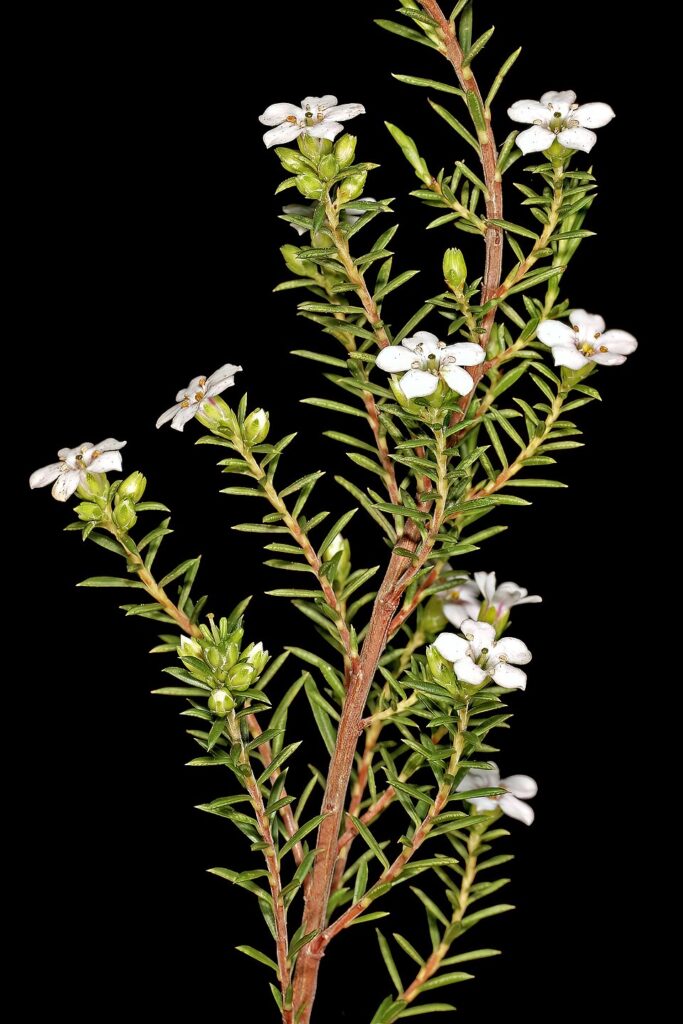
Coleonema album is an erect, evergreen shrub that branches from its base and may reach about 2 m. Its fine, needle-like leaves create a soft, feathery texture. Look underneath a leaf and tiny oil glands may be visible; crush the foliage gently and it releases a distinctive sweet, nutmeg-like fragrance.
From May to November, pink-tinged buds open into small white, five-petalled flowers only 6–7 mm across. They cluster so densely near the tips of the branches that a mature bush can resemble a white cloud. Bees, butterflies and other insects visit the nectar-bearing flowers.
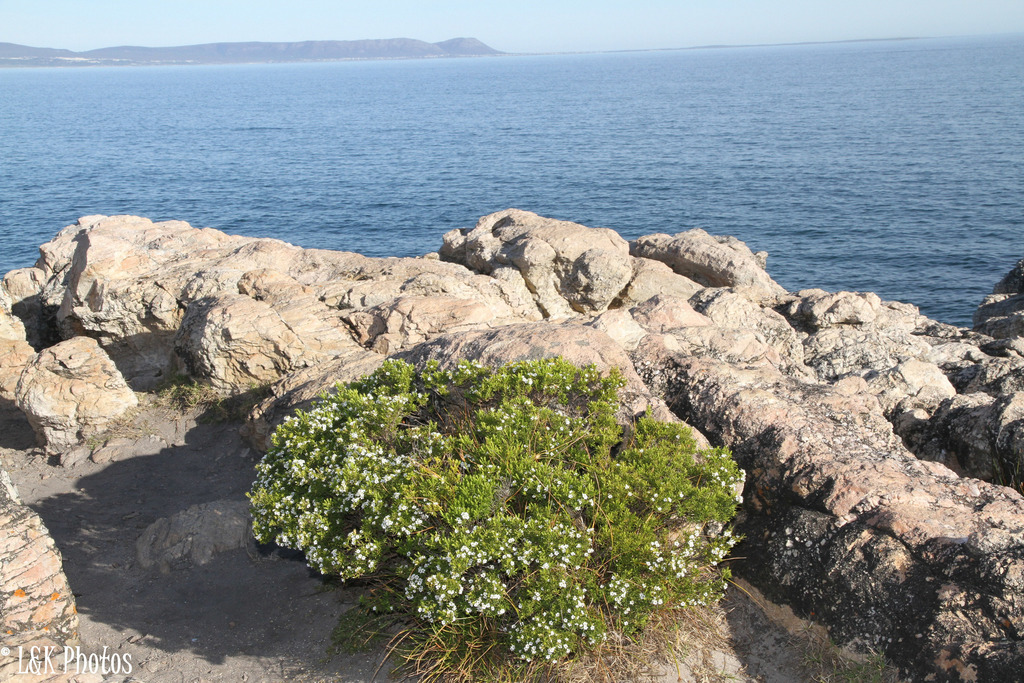
The fruit is equally ingenious. Each five-lobed capsule dries as it ripens and then ejects its seeds with a tiny catapult action. The species occurs from Saldanha Bay through the Cape Peninsula to Bredasdorp, growing among sandstone or granite rocks from sea level to about 750 m.
Its attraction continues between flowering seasons. The evergreen, fine-textured foliage gives year-round structure, while the scent rewards planting beside a path where a passing hand can brush the leaves. A loose, natural shape suits a mixed fynbos planting; several bushes together make a softly textured screen rather than a rigid wall.
The Afrikaans name aasbossie means “bait bush”: fishers traditionally rubbed the aromatic leaves on their hands to remove the smell of redbait. The leaves have also been used in potpourri and as a traditional insect deterrent.
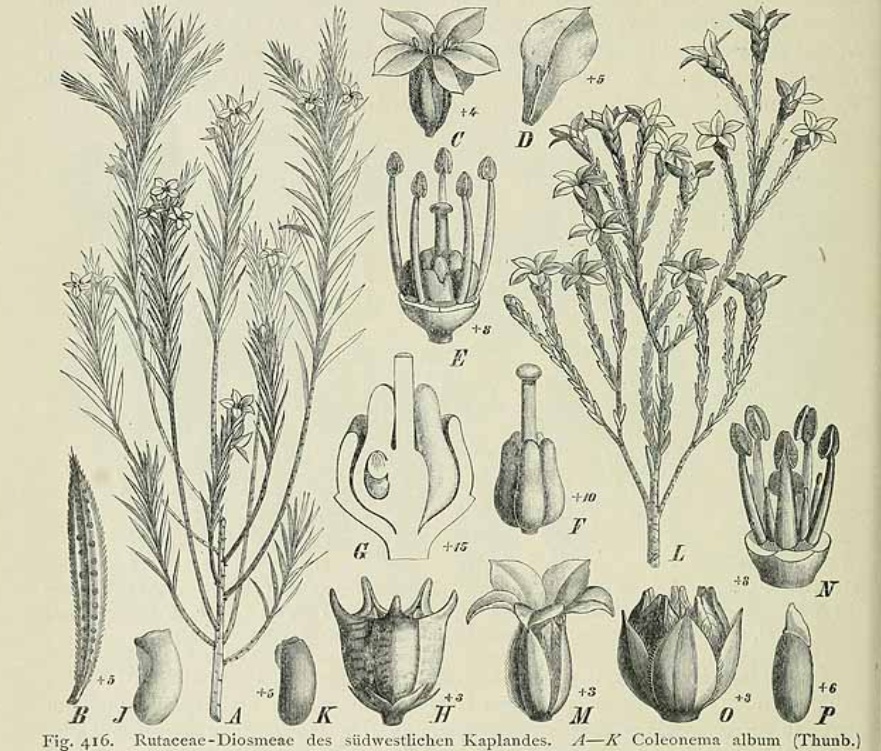
A name with history: Carl Peter Thunberg first described the plant as Diosma alba in 1794; Bartling and Wendland transferred it to Coleonema in 1824. The genus name refers to the sheathed sterile stamens, while album simply means white. In the historical drawing below, figures A–K show its branching foliage and enlarged details of the flower, fruit and seed—structures too small to appreciate easily on a living bush.