Chasmanthe aethiopica
Small cobra lily · small chasmanthe
Winter flames for the coastal garden
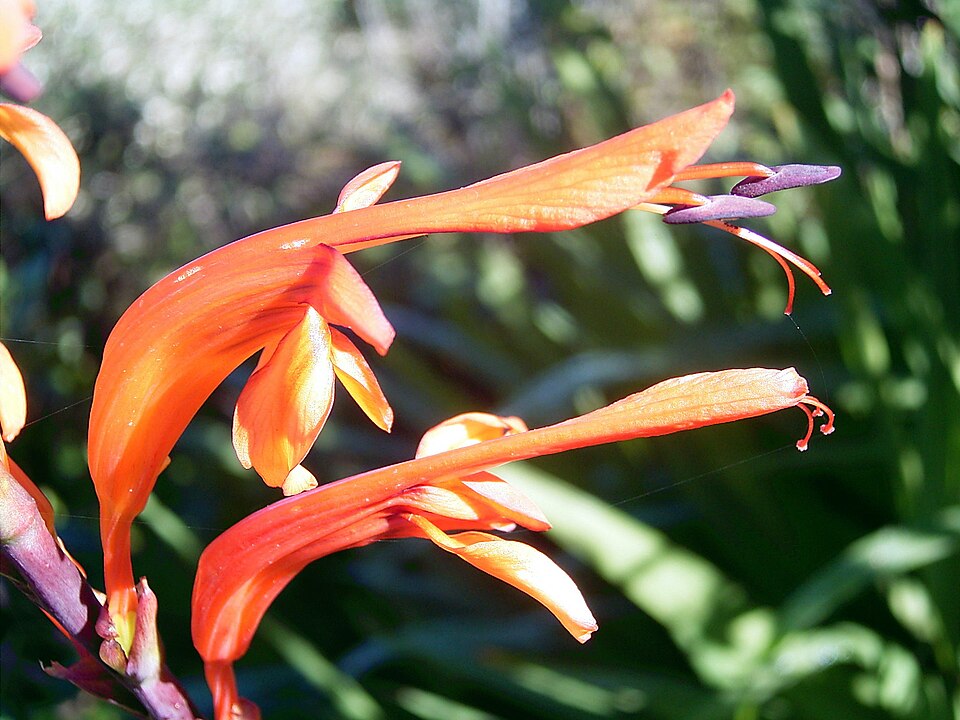
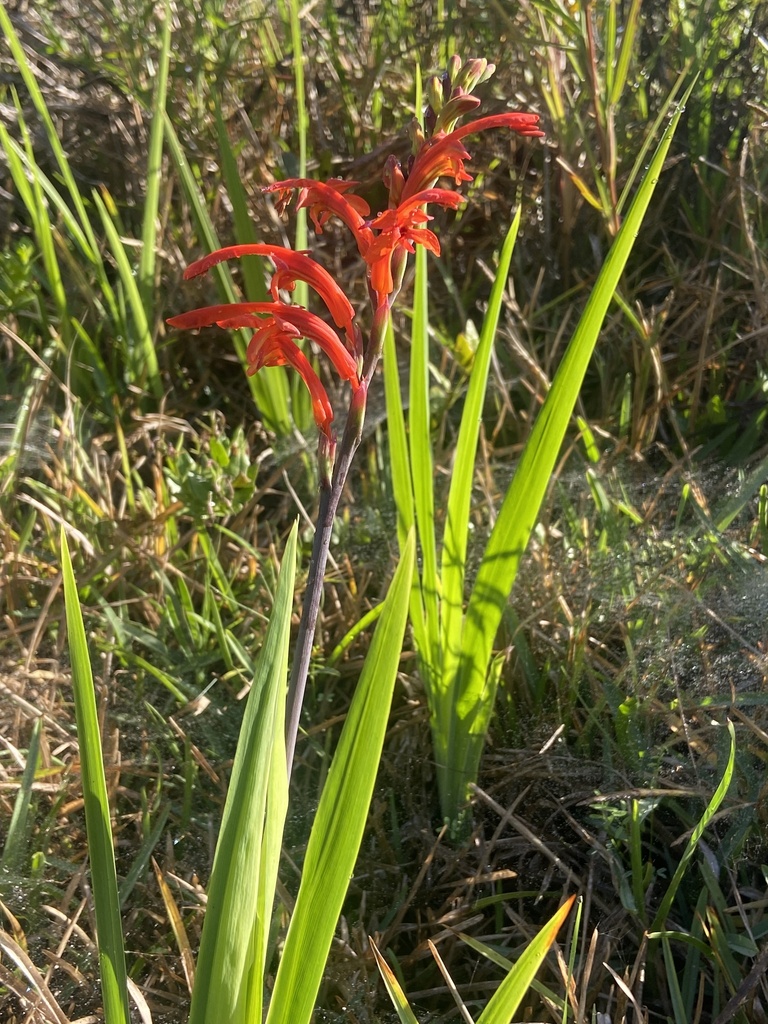
Chasmanthe aethiopica is a deciduous, corm-forming perennial reaching about 60 cm. Pale green, sword-shaped leaves emerge with the autumn rains. The flower stem leans outward, holding an almost horizontal spike of deep orange, trumpet-shaped flowers arranged in two rows along its upper side.
The dramatic blooms are built for birds. Their long tubes contain generous nectar, while the enlarged upper tepal forms a hood over the stamens. Lesser Double-collared Sunbirds are frequent visitors. Later, swollen capsules split open to reveal pea-sized, brilliant orange seeds against a dark maroon lining—an eye-catching display that attracts fruit-eating birds such as Red-winged Starlings.
The seasonal rhythm matters as much as the flowers. Autumn rain starts a fresh flush of foliage, followed by flowering in the cooler months. As summer approaches, the leaves die back and the plant rests as a corm underground. In mixed plantings, neighbouring shrubs can provide a backdrop while the cobra lily is dormant.
This is a coastal species of bush, scrub and forest margins, growing on granite, sandstone and shale as well as coastal soils, from Darling north of Cape Town eastwards to Kentani in the Eastern Cape. It is common in its natural range, although individual coastal habitats still deserve protection.
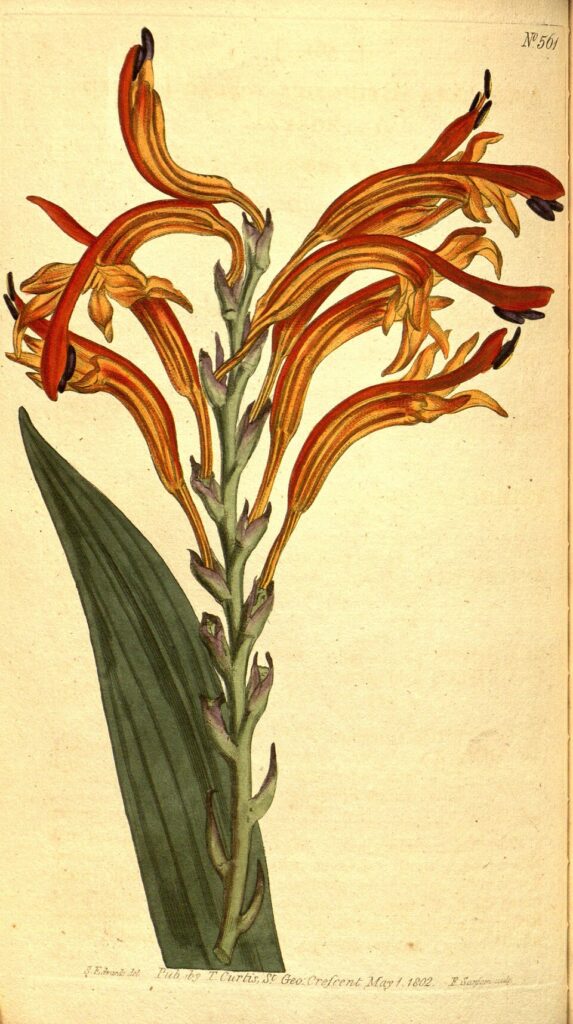
A name with history: Linnaeus described the species in 1759 as Antholyza aethiopica. Its identity was confused with the taller C. floribunda for decades, before the species were separated in 1812. N.E. Brown placed it in Chasmanthe in 1932; the name combines Greek words meaning “gaping flower”. The historical plate below was published under its earlier name, Antholyza aethiopica, linking today’s plant to the early illustrated botanical literature.