Carex clavata
Swamp grass · clubbed sedge
A handsome sedge of marshy ground
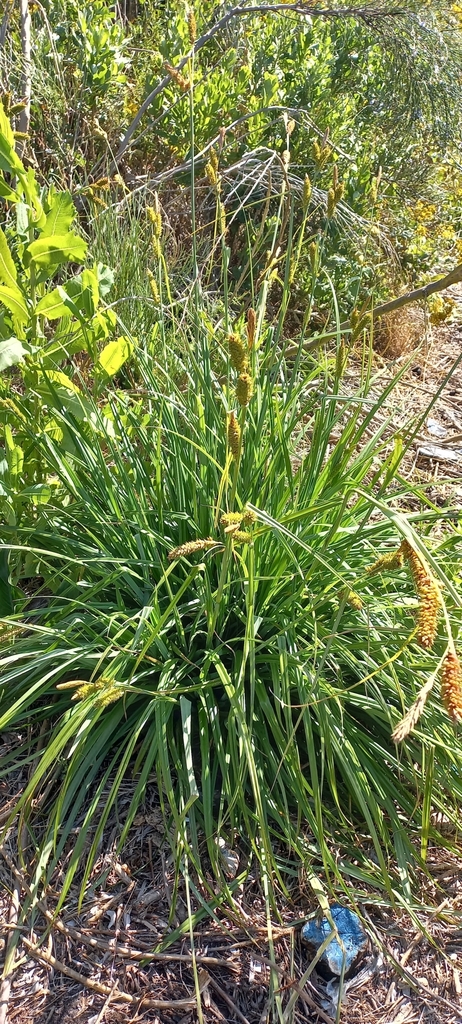
Carex clavata is a robust, evergreen perennial that grows in neat tussocks and may reach about 1.7 m. Its long, grass-like leaves arch outwards from the base, giving the plant a graceful fountain shape. Despite its common name, it is a sedge rather than a true grass.
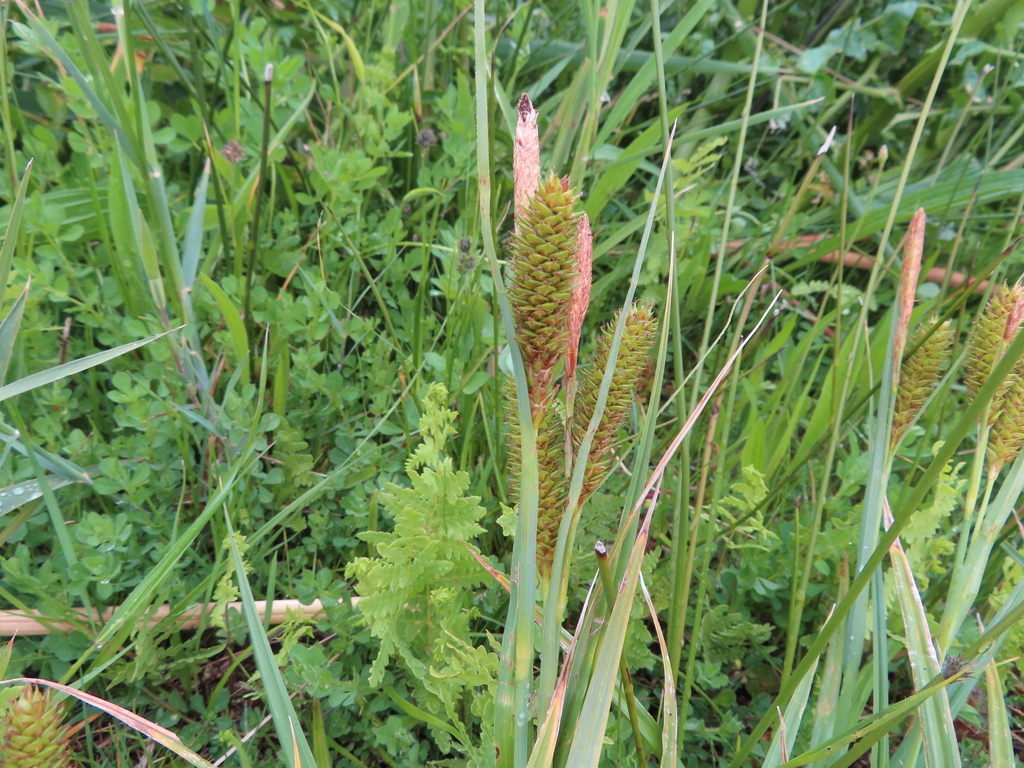
The flowering stems carry glossy brown to reddish-brown spikelets. These compact structures contain the tiny, wind-pollinated flowers. The species name clavata means club-shaped, an apt reference to the thickened appearance of the mature flowering spikes.
Dense sedge clumps do valuable work in a wetland. Their roots hold soft soil together, their leaves slow surface water, and the sheltered spaces around the base provide cover for insects, frogs and other small animals. The seedheads also add subtle colour and texture long after flowering. Unlike a showy garden flower, its appeal lies in the contrast between fine green foliage and the compact brown spikes; viewing it at close quarters reveals details easily overlooked in a broad sweep of wetland vegetation.
This species is endemic to South Africa, occurring naturally in the Western and Eastern Cape. It favours freshwater marshes, wet flats and damp lower slopes, particularly at lower elevations. Although its national conservation status is Least Concern and its population is considered stable, healthy wetlands remain essential to its future.
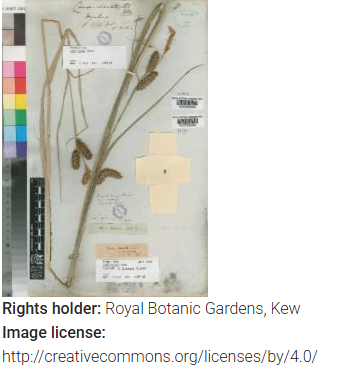
A name with history: Swedish botanist Carl Peter Thunberg formally described Carex clavata in 1794 in his Prodromus Plantarum Capensium, an early catalogue of plants from the Cape.