Berzelia lanuginosa
Common buttonbush · vleiknopbos
Soft foliage and woolly buttons
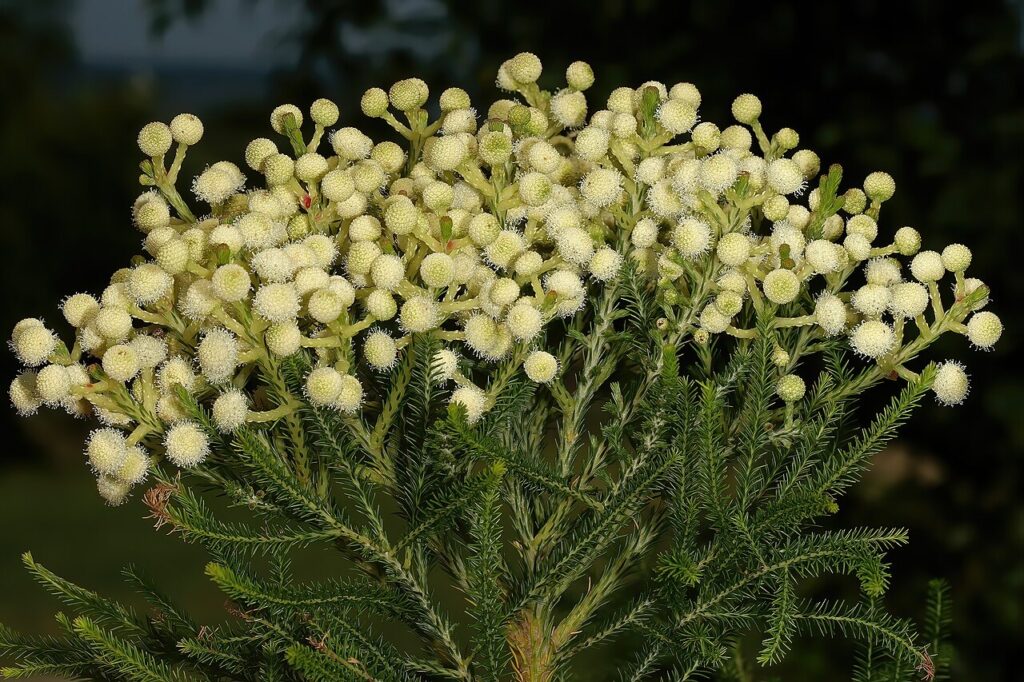
Berzelia lanuginosa is an evergreen shrub with an upright or gently spreading shape, usually reaching 1.5–2 m. Its slender branches are densely clothed in tiny, narrow leaves arranged in neat whorls, creating the soft, feathery texture that makes the plant distinctive even when it is not flowering.
From winter into spring, the branch tips carry crowded clusters of creamy white to pale yellow “buttons”. Each button is a head of many minute flowers. The Latin name lanuginosa means woolly, referring to their softly fluffy appearance.
After flowering, the heads become attractive green to reddish seedheads and can remain on the shrub for a year or two. This remarkable persistence explains the plant’s popularity with florists: both fresh stems and dried seedheads add fine texture to arrangements.
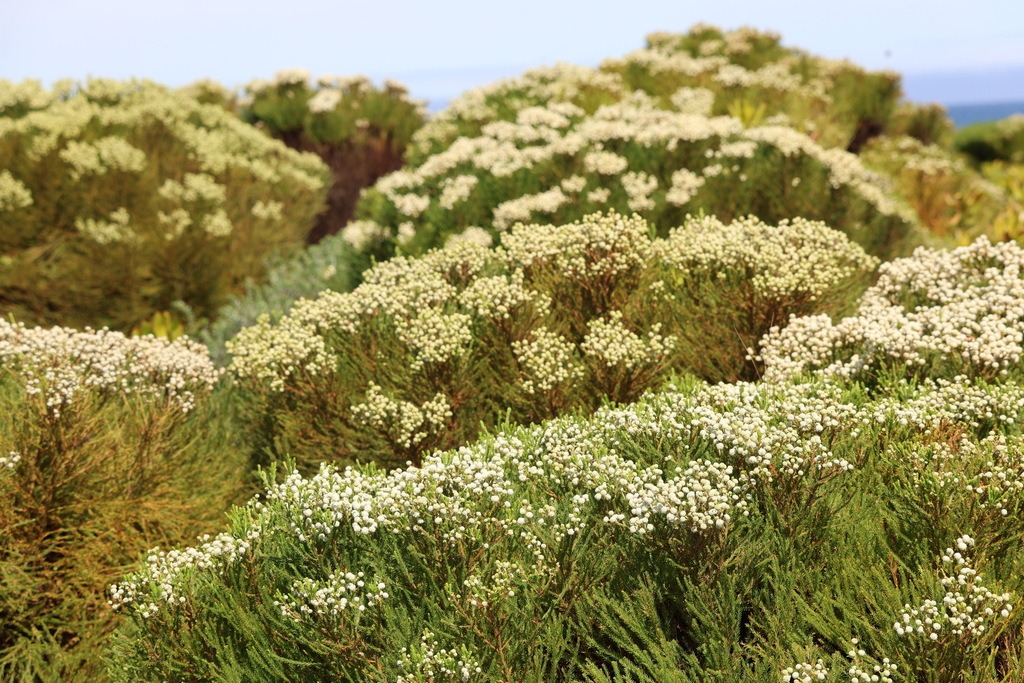
In the wild, common buttonbush grows from the Clanwilliam region southwards to Bredasdorp, favouring permanently moist sandy flats, slopes and seepages. It can even act as a useful sign that the ground is naturally boggy.
Like many fine-leaved fynbos shrubs, its small leaves give the plant a delicate texture; the contrasting rounded heads make the flowering stems especially conspicuous. Bees, flies and other insects visit the tiny flowers. The pale heads later persist as seed-bearing structures, so several stages of growth may be visible on the same plant.
The rounded heads and slender leafy shoots make a useful contrast with neighbouring rushes and broad-leaved wetland plants. Grouped plants create texture; close inspection reveals the many minute flowers that make up each button. SANBI lists the species as Least Concern.
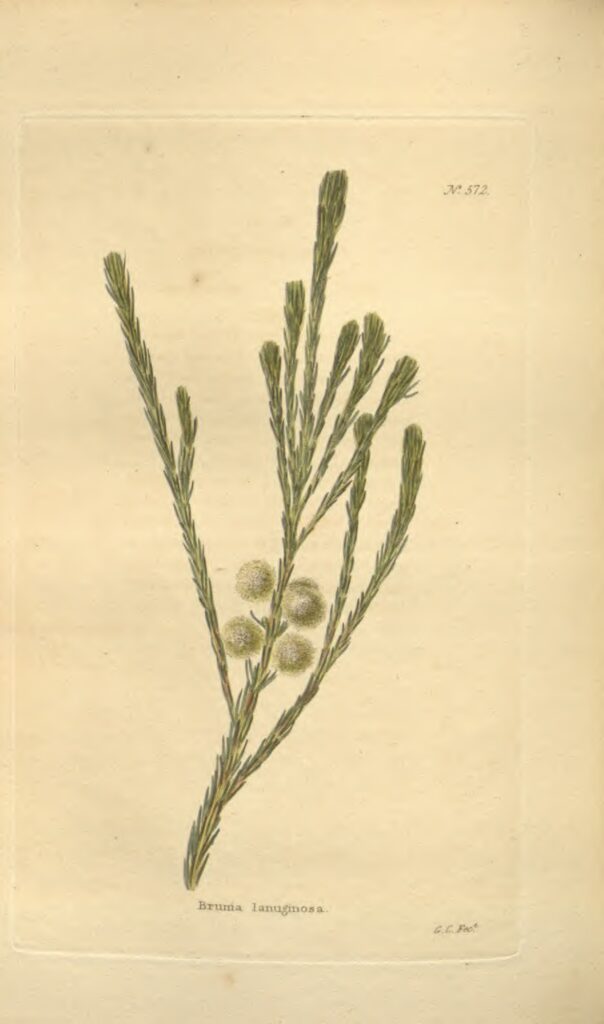
A name with history: Linnaeus described the plant as Brunia lanuginosa in 1753. Brongniart transferred it to Berzelia in 1826, honouring Swedish chemist Jöns Jacob Berzelius. The early nineteenth-century Botanical Cabinet portrait below, engraved by George Cooke as plate 572 under the older name, records its long history in cultivation.