Athanasia dentata
Toothed-leaf athanasia · geelblombos
Green foliage crowned with gold
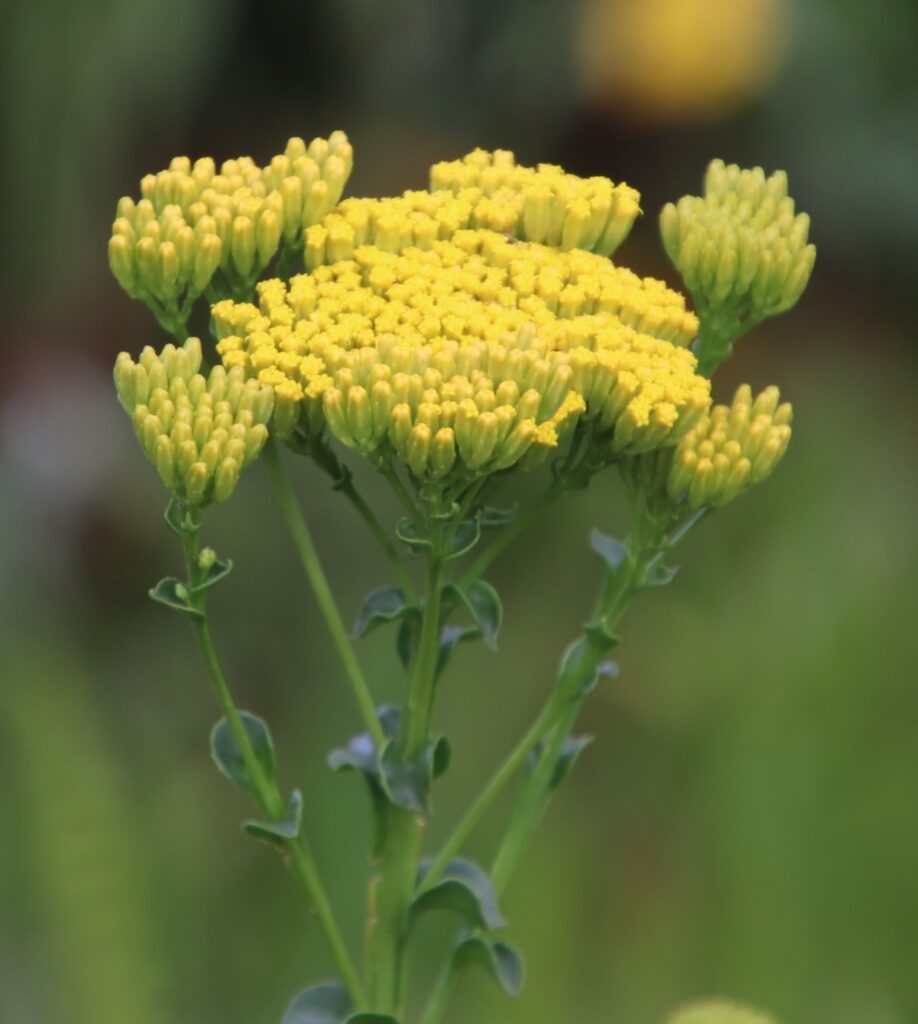
Athanasia dentata is a upright shrublet, usually 1–1.5 m tall. Its branches are neatly clothed in green, hairless leaves. Each leaf bends slightly backwards and has a strongly toothed edge—the feature celebrated by the name dentata.
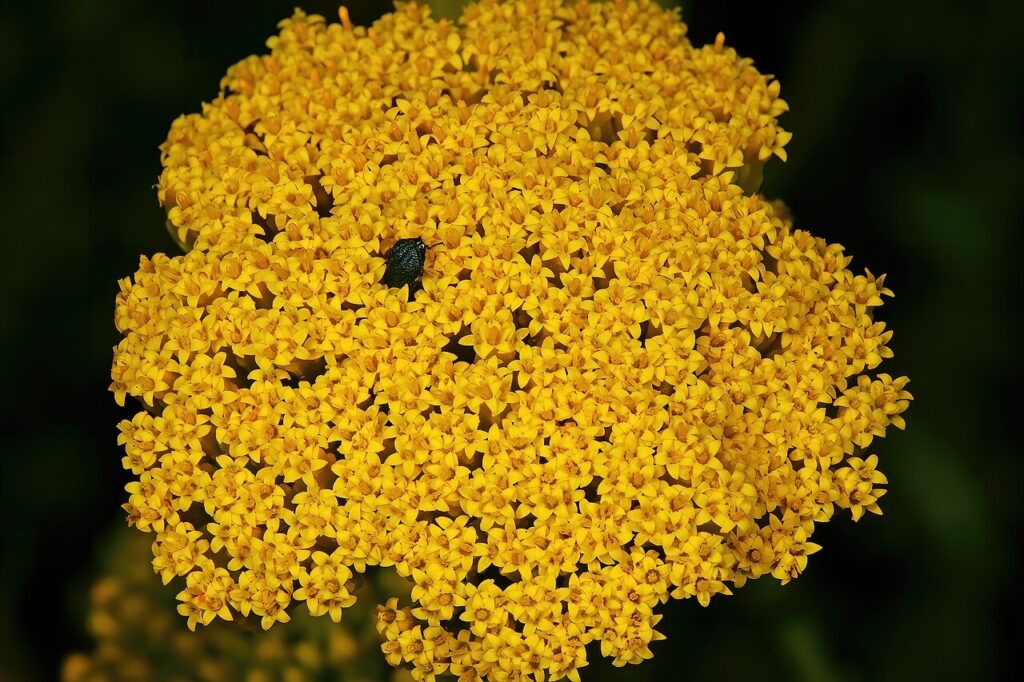
From spring into midsummer, the branch tips carry broad, flat clusters of golden yellow flowerheads with a honey scent. Each cluster contains around 15–20 rounded “buttons”, and every button is itself a community of many tiny tubular flowers surrounded by papery bracts.
Honeybees, solitary bees, butterflies and monkey beetles all visit the long-lasting flowerheads. About six weeks after flowering, the plant produces ridged seeds. The species occurs from the Cape Peninsula to Struisbaai and again from George to Gqeberha, most often on dry, sandy coastal slopes.
The papery bracts remain after the tiny flowers have faded, giving the heads a lasting, almost everlasting quality. This persistence lies behind the genus name Athanasia, from Greek for “without death”. It also helps explain why the flowering stems hold up well when cut for a vase.
Its place among other fynbos plants deserves some thought. SANBI notes that athanasias can release substances from their roots that inhibit sensitive neighbours such as ericas, buchus and proteas. Restios, watsonias, vygies, aloes and annual daisies appear less affected, making them more comfortable companions in an informal planting.
In gardens it suits full sun and well-drained soil. Trim lightly after flowering. SANBI assesses it as Least Concern.
The toothed, relatively undivided green leaves distinguish it from the finer, more deeply cut foliage of samphire-leaf athanasia.
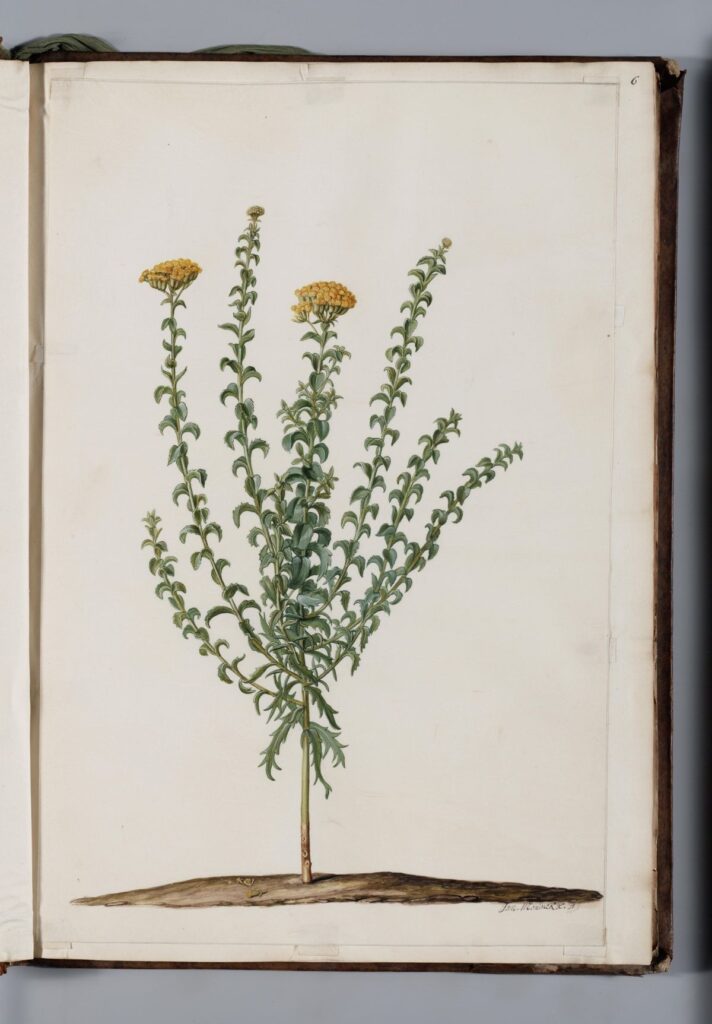
A name with history: Linnaeus described the species as Santolina dentata in 1753, then placed it in Athanasia in 1763. The historical watercolour below is Jan Moninckx’s portrait in volume 7, plate 6 of the Moninckx Atlas, painted around 1700 for Amsterdam’s botanical garden. Wijnands’s study confirms its identity.