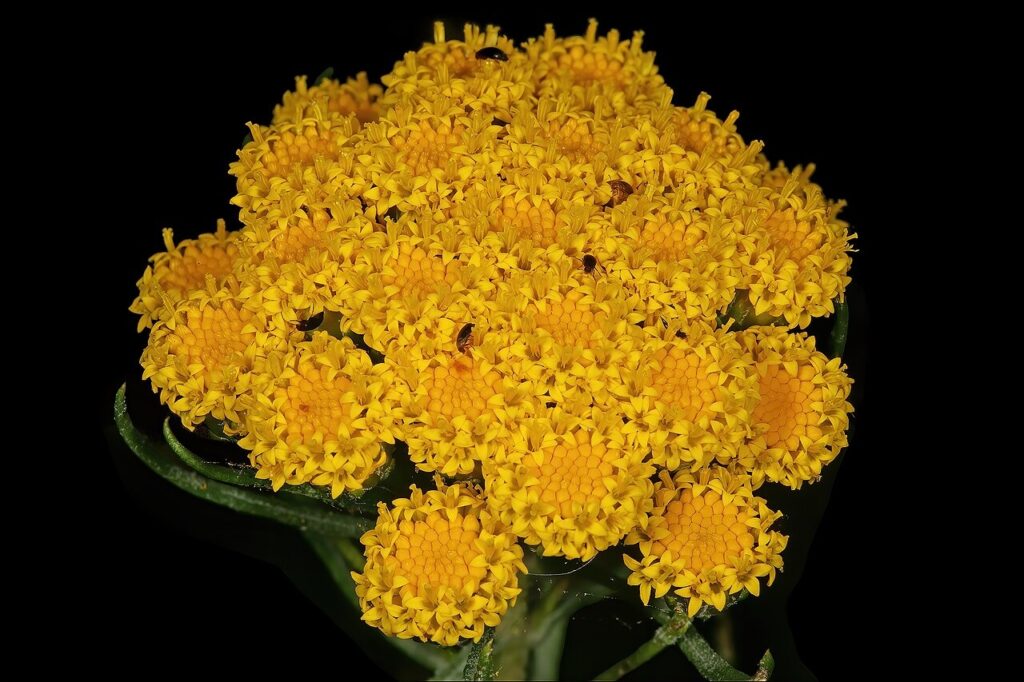
Athanasia crithmifolia
Samphire-leaf athanasia · draadblaar-klaaslouwbos
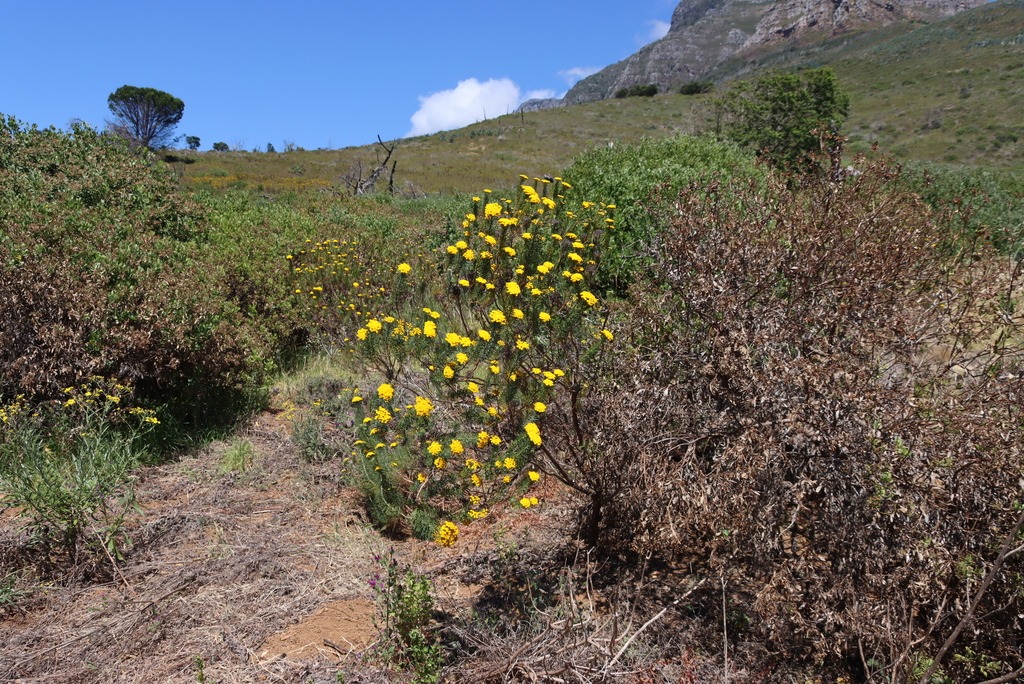
Golden buttons above feathery foliage
Athanasia crithmifolia is a shrub that usually reaches 1.5–2 m. Its finely divided grey-green leaves give it a feathery appearance, while flat-topped clusters of deep yellow flowerheads create a bright display from October to January.
Look closely and the “flowers” reveal a daisy-family trick: each yellow button is actually a compact head made up of many tiny tubular florets. There are no showy outer petals. Bees and other insects visit the crowded flowerheads, making the plant a useful addition to wildlife-friendly gardens.
The species occurs naturally from the Piketberg southwards to Hermanus and the Riviersonderend Mountains. It favours sandy flats and slopes, often on seasonally moist ground. Once established it is water-wise and largely looks after itself, although it can seed around freely in a small garden.
The genus name Athanasia comes from Greek words meaning “without death”, a reference to the dry bracts around the flowerheads that remain in place for a long time. The deeply cut leaves inspired the species name: crithmifolia means “with leaves like rock samphire”.
Flowering and foliage together make identification easier. The divided grey-green leaves contrast with the richer green, strongly toothed leaves of Athanasia dentata, another athanasia planted in the Park. Both have yellow button-like flowerheads, but their leaves create different textures. Watching the flowers also reveals an active insect community: honeybees, beetles and wasps have been recorded visiting the heads at Kirstenbosch. SANBI lists both recognised subspecies as Least Concern. Restoration benefits from matching local plant material to an appropriate site.
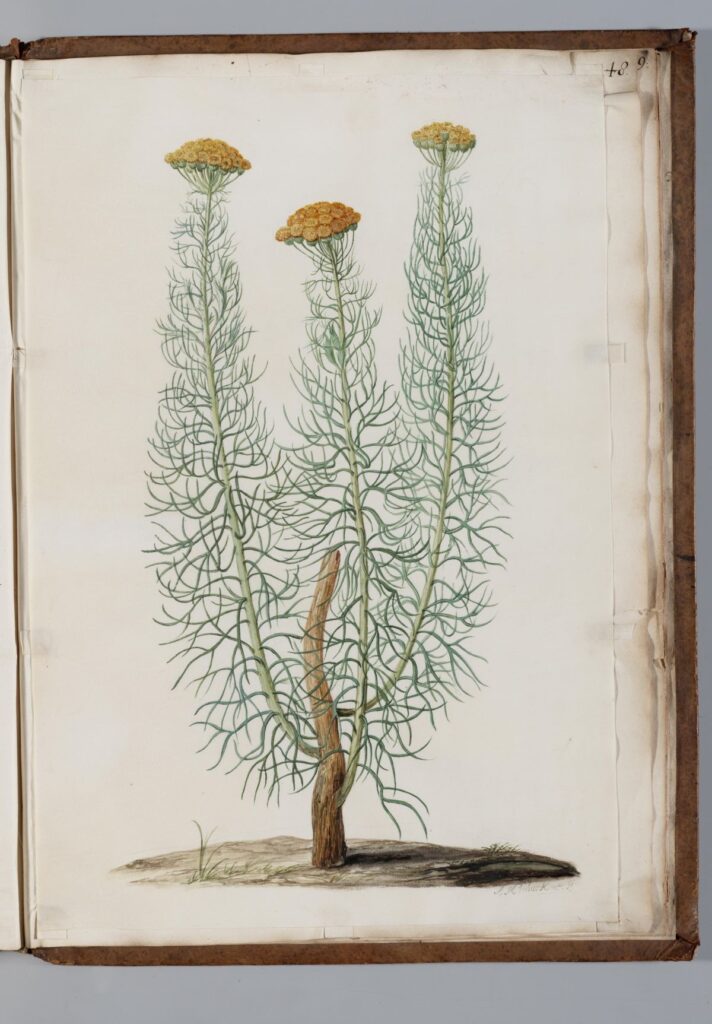
A name with history: Linnaeus described the species as Santolina crithmifolia in 1753 and transferred it to Athanasia in 1763. Jan Moninckx’s watercolour below, volume 3, plate 48 of the Moninckx Atlas, predates those names. Painted around 1700 for Amsterdam’s botanical garden, it is identified as this species in Wijnands’s study of the Commelins’ plants.