Arctotis aspera
Rough arctotis · taaigousblom
A resilient daisy with a rough side
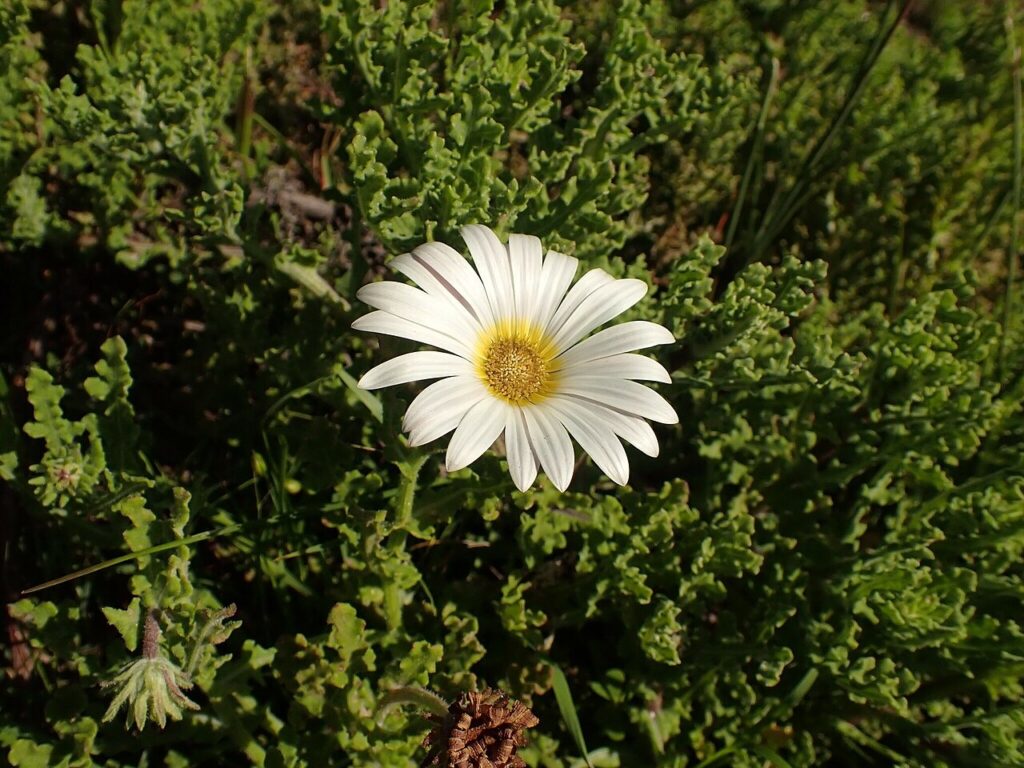
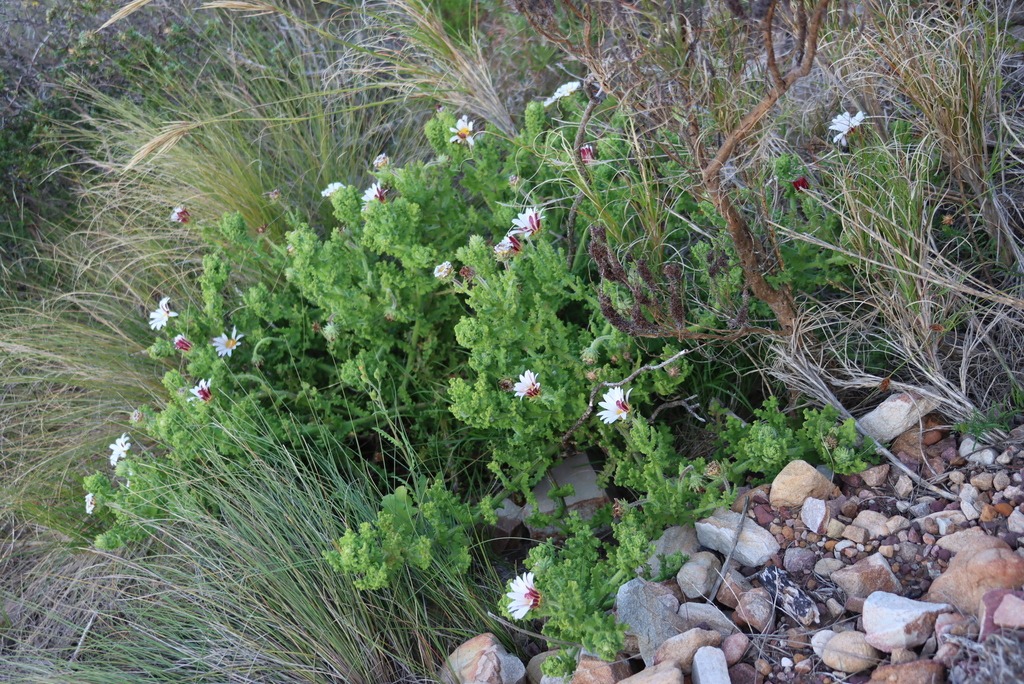
Arctotis aspera, known as rough arctotis or taaigousblom, is a perennial found only in South Africa’s Western Cape. It usually forms a sprawling plant about 1 m high and wide, although vigorous specimens can reach 2 m. Both stems and leaves carry gland-tipped hairs, giving them the rough texture celebrated in the Latin name aspera, meaning “rough”.
The deeply divided leaves have narrow segments with rolled-under edges and often look grey beneath. Above them, solitary daisy-like flowerheads rise on hairy stalks. The ray florets may be white or purple and are darker on the reverse, while the outer bracts have distinctive tail-like tips. Flowers can appear sporadically for much of the year, becoming most abundant from August to December and peaking in late winter and spring.
In the wild, the species occurs from Elands Bay to the Cape Peninsula. SANBI records it in sandstone and granite fynbos as well as coastal strandveld, chiefly on rocky slopes. Established plants need little supplementary water. It is assessed as Least Concern, with an inferred stable population, although competition from invasive alien plants can affect Peninsula habitats.
The genus name Arctotis means “bear’s ear”, referring to ear-like scales in the pappus—the fine structure attached to the fruit. Each dry, seed-like achene also has two elongated cavities and a basal tuft of hairs. Bees, including Cape honeybees, have been observed visiting the flowers, but the plant’s full pollination story remains unresolved.
For gardens, provide full sun and sharply drained soil. It grows readily from autumn-sown seed or cuttings and responds well to occasional light pruning. No other traditional uses are recorded.
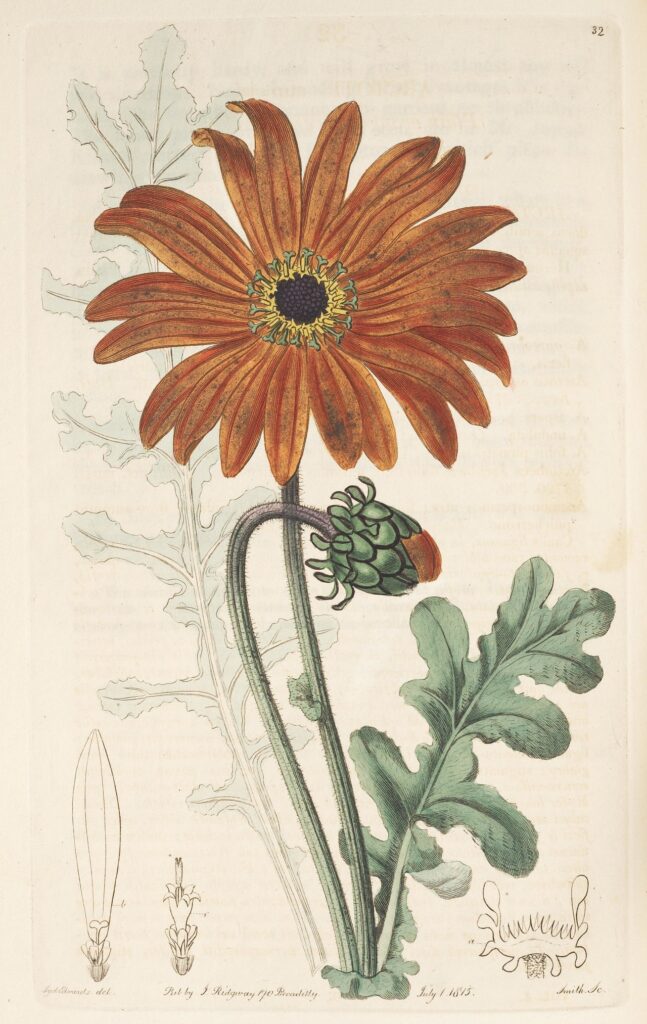
A name with history: Carl Linnaeus first described Arctotis aspera in 1753 in Species Plantarum . The 1815 plate from The Botanical Register , reproduced below, is an early published colour illustration of the species.