Zantedeschia aethiopica
Arum lily · white arum lily · calla lily · varkblom / wit varkoor
A white wetland beacon — but not a true lily
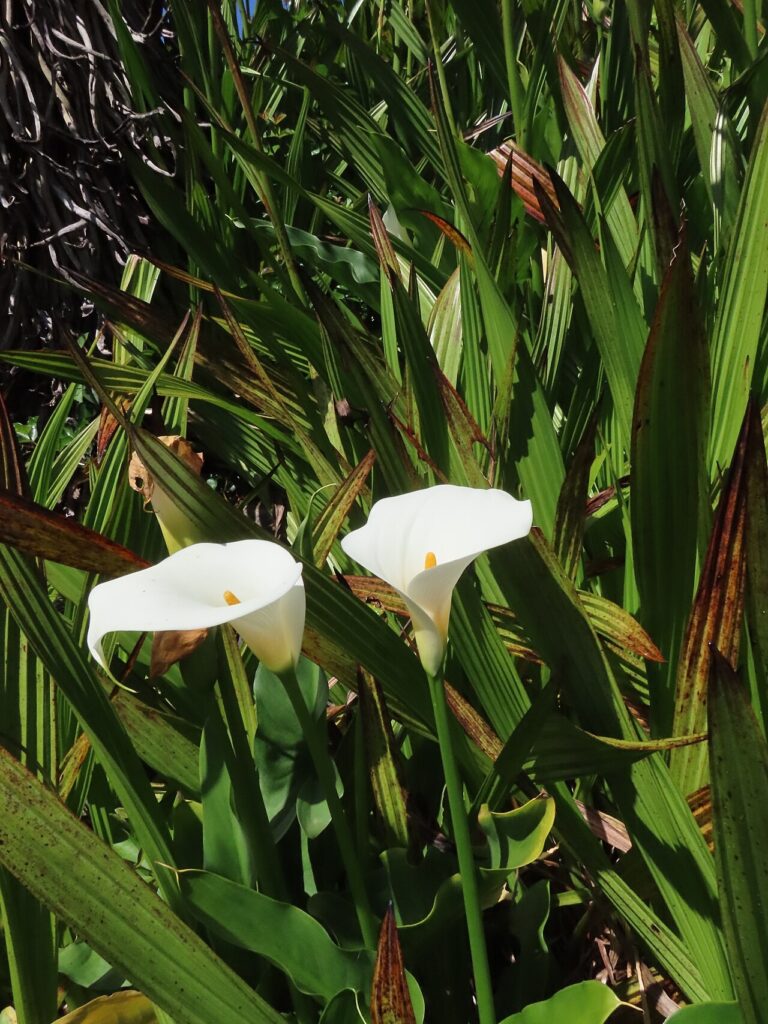
Zantedeschia aethiopica is a robust, clump-forming perennial with a thick underground rhizome. Its glossy, arrow-shaped leaves can stand nearly a metre high. In mild, wet places the plant may remain evergreen; where summers are dry or winters cold, its leaves can die back and return when conditions improve.
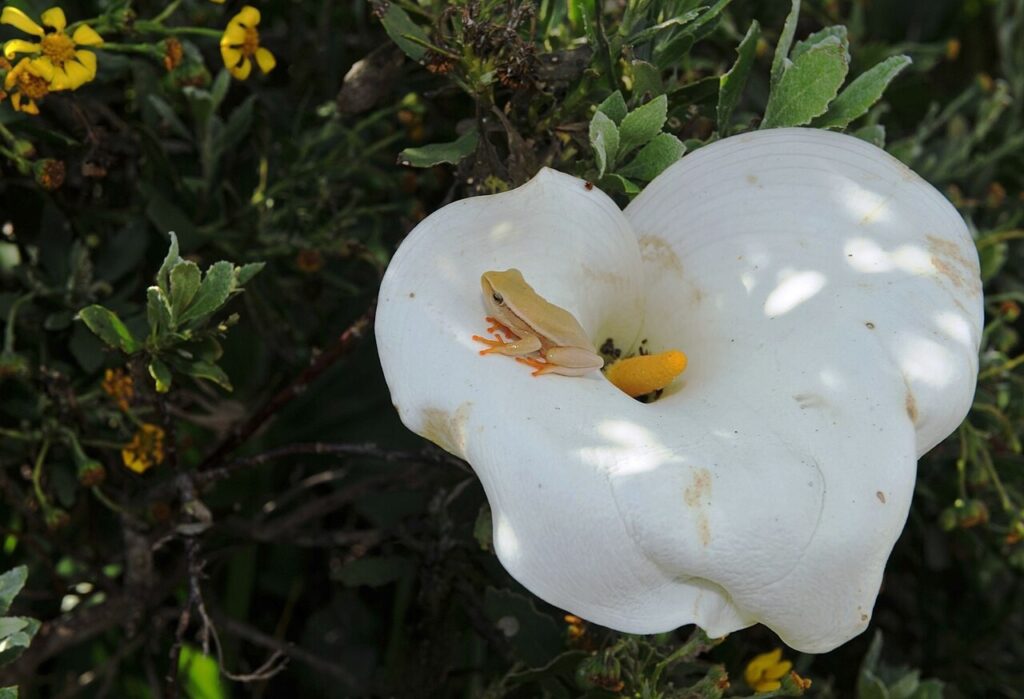
The brilliant white “flower” is actually a modified leaf called a spathe. It wraps around a central yellow spadix crowded with many tiny flowers: female flowers occur below and male flowers above. Beetles, bees and other small insects visit the faintly scented inflorescence and carry pollen; birds later help disperse the fleshy yellow-orange berries.
It is native across southern Africa, from the winter-rainfall Cape into summer-rainfall regions, Lesotho and Eswatini. Typical habitats are marshes, damp grassland, seepages, stream banks and pond edges. Its main flowering season is August to January, although flowers can appear at other times when moisture remains available.
SANBI assesses the arum lily as Least Concern: it is widespread, common and not in danger of extinction. Locally, however, intact wetlands and clean stream margins remain valuable. The whole plant contains irritating calcium-oxalate crystals and should not be eaten raw or handled carelessly.
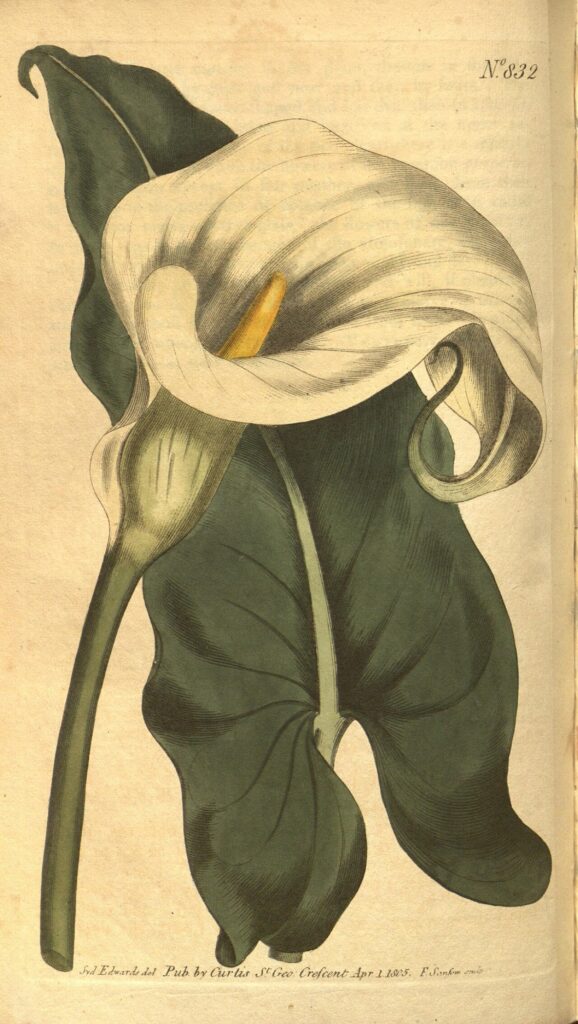
A name with history: Carl Linnaeus described the plant as Calla aethiopica in 1753. Kurt Sprengel transferred it to Zantedeschia in 1826, naming the genus for the Italian physician and botanist Giovanni Zantedeschi. The species had already appeared under its earlier name in Curtis’s Botanical Magazine as plate 832 in 1805—the historical artwork shown below.