Pelargonium cucullatum
Hooded-leaf pelargonium · herba althaea · wildemalva
A bold Cape shrub with hooded leaves
Pelargonium cucullatum is a vigorous, upright and spreading shrub that can grow more than 2 m tall. The lower stems become woody, while younger stems and leaves are hairy. Its rounded to kidney-shaped leaves are cupped or hood-like—an unmistakable feature reflected in the species name.
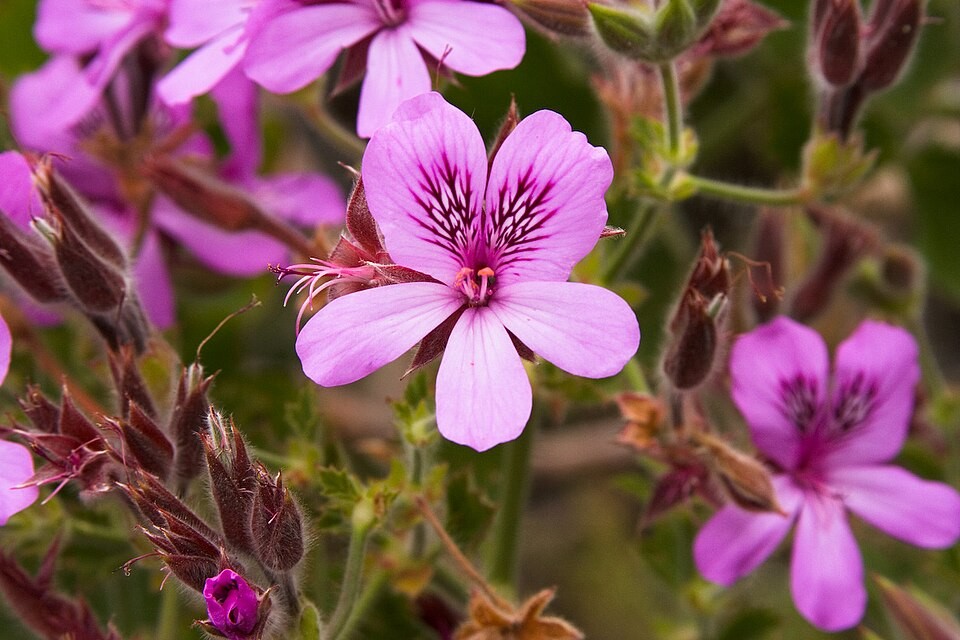
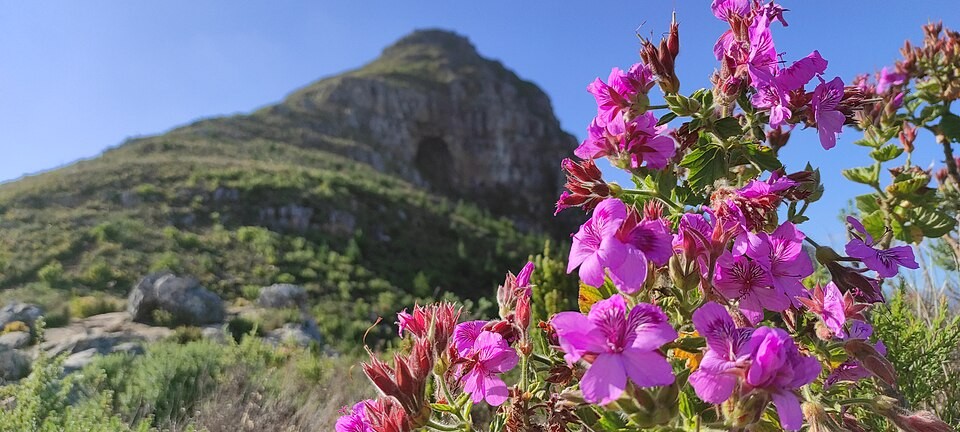
From September to February, dense plants can be covered with softly scented flowers in shades from pale pink and mauve to deep purplish pink; white forms also occur. Darker veins mark all five petals. Sunbirds, butterflies, long-tongued flies and moths visit the flowers.
The species occurs naturally on coastal sandy and granite slopes from Saldanha Bay around the Cape Peninsula to Gansbaai. It tolerates wind and salt-laden air, resprouts from its rootstock, and often forms conspicuous stands in southwestern Cape fynbos. Its recognised subspecies are assessed as Least Concern.
The broad foliage makes a striking contrast with fine-leaved restios and buchus. Individual flowers are worth inspecting: the five petals do not form a perfectly regular circle, and the darker markings draw attention towards the flower centre. The cupped leaves remain a useful identification feature outside the flowering season. Several subspecies occur, so leaf hairiness and shape can vary between populations.
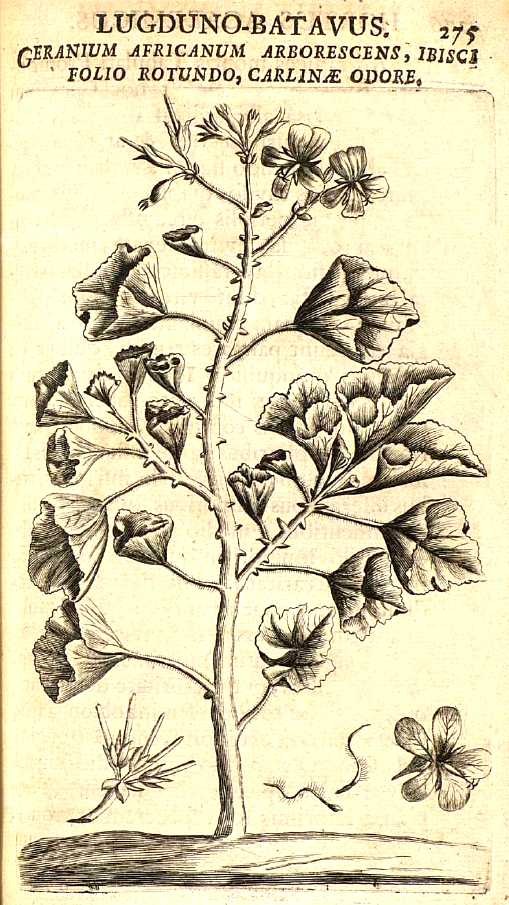
A name with history: Dutch botanist Paul Hermann collected this pelargonium on the slopes of Table Mountain in 1672 and published its first known illustration as Geranium africanum in Horti academici Lugduno-Batavi in 1687. Carl Linnaeus formally described it as Geranium cucullatum in 1753; Charles-Louis L’Héritier de Brutelle later placed it in Pelargonium , with the name published in William Aiton’s Hortus Kewensis in 1789. It became an important ancestor of modern Regal pelargonium hybrids. The epithet cucullatum means “hooded”, referring to the cupped leaves.