Oftia africana
Lazy bush · koekblommetjiesbos · sukkelbossie
A rough-leaved shrub with a sweet surprise
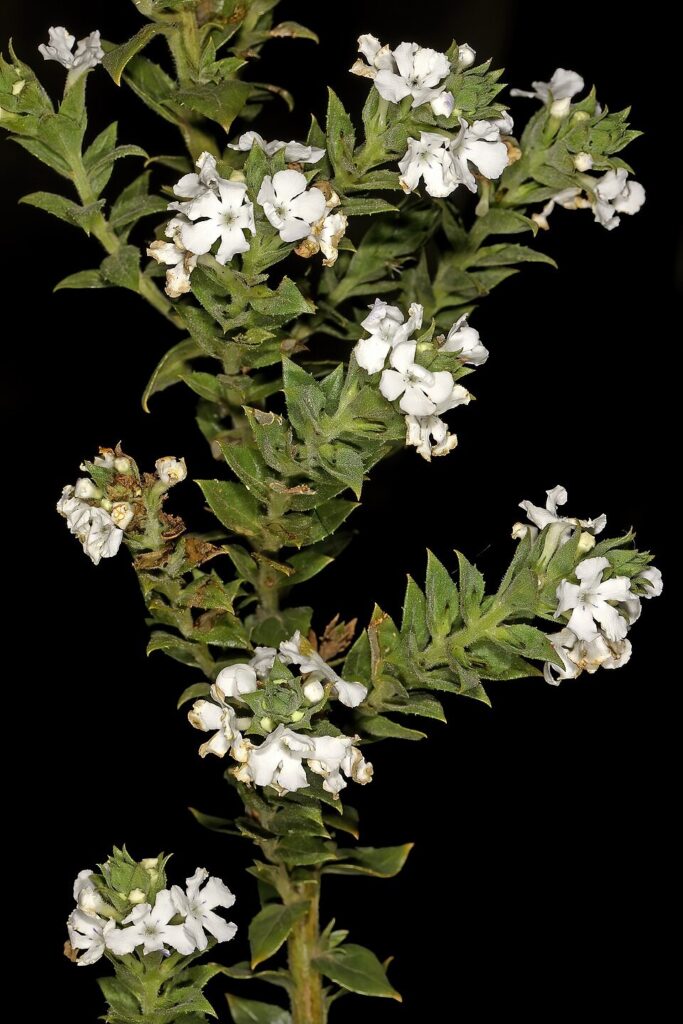
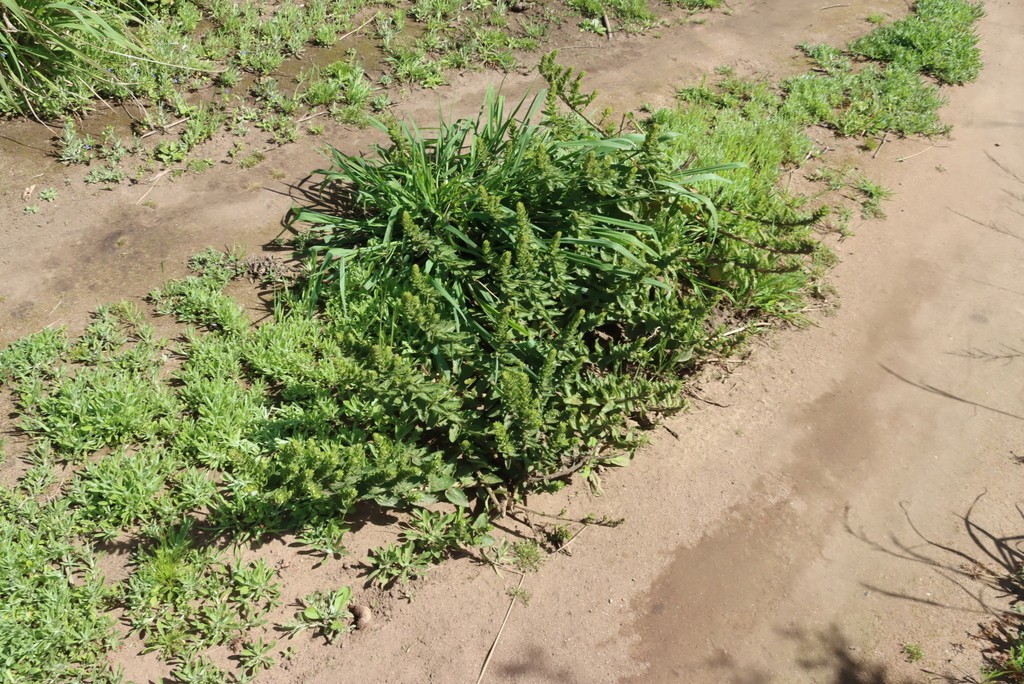
Oftia africana is a small, much-branched shrublet with both upright and trailing stems. Individual branches may reach about a metre, and neighbouring plants can knit together into broad, low thickets. Its young stems and leaves are hairy, giving the plant the rough texture behind one of its most memorable features.
The small, alternate leaves are glossy green above but look greyish from the hairs beneath. Their sharply toothed margins give the foliage a crisp, almost holly-like outline—hence the historical name “Ilex-leaved spielmannia”.
White flowers are carried singly in the axils of the upper leaves. They release a distinctive sweet, chocolate-like fragrance. Peak flowering is usually from September to December, although flowers may appear for much of the year in favourable conditions. The scented blooms are visited by insects.
This South African endemic is widespread across the Western, Northern and Eastern Cape, chiefly on rocky sandstone and granite slopes in fynbos and renosterveld. It is assessed as Least Concern.
Green berries can appear while other branches are still flowering, so a single plant may show several stages of its reproductive cycle. Notice where the flowers sit: they arise beside leaves along the upper shoots, rather than forming one conspicuous terminal head. The combination of glossy upper leaf surfaces, pale hairy undersides and small white blooms helps distinguish this modest shrub from its neighbours.
A name with history: Linnaeus originally described this plant as Lantana africana in 1753. It was later placed in Oftia, with the combination Oftia africana published by Henri Bocquillon in 1862. The epithet africana means “African”. The old name Spielmannia africana appears on the nineteenth-century botanical plate below, a reminder that the same familiar Cape plant has passed through several botanical classifications.