Leucadendron coniferum
Dune conebush · dune yellowbush · duin-geelbos
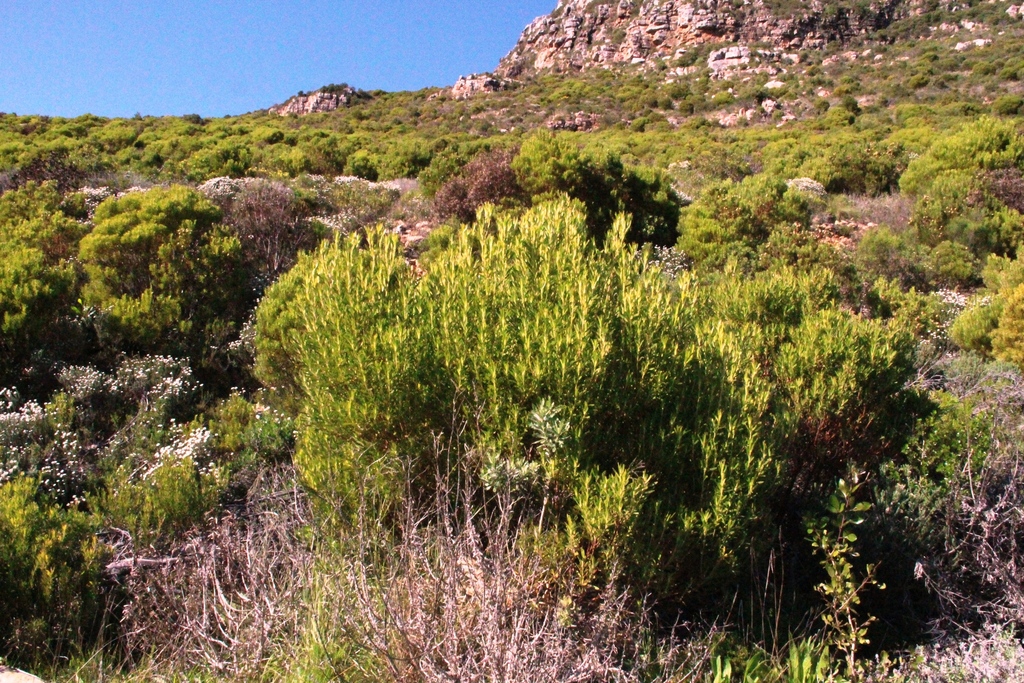
A tall Cape conebush shaped by sand, wind and fire
Leucadendron coniferum is an evergreen shrub or small tree reaching about 2–4 m. A stout trunk carries numerous upright branches clothed in narrow leaves, which become hairless as they mature. In August and September, the leaves surrounding the flowerheads brighten to pale yellow, making a flowering shrub conspicuous against darker coastal vegetation.
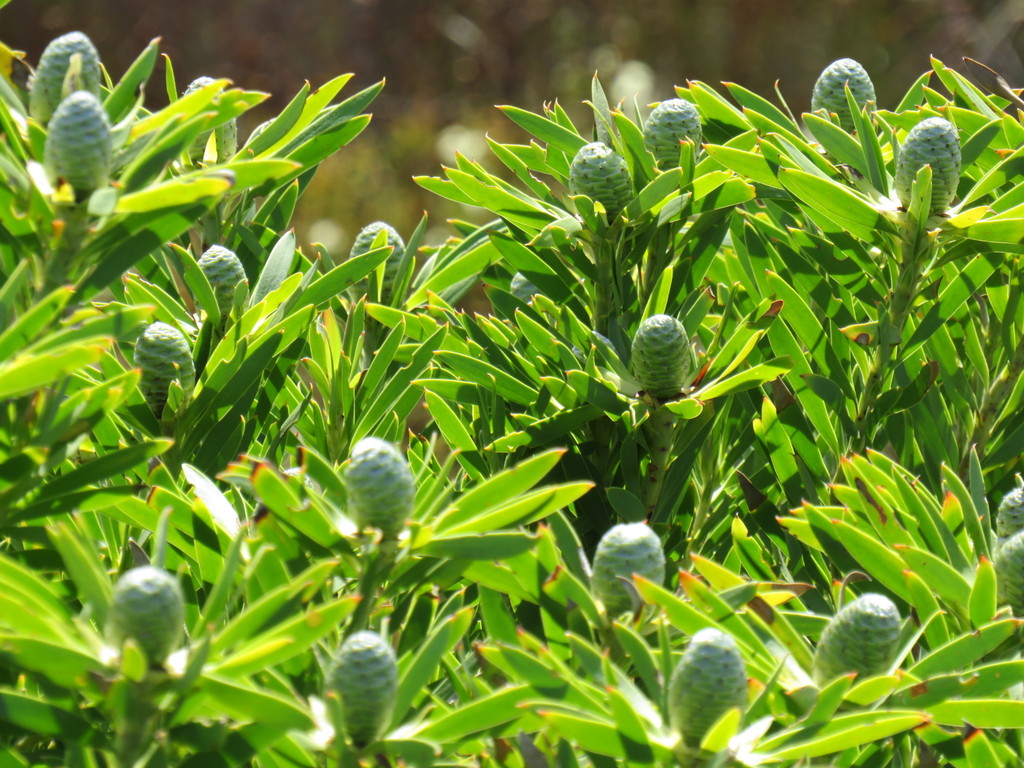
Each plant bears either male or female flowers. Male heads produce pollen; female heads develop into woody cones, about 4 cm long. The sexes can look quite different at close range, even though their overall foliage is similar. Both are needed nearby for female shrubs to produce fertile seed.
Those persistent cones form a seed bank held in the canopy. Seeds remain protected for years, then are released when fire kills the adult shrub and the cones open. Their wings help them travel on the wind into newly available ground. Recovery depends on a surviving seed reserve, rather than on fresh shoots from the burnt trunk.
Naturally occurring from the Cape Peninsula to Soetanysberg, this Western Cape endemic often forms dense stands on lowland coastal sands. It grows in sand fynbos and at some strandveld boundaries. Its tolerance of several soil textures makes it a useful link between different parts of a coastal restoration landscape, provided drainage remains good.
SANBI assesses dune conebush as Near Threatened. Urban development, agriculture, invasive alien trees, frequent fires and harvesting continue to affect its habitat. Fires that return before young plants have built a seed bank are especially damaging. Protecting established stands and using responsibly propagated plants both help sustain this coastal species.
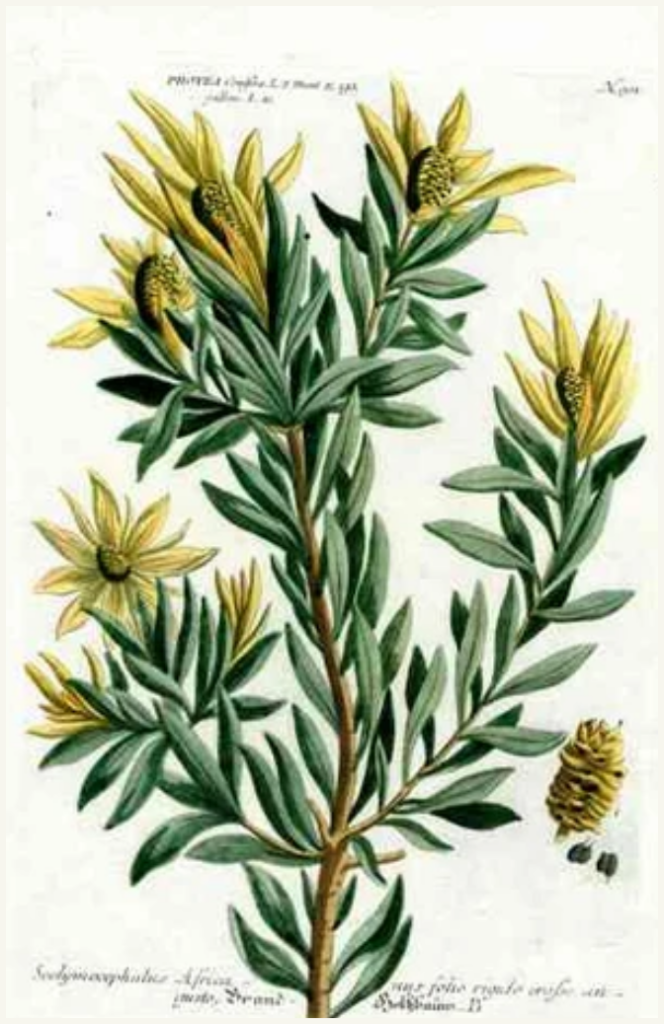
A name with history: Coniferum means ‘cone-bearing’, referring to the enduring female cones. Earlier names include Protea conifera and Leucadendron sabulosum. The eighteenth-century Weinmann engraving below records the leafy shoots and reproductive structures that attracted early botanical illustrators to Cape conebushes.